

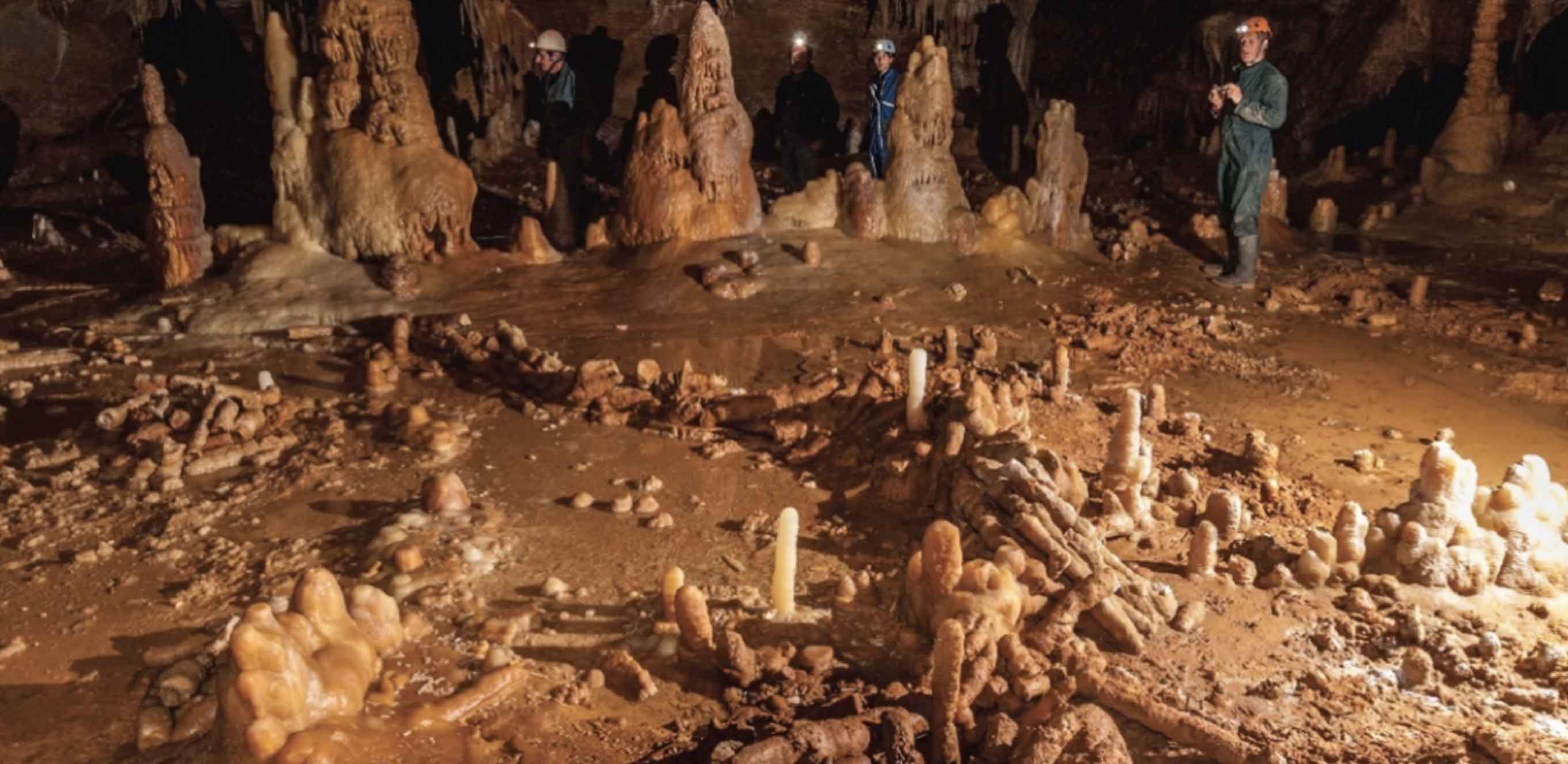
In 2016, the archaeologist Jacques Jaubert and collaborators described a fascinating discovery deep within the Bruniquel Cave, France. This roughly linear cave is nearly a half-kilometer in length, situated within the steep-sided Aveyron valley. Most of this long system had been hidden by a scree slope inside a smaller cave until cavers dug through in 1990, opening passage much deeper into the hillside.
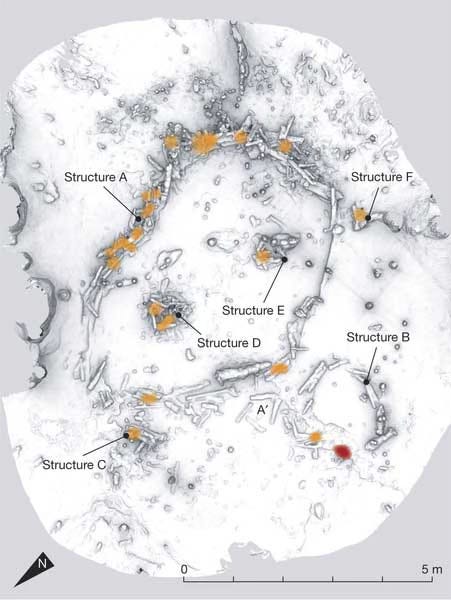
Three hundred thirty-six meters from the entrance, explorers noticed that the floor of the cave holds a series of circular structures made from broken stalagmites. More than 400 stalagmites were broken, moved, and piled into rings on the cave floor. Calcite had formed upon many parts of these structures after they were built, which enabled Jaubert and coworkers to use uranium-thorium to see how long ago they were built. The result was a minimum of 176.5 ± 2.1 ka. This was a time period when early Neanderthals inhabited western Europe, long before the arrival of any modern humans.
Upon some of those rings—sitting in a few cases right on top of stalagmites—are reddened or blackened “speleofacts”, objects interpreted as evidence of fire. Some fragments of burned bone and an area of “char” in one of the structures suggest that the makers of these structures had built and manipulated fires here, deep in the cave.
Last month, research led by Kim Génuite provided some new evidence about the use of Bruniquel Cave. By investigating the geology of the cave entrance, they have established a timeline for the opening and closure of the cave system and its use by early Neanderthals. Their work shows that the cave became closed sometime before 142.9 ± 1.3 ka, and likely was closed by gradual rockfall corresponding to the cold period of Marine Isotope Stage 6.
This new information corroborates the earlier findings. Early Neanderthals walked into this cave, went three football fields into the earth, created 15-foot-wide bubbles of rock, lit and tended small fires upon them. Then they left. Tens of thousands of years later, sliding and falling rock closed the cave, sealing in the evidence for more than 140 millennia.
Without a trace
I wrote about Bruniquel in 2016 when Jaubert and coworkers first established the age of the structures. At the time the site stood out as an outlier in many ways.
Little evidence was known in 2016 of any hominin-made structures anywhere as early as 170,000 years ago. Hominin access into deep caves at this geological age was not well known outside of the Sima de los Huesos site and the Rising Star cave system of South Africa. There were in 2016 no small number of archaeologists who doubted that Neanderthals ever had reliable use of fire.
Bruniquel combines all these things: fires upon structures built in a deep cave, all long before any direct evidence of modern humans in the region.
The structures were an enigma. The floor of the cave looks like someone tossed stones into a pool that suddenly froze, but the rings weigh hundreds of kilograms. No other hominin-made markings exist within the cave system. There is no evidence of a living floor or occupation area, and no stone tools or artifacts whatsoever. There are no hominin bones or physical remains. Whoever made these rings on the floor, they came in, broke and moved tons of speleothems, tended small fires in ways that heated and discolored many of the stones, and left no other trace.
When I last wrote about Bruniquel, I didn’t yet know much about the backstory of the discovery. That’s a sign of how the site had become a footnote to 1990s-era archaeology. The cavers and scientists who first entered the cave noticed the stalagmite rings and obtained an AMS radiocarbon age on burnt bone of >47.6 ka BP. As noted in the subsequent work by Jaubert and collaborators, any date above 45,000 years ago suggested that the site was earlier than the Upper Paleolithic, but at the very edge of the capabilities of the method it could not be taken as real. In the 1990s, archaeologists were primed to doubt any cultural capabilities of the Neanderthals.
Little could anyone have suspected that these structures are actually more than 170,000 years old. If not for Jaubert and coworkers who revisited the site starting in 2013, the site might remain a footnote today. Looking back, it’s striking to me how many other footnotes from the 1990s are left, waiting for someone to re-examine them with today’s approaches.
Fire
In earlier eras, archaeologists often noted discolored bone, blackened or reddened stone, and dark chunks of organic material as possible charcoal. That’s exactly the kind of evidence that Bruniquel presented, localized into small areas on the structures themselves.
But by the early 2000s Paleolithic archaeologists were experiencing a wave of skepticism about the firemaking capabilities of Neanderthals, and by extension all early humans. Too often blackened bone had turned out to be not burned, instead permeated by black or reddish chemicals like manganese and iron oxides. Without dense concentrations of burned material and ash, many archaeologists were willing to dismiss even genuine burned bone as the product of accidental or natural fires, carried into caves by erosional processes or chance.
Tiny blackened or reddened areas on speleothems, traces of blackened bones and unidentifiable “char”, of the kind found at Bruniquel, these kinds of traces were too easily dismissed.
The confirmation of the fire evidence at Bruniquel came from a method called “Raman spectrometry”, which was applied to three blackened fragments. Two of those fragments were embedded within calcite speleothems that showed ages consistent with the stalagmite structures. The results of the Raman spectrometry method showed bone fragments that had been heated to temperatures consistent with controlled fires. These gave the broader pattern of reddened and blackened speleothem evidence meaning as trace evidence of the manipulation of small fires. The situation is more akin to the votive offerings in a temple than the long-tended hearths that might have gotten more archaeological attention.
Over the last decade or more, I’ve felt a sea-change in the way that archaeologists examine ancient fire evidence. Forensic methods have become more standardized, as reflected by the Bruniquel results.
Later Neanderthals were masters of fire technology. Already by 2016 researchers had observed that the birch pitch used by Neanderthals at some sites would have required prolonged heating and sophisticated control of oxygen supply. Recently Juan Ochando and collaborators identified a specialized fire structure at Vanguard Cave, Gibraltar, that seems well-suited to exactly such tar production from resinous plants, in this case rockroses.
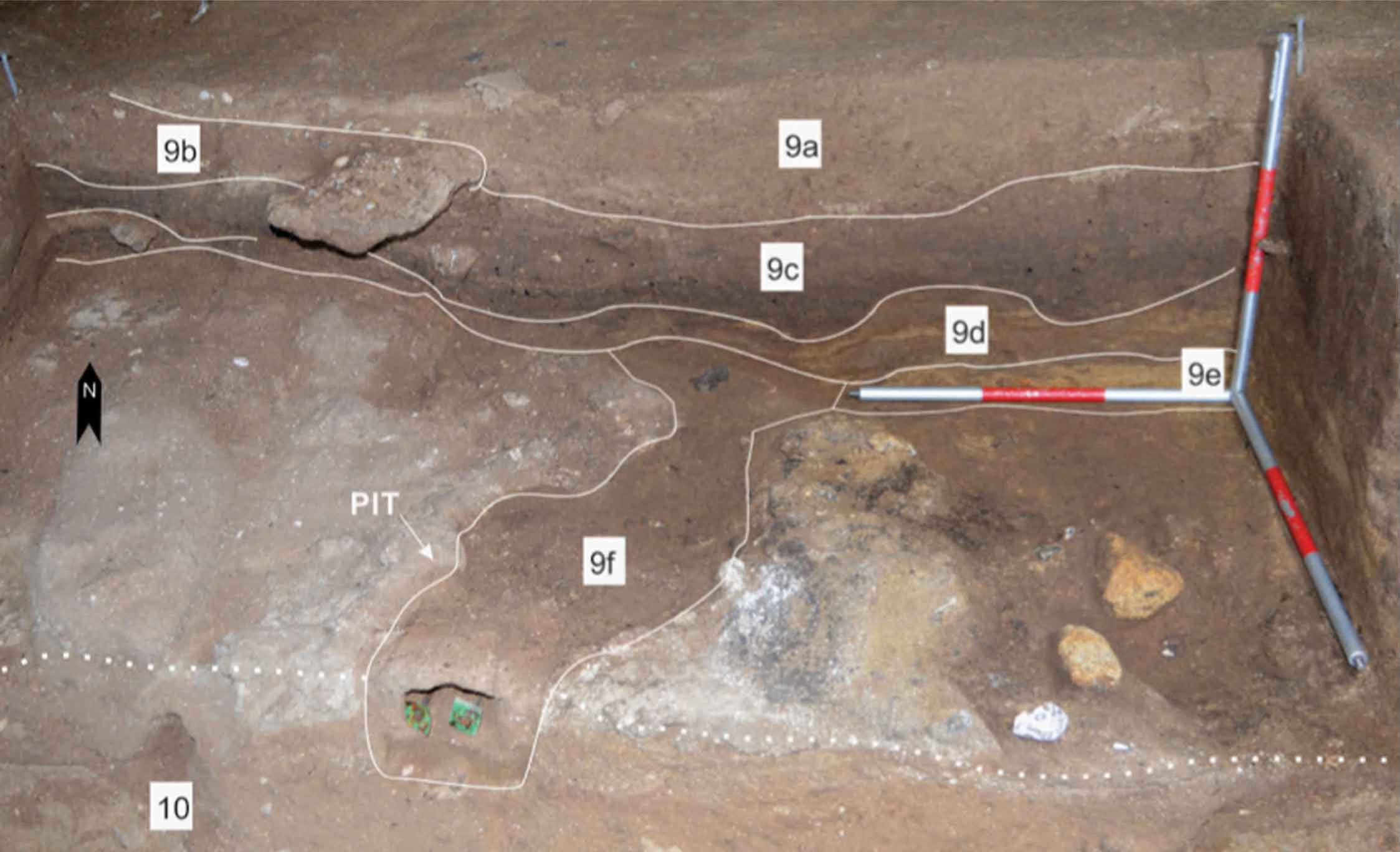
In past excavations, such occurrences might be noted as small hearths or possible cooking fires, but the structure and import of the evidence was certainly missed.
At the same time, the processual perspective on how fire fit into Neanderthal ways of living has also become richer and more capable of testing hypotheses. For example, in northern Europe the Neanderthals of the last interglacial, around 125,000 years ago, used fires to clear landscapes and generate favorable habitats that attracted grazing animals for hunting, as well as shifting plant foraging opportunities. Neanderthals were engineering the ecosystem at the Neumark-Nord site for more than 2000 years during this warm climate period, setting and using fire as part of their strategy.
Was it a stretch for the Neanderthals of Bruniquel to transport coals and create small fires for lighting, almost a quarter-mile into the rock? For people who lived by firelight any night they wished, it was surely routine.
Structures
All human societies all around the world have at least basic architecture. Shelters built from wood, brush, grass, or reeds are nearly ubiquitous. Many societies add other kinds of structures. Some are utilitarian: workbenches for crafting large wooden items, windbreaks and fire rings, hunting blinds, thorn bomas for keeping out predators. Others are ritual in purpose: mortuary stands for exposing corpses to the elements, astronomical markers or henges,
Great apes, too, all build structures. Every great ape sleeps in a nest of their own construction, generally built each night, and around 1–2% of their waking time is spent in construction.
It’s not too surprising that evidence for structures at early archaeological sites has been hard to find. Big rocks are not a primary component of most of the structures made by foraging peoples. But considering the evolutionary context, it is inevitable that many ancient groups would have built structures.
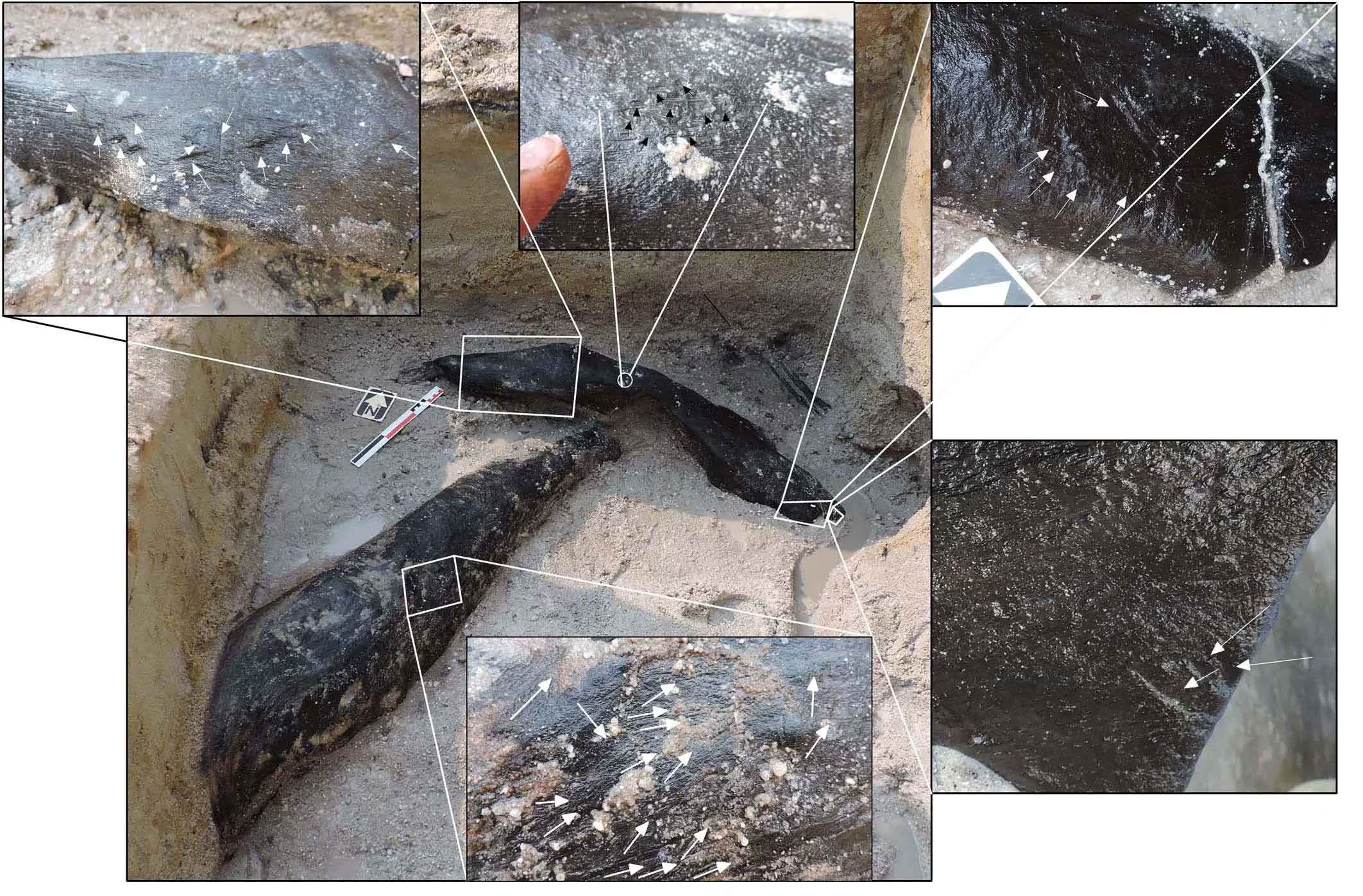
This is one reason why the preserved evidence of a large, carved log structure from Kalambo Falls, Zambia, was so striking when revealed in 2023. More than 470,000 years ago, hominins notched logs to interlock with each other and built some kind of low structure out of them. It’s not clear how large or extensive the finished structure may have been, nor is its purpose evident. In that way the Kalambo Falls evidence resembles the evidence from Bruniquel: Each is enigmatic in purpose, but each was clearly part of a tradition that was much broader than the single piece of evidence that survived.
Few ancient structures as evocative as the eight-meter circle built from mammoth bones at Molodova 1, Ukraine, more than 44,000 years ago. This evidence is old, first excavated in the 1950s and subject to repeated analysis and reanalysis by Soviet archaeologists and outsiders. Most recently, Laëtitia Demay and coworkers presented a review and summary of the evidence in 2012.
The stone tools associated with mammoth butchery at this site are Mousterian, and combined with the date cause archaeologists to attribute this site to Neanderthals. The broad circle contains several ancient fireplaces, cutmarked bones of red deer and bison, a cache of red ochre, and stone tools.
Was this the base of a hut made from skins and wooden poles? Was it the base of a windbreak or hunting blind? Or did the Neanderthals who used this site merely kick and shove mammoth bones out of the way of their campsite, making a circle as an accidental side effect? Aside from the first hypothesis, these ideas were suggested by outside researchers reading the work, without direct familiarity with the site itself. Demay and coworkers emphasized that the site was used repeatedly, with remains of at least fifteen mammoths represented there. Hearths were built several times in the southern part of the bone circle, and there is much evidence for human activity within it. They interpret this as a domestic area of a long-term campsite, repeatedly used by the mammoth hunters.
Resetting expectations
One of my recurring areas of interest is the way that archaeologists dismiss or minimize the cultures of earlier human relatives. I’ve written that we need to replace a “Culture Last” way of looking at the evidence with a “Culture First” model. I keep pushing this concept because I’ve seen so many cases where evidence is published not at the time of its discovery, but only after someone else says the evidence should exist somewhere.
Bruniquel has a unique status in being used only for a very short time and closed to later access. In this limited sense, the site is the best possible case of preservation of ancient behavior.
A decade after the work establishing the age of the Bruniquel evidence, discussion of fire evidence has shifted quite strongly. Scientific discussion of building of shelters and other structures has shifted much less. The Bruniquel evidence of structures is often mentioned in other recent research, and it seems that other researchers struggle to apply the evidence of building outside the context of shelter or windbreaks. Clearly much more work remains to integrate an understanding of built environments into the early archaeological record.
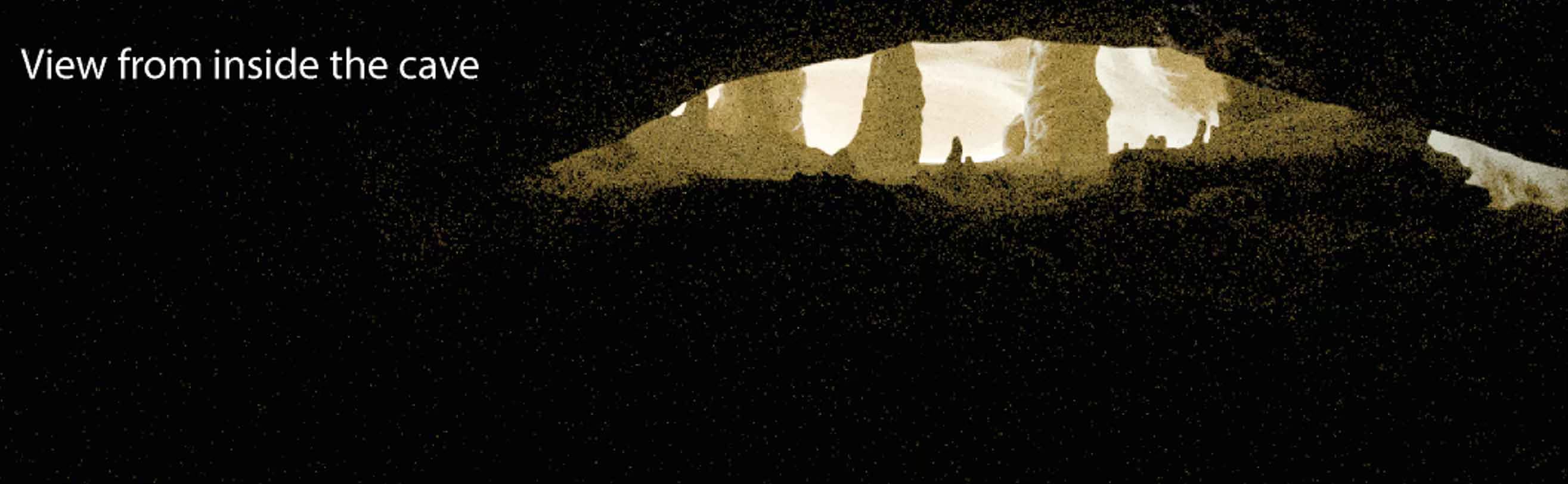
The new work on the closure of Bruniquel’s entrance has some fascinating elements. At the time the site was used, the rockshelter entrance stretched fairly widely, with large speleothem pillars interrupting the view. Génuite and coworkers present a view of the cave mouth from inside, as it would have been for the Neanderthals 170,000 years ago in the site.
I see it as a metaphor. How little we know of the world of these Neanderthals, outside the cave where they left those circles of stone.
References
Barham, L., Duller, G. a. T., Candy, I., Scott, C., Cartwright, C. R., Peterson, J. R., Kabukcu, C., Chapot, M. S., Melia, F., Rots, V., George, N., Taipale, N., Gethin, P., & Nkombwe, P. (2023). Evidence for the earliest structural use of wood at least 476,000 years ago. Nature, 622(7981), 107–111. https://doi.org/10.1038/s41586-023-06557-9
Demay, L., Péan, S., & Patou-Mathis, M. (2012). Mammoths used as food and building resources by Neanderthals: Zooarchaeological study applied to layer 4, Molodova I (Ukraine). Quaternary International, 276–277, 212–226. https://doi.org/10.1016/j.quaint.2011.11.019
Gao, X., Zhang, S., Zhang, Y., & Chen, F. (2017). Evidence of Hominin Use and Maintenance of Fire at Zhoukoudian. Current Anthropology, 58(S16), S267–S277. https://doi.org/10.1086/692501
Génuite, K., Verheyden, S., Camus, H., Burlet, C., Boudadi-Maligne, M., Bruxelles, L., Cheng, H., Cochard, D., Delaby, S., Fabre, E., Ferrier, C., Lézin, C., Ledoux, L., Medina-Alcaide, M.-A., Mora, P., Muth, X., Pélissié, T., Soulier, D., Xue, J., & Jaubert, J. (2026). The evolution of the cave’s entrance of Bruniquel and consequences for its accessibility by early Homo neanderthalensis. Quaternary Science Reviews, 377, 109866. https://doi.org/10.1016/j.quascirev.2026.109866
Huang, C., Li, J., & Gao, X. (2022). Evidence of Fire Use by Homo erectus pekinensis: An XRD Study of Archaeological Bones From Zhoukoudian Locality 1, China. Frontiers in Earth Science, 9, 811319. https://doi.org/10.3389/feart.2021.811319
Jaubert, J., Verheyden, S., Genty, D., Soulier, M., Cheng, H., Blamart, D., Burlet, C., Camus, H., Delaby, S., Deldicque, D., Edwards, R. L., Ferrier, C., Lacrampe-Cuyaubère, F., Lévêque, F., Maksud, F., Mora, P., Muth, X., Régnier, É., Rouzaud, J.-N., & Santos, F. (2016). Early Neanderthal constructions deep in Bruniquel Cave in southwestern France. Nature, 534(7605), 111–114. https://doi.org/10.1038/nature18291
Ochando, J., Jiménez-Espejo, F. J., Giles-Guzmán, F., Neto de Carvalho, C., Carrión, J. S., Muñiz, F., Rubiales, J. M., Cura, P., Belo, J., Finlayson, S., Martrat, B., van Drooge, B. L., Jiménez-Moreno, G., García-Alix, A., Lozano Rodríguez, J. A., Albert, R. M., Ohkouchi, N., Ogawa, N., Suga, H., … Finlayson, C. (2024). A Neanderthal’s specialised burning structure compatible with tar obtention. Quaternary Science Reviews, 346, 109025. https://doi.org/10.1016/j.quascirev.2024.109025
Roebroeks, W., MacDonald, K., Scherjon, F., Bakels, C., Kindler, L., Nikulina, A., Pop, E., & Gaudzinski-Windheuser, S. (2021). Landscape modification by Last Interglacial Neanderthals. Science Advances, 7(51), eabj5567. https://doi.org/10.1126/sciadv.abj5567
Rouzaud, F., Soulier, M., & Lignereux, Y. (1995). La grotte de Bruniquel. Spelunca. Bulletin, (60), 27-34.
Soressi, M. (2016). Neanderthals built underground. Nature, 534(7605), Article 7605. https://doi.org/10.1038/nature18440
Stepka, Z., Azuri, I., Horwitz, L. K., Chazan, M., & Natalio, F. (2022). Hidden signatures of early fire at Evron Quarry (1.0 to 0.8 Mya). Proceedings of the National Academy of Sciences, 119(25), e2123439119. https://doi.org/10.1073/pnas.2123439119
Even more than "Culture First" over "Culture Last", we need to think of earlier humans as smart people. In the 19th and 20th centuries, the perception was that of early people were stupid brutes. As more evidence piles up, we see these people were creative and smart, maximizing their ability to survive and often flourish in changing environments. I know I could never survive in the Paleolithic, unless I had an excellent education from childhood. If we think of Neandertals and Denisovans as races separate from our current single Human race, then a presumption of ignorance or stupidity is racism. In our current world, we have people doing brilliant things and those doing stupid things. No doubt, this is a common theme across our shared history as humans.
How would the Neanderthal have lighted their way into the deep recesses of the cave? Are there evidence of torches?