

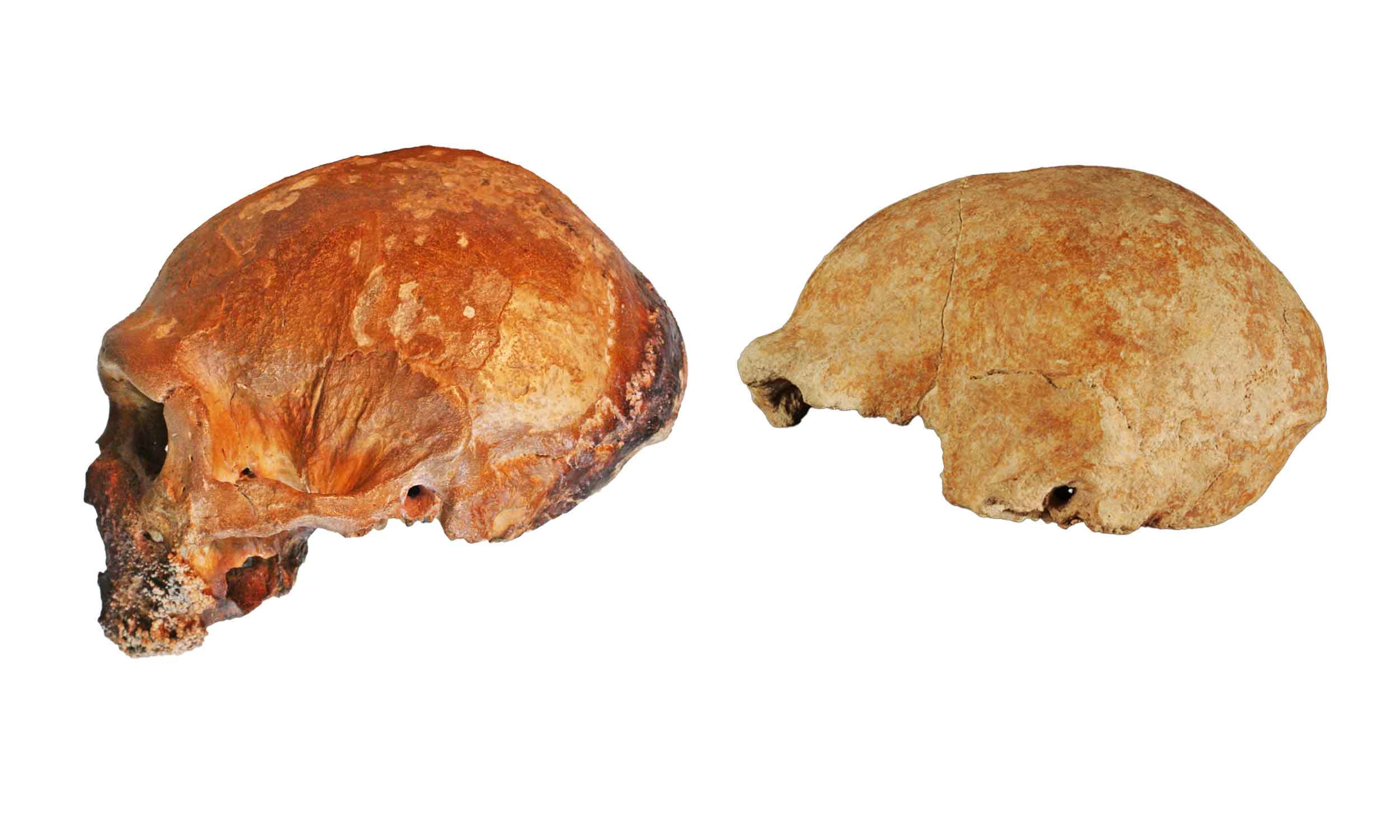
On February 24, 1939, Antonio Borrani was digging to level the ground and extract stone for the expansion of the Villa Guattari. Alessandro Guattari was expanding his family’s hotel at its favorable beachside site at the edge of San Felice Circeo. To the west stretched the massif of Monte Circeo, its rocky flank dotted with caves where it juts into the Tyrrhenian Sea. The picks had already turned up bones. On this day, the digging uncovered a hole.
Guattari climbed through the hole into a narrow winding tunnel, its floor littered with bones. In a small chamber was a skull, upside-down and surrounded by a circle of stones.
The next day brought the paleontologist Alberto Carlo Blanc. He recognized bones of ancient deer and aurochsen. It was clear the cave had been sealed for a very long time. The skull he recognized also. It belonged to a Neanderthal.
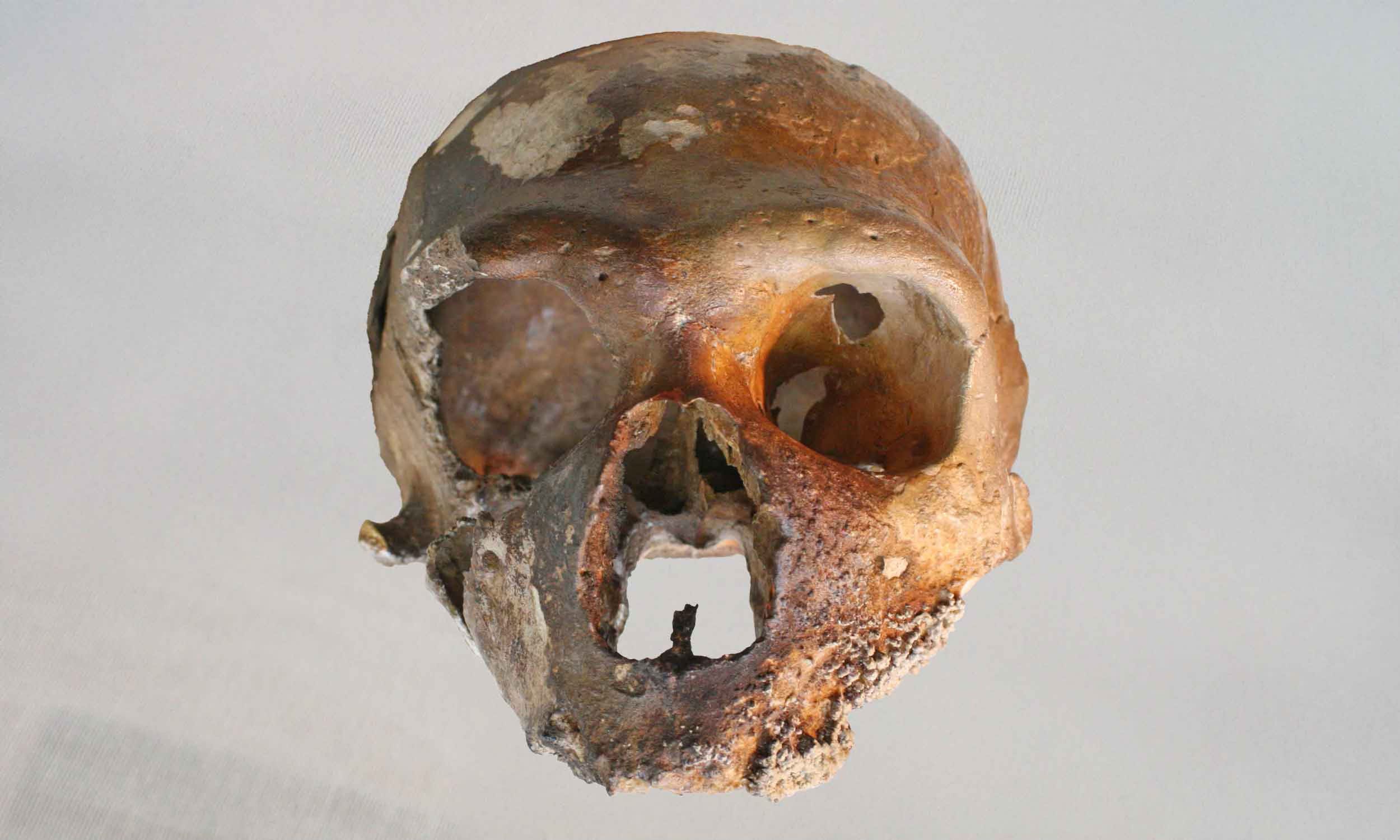
Blanc thought the cave was a ritual site. The skull and stones he interpreted as intentionally placed. The Neanderthal skull and jaw were studied by the anthropologist Sergio Sergi in Rome, who interpreted the damaged cranial base as a result of intentional brain removal. After the war, Blanc worked with the archaeologist Luigi Cardini to excavate parts of the site. In the hardened breccia deposits just outside the cave’s entrance their work uncovered stone tools belonging to a local Mousterian tradition, as well as a second Neanderthal jaw.
Yet aside from the skull there was little evidence of Neanderthals inside the cave. On the other hand, there was a lot of evidence of hyenas, from the marks on the bones to the dozens of coprolites. Later research concluded that the Neanderthal individual and other animals within the cave had been hyena prey.
Ever since the discovery the cave has been a heritage site and tourist attraction, with Blanc and Cardini’s excavations expanded into small walkway. In 2018, the local archaeological authority started a small project to renovate access, cleaning the old trenches. When this work uncovered intact archaeological deposits, a new project led by Mario Federico Rolfo aimed to re-evaluate the cave.
Over the last year, several papers describing new finds from Grotta Guattari have come out. These include two articles that present more than a dozen new fossils of Neanderthals.
Part of the new work unfolded within a small chamber where water collects into a pool during seasons of higher rainfall. This “Pond Chamber”, or Antro del Laghetto, was beyond the area with foot traffic and its deposits were sealed by a crust of calcite. Through this crust, they could see some bones.
As the archaeologists worked in this chamber, from 2019 to 2023, they uncovered an intact paleosurface, likely the same that had formed the floor of chamber where the skull was found in 1939, Antro dell’Uomo. At a low point in the chamber, they found a dense array of animal and Neanderthal bones intermingled.
The surfaces of many of the bones have carnivore damage. An article led by Ivana Fiore last year described the overall condition of the assemblage with close analysis of carnivore damage and possible cutmarks. The bones from the Antro del Laghetto show how hyenas gnawed bone ends, and selectively transported limbs, skulls, and ribcages into the cave. They found many small bone fragments that had been intensively chewed by juvenile hyenas. These so-called “nibbling sticks” were basically hyena teething toys.
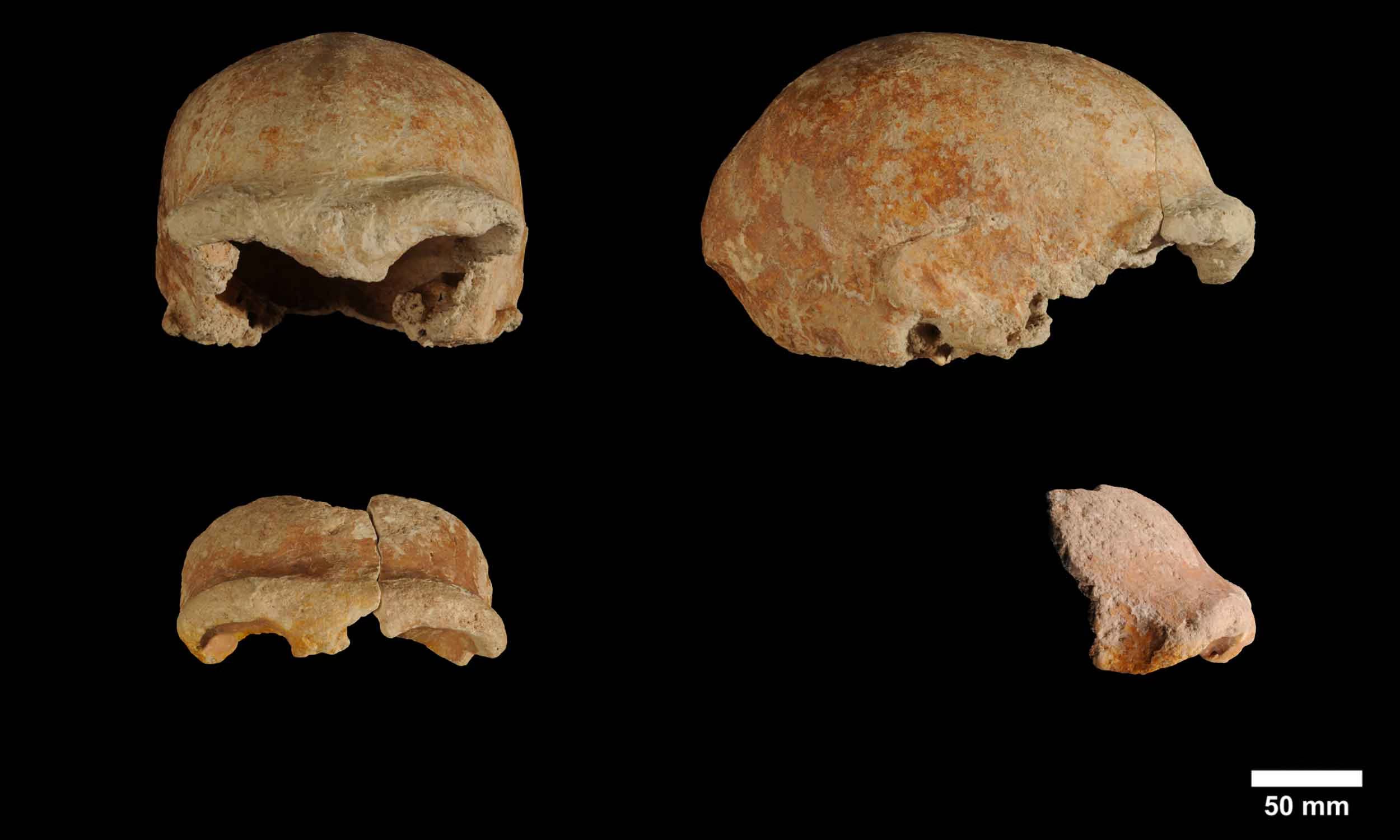
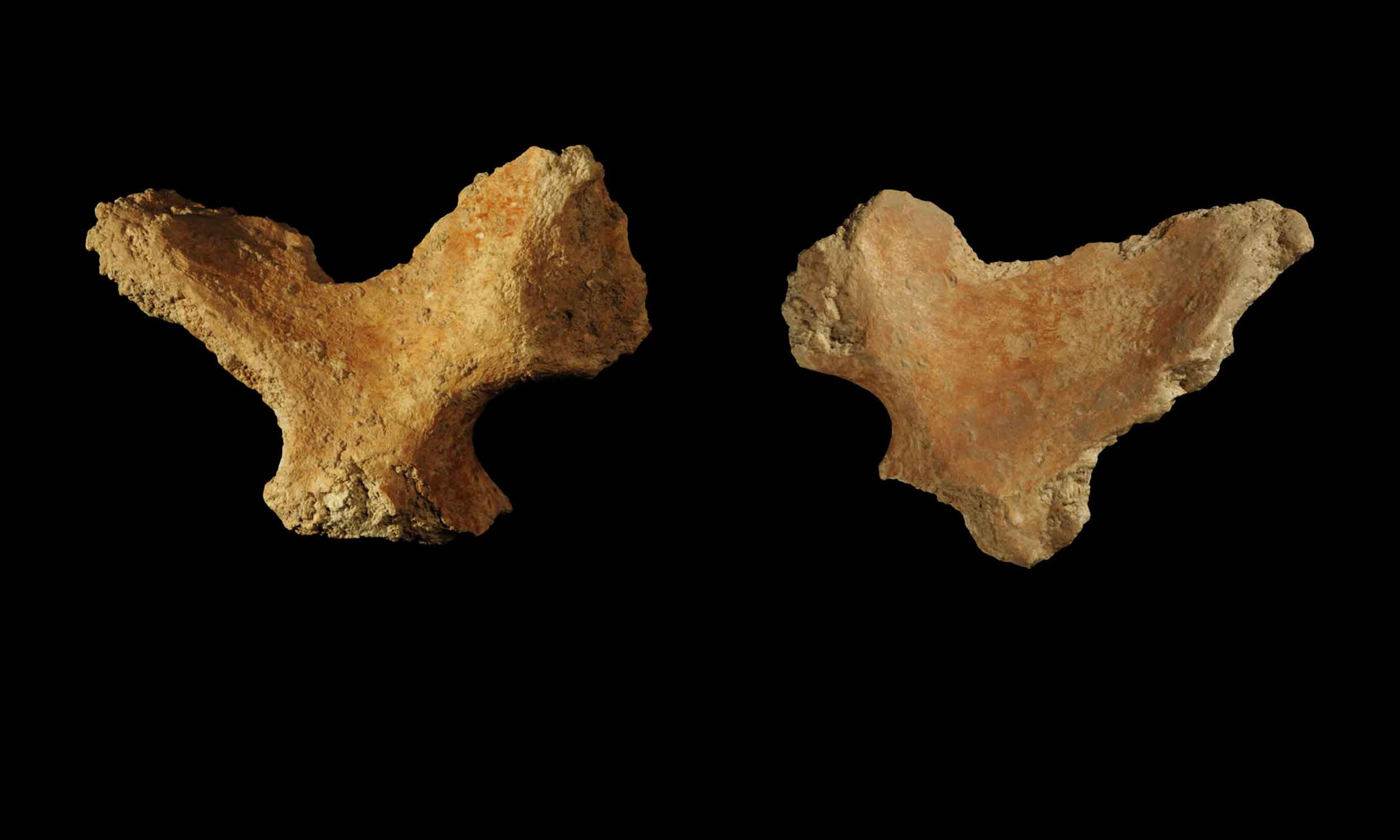
The Neanderthal bones in this area include parts of at least three skulls, a partial femur, partial radius, left and right hip bones, and several teeth.
The team also undertook excavations in the rockshelter area outside the cave entrance, to better understand the layers found there during Blanc’s work in the 1950s. This area was long assumed to be connected with the deposits within the cave itself. But the system of excavation and dating has shown that these areas are very different in time. The hyena den inside the cave is somewhere around 65,000 years old, but the external deposits are much older, estimated roughly 125,000 to 110,000 years ago.
Unlike the internal bone assemblage, the external deposit includes abundant cultural material. Animal bones in this area have cutmarks and intentional impact fractures, which are diagnostic of human processing for meat and marrow. Many of these bones are burnt. Fiore and coworkers describe a piece of red deer tibia from this area, with markings similar to those found on bone retouchers used by knappers making stone tools.
Where do these fossils fit into Neanderthal evolution?
The fossils from the external shelter area are too few to consider in much detail. Previous work had shown some differences in form between the Guattari 2 mandible from within the cave, and the Guattari 3 partial mandible from outside it. The new teeth from outside the cave may add some information when full analyses of their internal structure are carried out.
The age of these fossils at or just after the last interglacial makes them a very interesting comparison for other fossils from this time. These include the large sample of Neanderthals from Krapina, Croatia, as well as the fossil child from Scladina, Belgium, and the Neanderthals from Moula-Guercy, France. The last interglacial was a time of very mild climate across Europe, with Neanderthals expanding their presence into the northern parts of Germany, France, and Great Britain. Two thousand kilometers to the east, Neanderthals of this era encountered early populations with African ancestry. These people were culturally similar in many ways. Every fossil from this interesting time may provide valuable clues about their interactions.
The fossils from inside Grotta Guattari represent a much later time, when long periods of cold spurred the growth of great ice sheets in the northernmost parts of Europe. The sea level was 70 to 80 meters lower than today, and a broad coastal plain stretched from Monte Circeo away from the site, rich grazing for aurochsen and other herbivores. This time period, part of Marine Isotope Stage 4 (MIS4), was a time of contraction of Neanderthal populations into the parts of southern Europe that remained temperate, including the Italian peninsula.
The Guattari 1 skull found in 1939 has long been considered a part of the “classic” Neanderthal population. Its shape and many details resemble fossils from southern France like the La Ferrassie 1 skull, or the “old man” of La Chapelle-aux-Saints.
The shape of the new Guattari 17 skull, most complete of the new finds, fits generally into this pattern also with its rounded, en bombe shape when seen from behind, and its flattened profile where the occipital and parietal bones meet. This skull as well as the Guattari 11 occipital bone share a small depression above the area where the neck muscles join the skull, known as a suprainiac fossa. A hallmark of Neanderthal skulls, this is thought to be a side effect of development.
Still, across many of the finds are features that are a bit out of the ordinary for the Neanderthal population of this time. Some of those are detailed in a new article by Mauro Rubini and coworkers, who propose broader networks of gene flow—even as far as Southeast Asia—might explain the variability of some of the Guattari fossils. On the other hand, the migration of populations from north to south, and the contracting population size, may have caused different patterns of evolutionary change in Neanderthal populations in Italy from France, Spain, and the Levant.
Testing those possibilities may require DNA data. Sperduti and coworkers end their brief description of the fossils by noting the many kinds of studies that are underway. They mention ancient DNA and also proteomics, histological, and isotopic studies, as well as the broader comparison of the morphology of the fossils with other hominins. What they describe as a “multi-methodological approach” to the site is increasingly the pattern of today’s paleoanthropological research.
For readers who would like to see the cave and excavation context, the Italian Ministry of Culture produced a video in 2022 showing the excavations that were still ongoing at that time. The voiceover and interviews are in Italian, but even for non-Italian speakers it is a great video for its overview of the work.
References
Di Stefano, G., Ceruleo, P., Ferracci, A., Fiorillo, A., Fiore, I., Gatta, M., Rolfo, M. F., Salari, L., & Petronio, C. (2025). The Late Pleistocene Cervus elaphus from Grotta Guattari (San Felice Circeo, Central Italy). Geobios, S0016699525000841. https://doi.org/10.1016/j.geobios.2025.09.002
Fiore, I., Ceruleo, P., Di Mario, F., Ferracci, A., Gatta, M., Petronio, C., Salari, L., & Rolfo, M. F. (2025). New excavations at Grotta Guattari. Humans and carnivores: Prey and bone surface modifications. Archaeofauna, 34(1). https://doi.org/10.15366/archaeofauna2025.34.1.038
Piperno, M., & Giacobini, G. (1991). A taphonomic study of the paleosurface of Guattari Cave (Monte Circeo, Latina, Italy). Quaternaria Nova, 1990–91(1), 143–161.
Rubini, M., Zaio, P., Spanó, F., Cognigni, F., Rossi, M., Gozzi, A., & Di Mario, F. (2026). Hominin Variability and Evolutionary Relationships at Guattari Cave During the Middle and Late Pleistocene (San Felice Circeo, Latina, Italy). Genes, 17(2), 132. https://doi.org/10.3390/genes17020132
Salari, L., Gatta, M., Fiorillo, A., Fiore, I., Ceruleo, P., Di Stefano, G., Ferracci, A., Rolfo, M. F., & Petronio, C. (2025). The Late Pleistocene cave hyena from Grotta Guattari (San Felice Circeo, central Italy). Historical Biology, 1–21. https://doi.org/10.1080/08912963.2025.2526019
Sperduti, A., Alhaique, F., Borrani, A., Candilio, F., Bondioli, L., Di Vincenzo, F., Ferracci, A., Gatta, M., Piccirilli, E., Benazzi, S., Caramelli, D., Nava, A., Rolfo, M. F., & Manzi, G. (2026). The New Neanderthal Fossil Sample from Grotta Guattari, Monte Circeo (Italy): A Preliminary Synopsis. PaleoAnthropology, 2026(1), 99–121. https://doi.org/10.48738/2026.iss1.3951
Stiner, M. C. (1991). The Faunal Remains From Grotta Guattari: A Taphonomic Perspective. Current Anthropology, 32(2), 103–117. https://doi.org/10.1086/203930
White, T. D., Toth, N., Chase, P. G., Clark, G. A., Conrad, N. J., Cook, J., d’Errico, F., Donahue, R. E., Gargett, R. H., Giacobini, G., Pike-Tay, A., & Turner, A. (1991). The Question of Ritual Cannibalism at Grotta Guattari [and Comments and Replies]. Current Anthropology, 32(2), 118–138. https://doi.org/10.1086/203931
John, I was listening to the most recent MeatEater podcast episode and at the end they seemed pretty exasperated because they can't seem to find a Neanderthal expert to interview on the podcast. They claim it's the first time they've put out a call for a scientist and never got a response. Steve is a hunter but has a background in literature and is pretty thoughtful.
I'm not affiliated with them but being a fan of their work and yours I figured I'd throw it out there. I'd love to here a conversation between you and the MeatEater crew. At 1:49:22 Steve talks about wanting someone to discuss Neanderthals with him https://www.themeateater.com/listen/meateater/ep-832
I find the physical and genetic differences between early Neanderthals like Denisova 5 and classic Neanderthals fascinating. These two populations from Grotta Guattari were further apart in time from each other than we are from the extinction of all Neanderthals. That is pretty mind-blowing!