

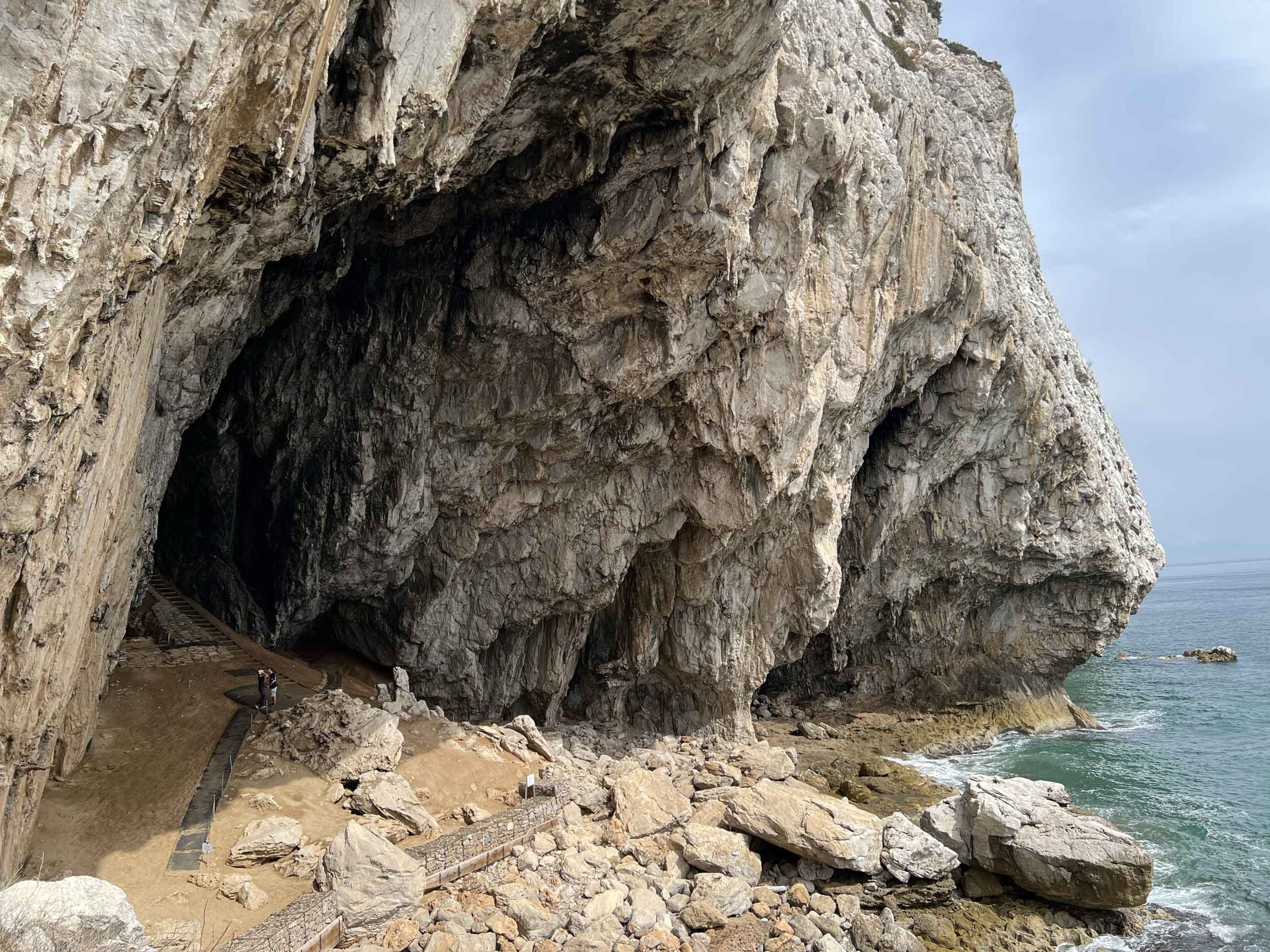
This month I had the honor of speaking at Calpe 2026, a conference in Gibraltar dedicated to the Neanderthals and their legacy. The famous Rock is riddled with caves and many of these have evidence for activity by Neanderthals. The history of discoveries there goes back more than 170 years, and is still developing with new research providing unparalleled evidence of ancient behavior.
Vanguard Cave is where some of that new evidence has emerged. Modern excavations of the site began in the mid-1990s, coordinated with work at Vanguard’s better-known sister site, Gorham’s Cave. Many archaeologists of the era were ready to take a fresh look at Neanderthal behavior. Gorham’s and Vanguard would provide a remarkable case study of Neanderthal exploitation of marine foods like limpets, mussels, and even marine mammals like dolphins.
The excavations at the site have continued over the years under the leadership of the Gibraltar Museum, director Clive Finlayson and a team of researchers including Geraldine Finlayson and their son, Stewart. Their work with many collaborators has illuminated previously underexplored behaviors including the systematic hunting of birds, use of feathers, and the sources of stone raw materials out on the present-day seafloor.
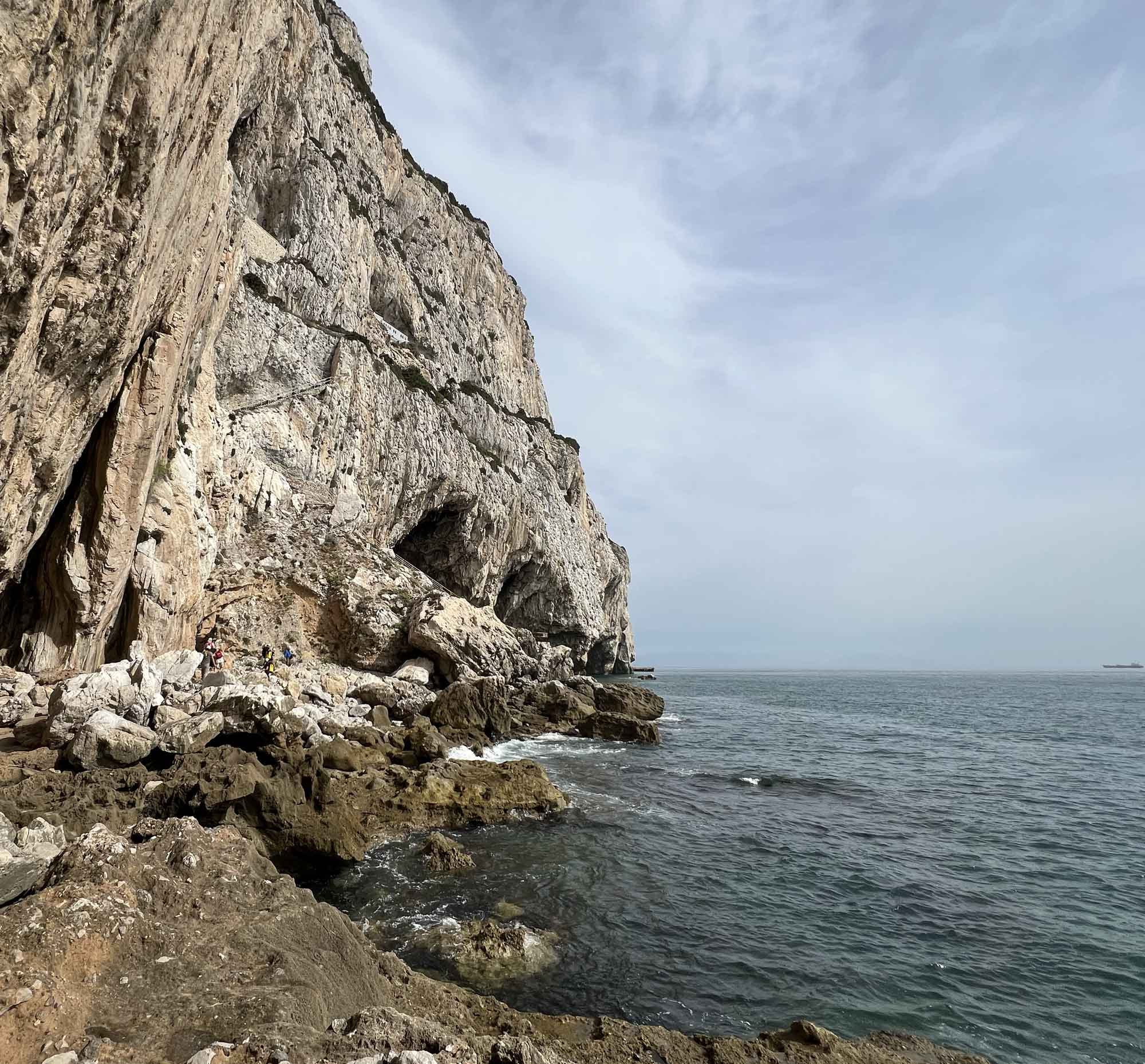
The setting of Vanguard Cave makes the story of marine resources a natural one. The cave mouth opens to the east, looking out onto the golden sunrise over the Mediterranean Sea. The blue light filters far back into the cave’s interior, enabling algae and a few bright green ferns to grow far up into its inner reaches. The ceiling peaks like a Gothic arch.
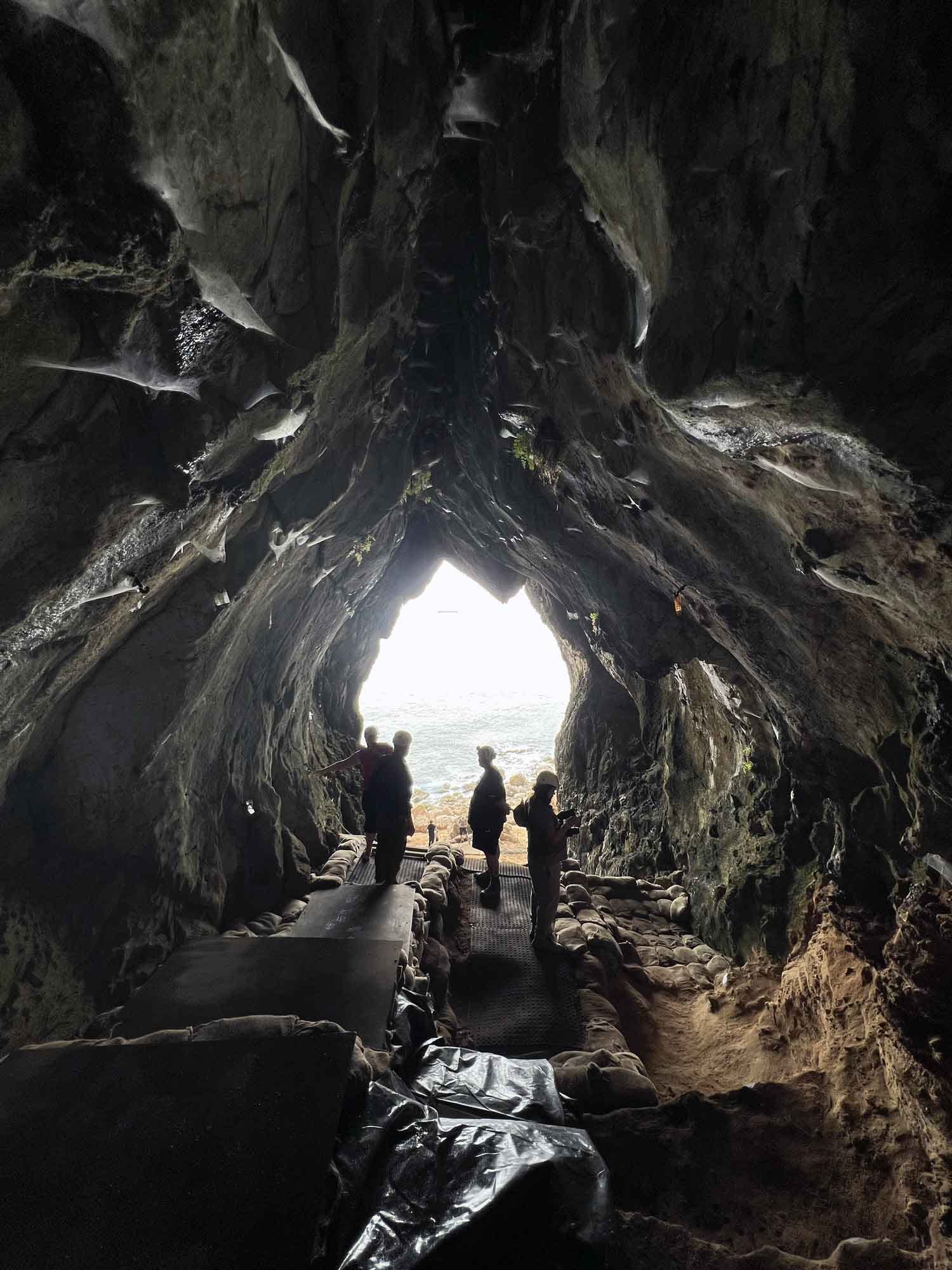
The Rock itself is formed primarily from Jurassic limestone that has inverted stratigraphy, folded during the Miocene epoch by the collision of African and Eurasian plates. The last quarter million years has been a time of gradual uplift of the Rock. Vanguard formed by karstic dissolution of the limestone and wave action opened it out to the east. What was the highstand of sea level around 250,000 years ago has lived upward dozens of meters, so that the floor of Vanguard is well above today’s sea level. Yet during the last glaciation, the sea level ran as much as 120 meters below today’s value. Where today the sea comes up within 30 meters of the cave’s mouth, during most of the time the Neanderthals knew this cave it looked out across up to 3 kilometers of coastal plain.
The sediments within Vanguard are a layer cake of tan sands and reddish Sahara dust, blown into the cave over a hundred thousand years or more by the easterly Levante wind. The Levante carries moist air from the Mediterranean eastward, pulled westwad by low pressure over the Gulf of Cadíz. As it rises up over the massive Rock, this moist air condenses into a cloud plume trailing off Gibraltar’s 400-meter summit. During the Pleistocene, the wind brought dust and sand against the Rock’s eastern cliff faces, leaving a great dune.
A smaller version of this dune-building filled much of Vanguard itself. As a result, the present floor of the cave forms a steep slope upward into the darkness of the interior. Near the mouth of the cave, the ceiling is more than twenty meters up; toward the back it closes against the dune. As the sand blew in from time to time, a thin layer might cover a single hearth and the surrounding scatter of artifacts and bone. Potentially hundreds of these episodes built up over time. Each is a slice of Neanderthal life at high resolution.
While the site has produced remarkable evidence of the behavior of Neanderthals, none of their skeletal remains or teeth have been found there yet. The famous Gibraltar Neanderthal remains come from two sites: Forbes Quarry and Devil’s Tower, both near the northern face of the Rock where quarrying activity for building and land reclamation was underway through the nineteenth and early twentieth century. Neither of these sites still exist today. From Gorham’s Cave, a single tooth of a Neanderthal child has been found in the excavations of the last thirty years.
Still, Vanguard has produced totally unique evidence. In 2024, Juan Ochando and collaborators described a small pit feature within a hearth that is the first-known specialized fire structure for extracting pitch or tar from plant resin. The Neanderthals used these sticky materials as adhesives. These substances take special preparation under controlled heat and low oxygen so that they do not combust. It’s a tricky procedure.
Traces of pitch and tar have been found on the base of many stone points from various sites across Europe. In some cases the adhesive helped to haft the points onto wooden handles or spears. In other cases, lumps of sticky material were molded directly onto a stone tool to provide a grip for the hand, possibly in some cases with leather, in others without.
Tar and pitch would have had many other uses, less visible than stone artifacts. Modern foraging people have used these substances for firestarting, for waterproofing, and for tanning hides. They also have used these substances medicinally, chewing birch pitch like a gum and applying pitch and tar as antiseptics to wounds, together with other plant materials.
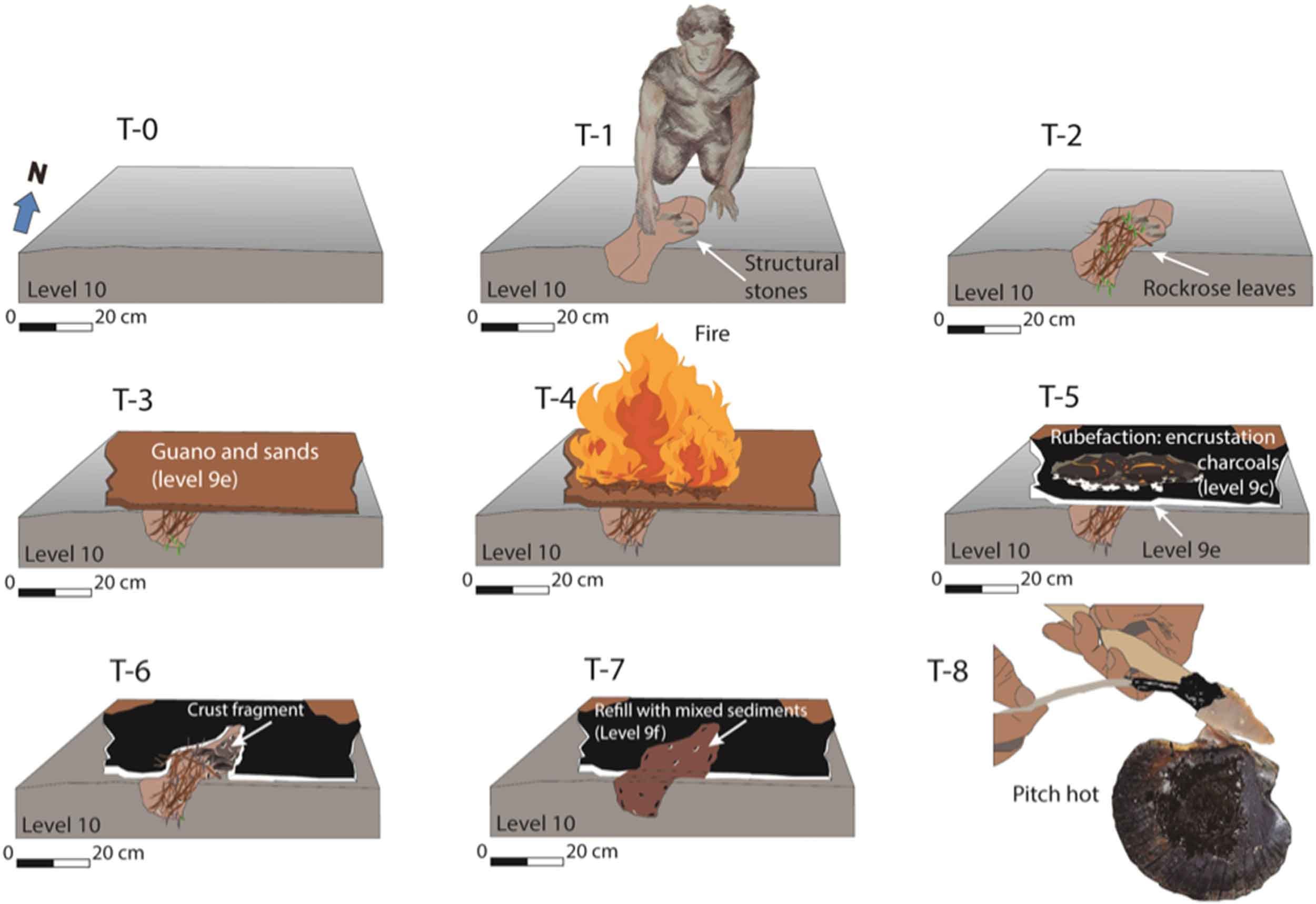
In the Vanguard example, the team found evidence that the resin-rich gum rockrose (Cistus ladanifer) was processed by heating beneath a layer of sand and guano, extracting tar without burning the plant material. They carried out experiments outside the cave to recreate the entire process, showing that it really works. In Vanguard this structure dates to sometime between 68,000 and 61,000 years ago.
I first visited Vanguard in 2012, and in 2013 I filmed interviews in the site with Clive, Geraldine, and their collaborator Darren Fa. I visited again several times over the years. One thing that always strikes me about long-term excavations is how unexpected discoveries can result from a systematic approach, planning, and remaining open to possibility.
In Vanguard Cave nothing has been more rewarding than seeing the payoff of excavation near the back of the cave. Knowing that the cave was partially filled by windblown sediment, the team working there always suspected it was possible that the cave goes much further back. They wondered whether excavating the highest deposits near the ceiling might break through to deeper sections of the cave.
During the 2021 excavation season, they found their answer. The team exposed an opening that led into a deeper chamber. Inside were traces of carnivore activity, remains of lynx, hyena, and vultures, and scratch marks upon the walls. They also found hints of human activity, including an intact shell carried into this deep part of the cave. Their estimates of the age of the deposits suggest that this chamber has been sealed for more than 40,000 years.
Further scientific exploration of this intact chamber has been underway for the last five years. Aside from the initial press accounts from 2021, no additional details of subsequent research have yet been published.
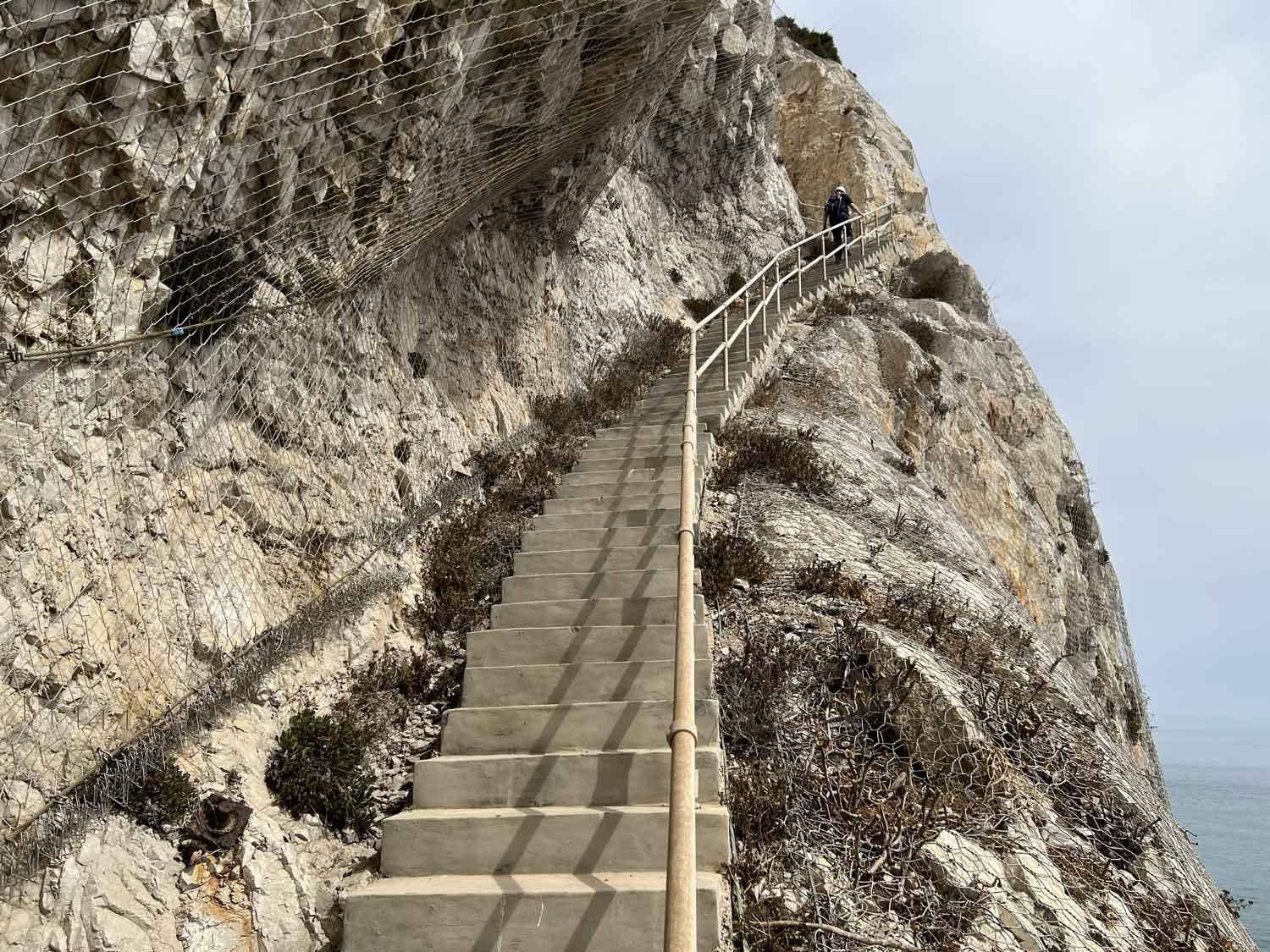
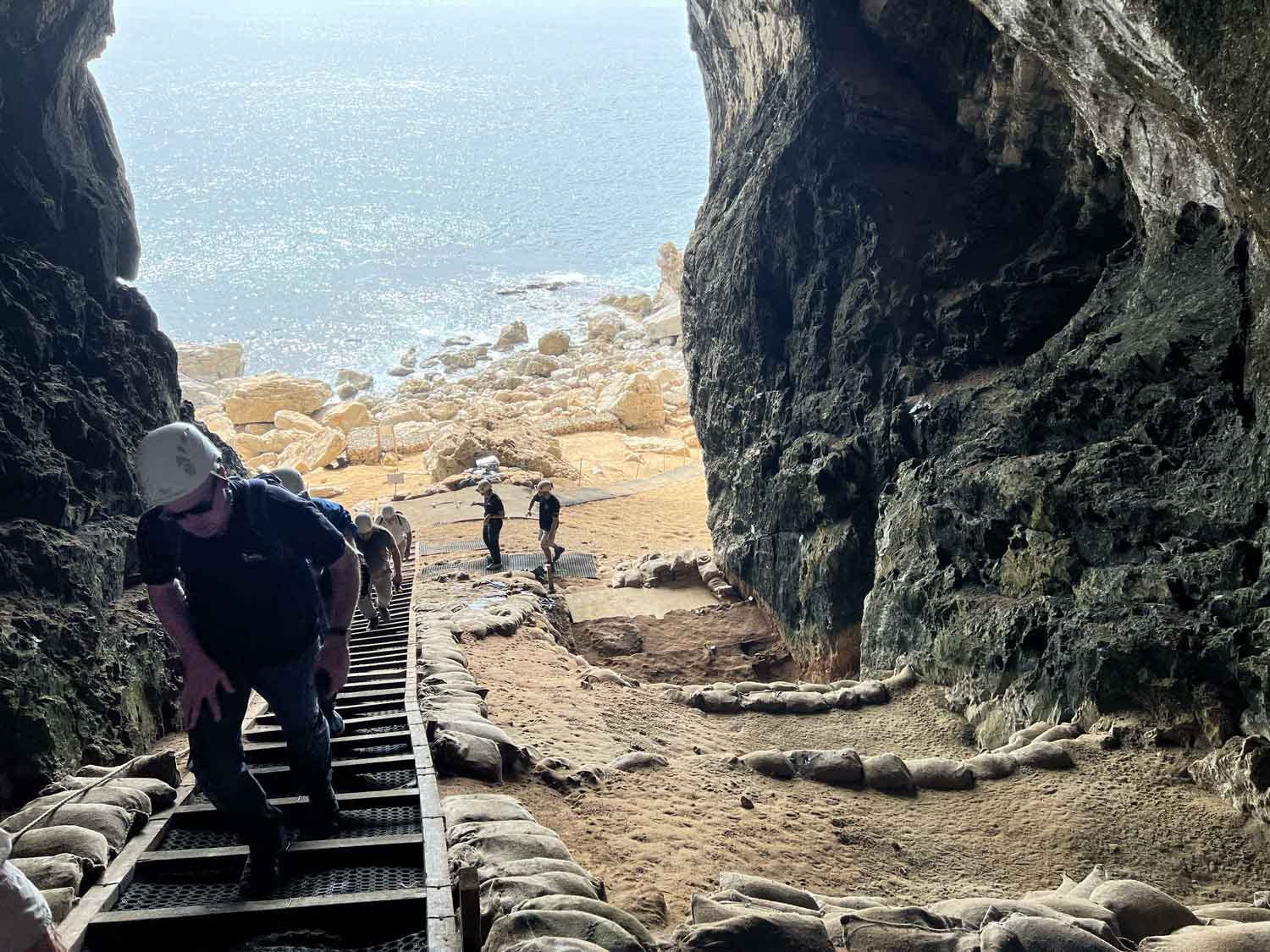
Vanguard Cave today is accessed by climbing down more than 300 concrete steps from the level of the main road above the site. That means of course that the return trip is a long climb back up. I paused on the stairs in a few places to consider how they compare to the depth of sites where I work in South Africa.
Gorham’s and Vanguard Caves were enrolled with UNESCO as part of a World Heritage Site in 2016. Access to the sites is primarily for excavation teams and their collaborators. To protect the delicate archaeological contexts, only a small number of visitors from the public are allowed each year. However, for public visitors to the World Heritage Site, there is a viewing platform accessible from the main road above the site, with interpretive signs and views of the caves and sea. The cave can also be viewed from the sea itself, with dolphin-watching boat tours available from Gibraltar city. Both ways of seeing the cave are a lot easier than climbing back up from the site afterward.
References
Ochando, J., Jiménez-Espejo, F. J., Giles-Guzmán, F., Neto de Carvalho, C., Carrión, J. S., Muñiz, F., Rubiales, J. M., Cura, P., Belo, J., Finlayson, S., Martrat, B., van Drooge, B. L., Jiménez-Moreno, G., García-Alix, A., Lozano Rodríguez, J. A., Albert, R. M., Ohkouchi, N., Ogawa, N., Suga, H., … Finlayson, C. (2024). A Neanderthal’s specialised burning structure compatible with tar obtention. Quaternary Science Reviews, 346, 109025. https://doi.org/10.1016/j.quascirev.2024.109025
Stringer, C. B., Finlayson, J. C., Barton, R. N. E., Fernández-Jalvo, Y., Cáceres, I., Sabin, R. C., Rhodes, E. J., Currant, A. P., Rodríguez-Vidal, J., Giles-Pacheco, F., & Riquelme-Cantal, J. A. (2008). Neanderthal exploitation of marine mammals in Gibraltar. Proceedings of the National Academy of Sciences, 105(38), 14319–14324. https://doi.org/10.1073/pnas.0805474105