

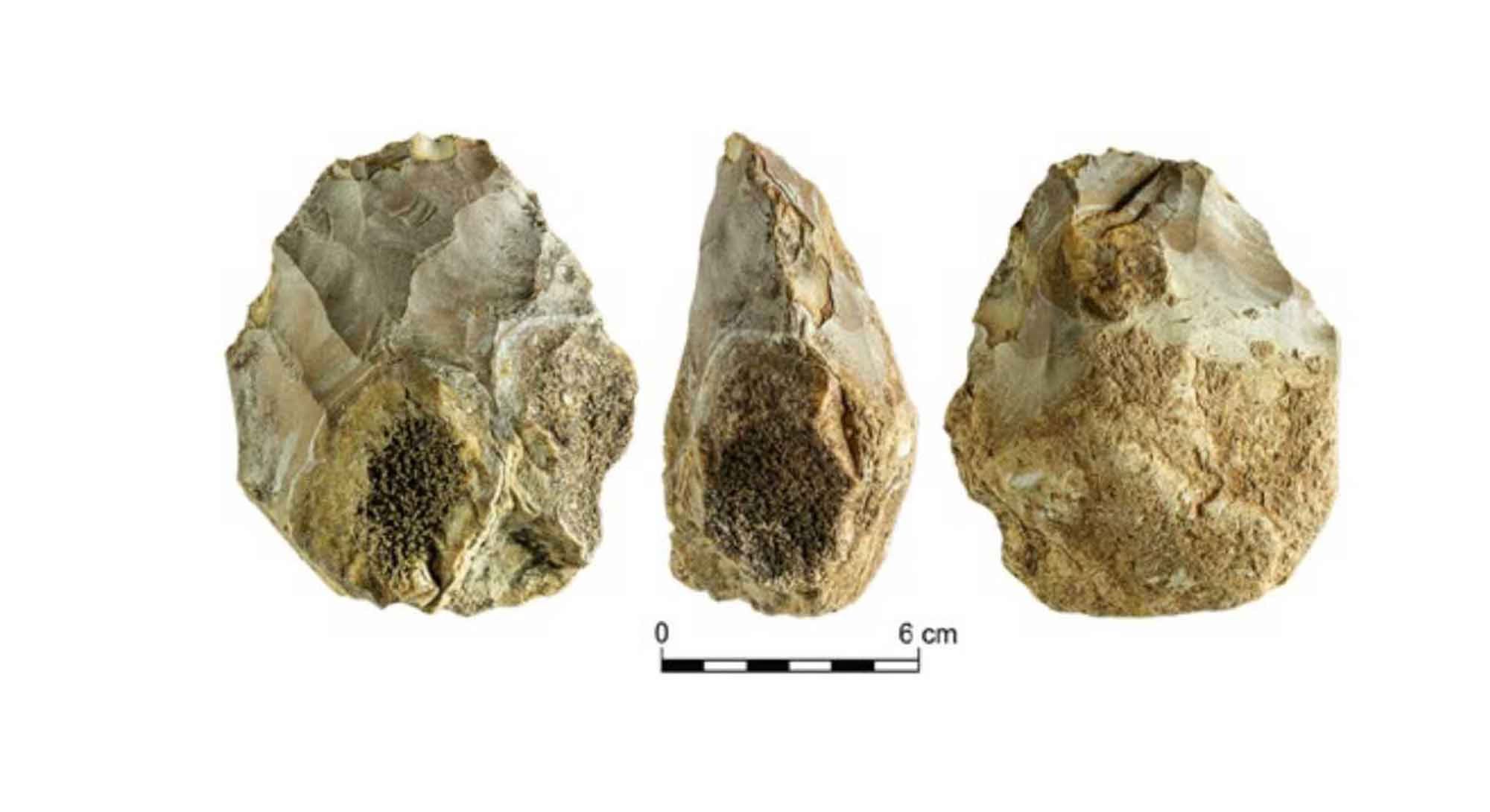
Earlier this month, Ran Barkai and Muataz Shalata published a new article describing fascinating Acheulean artifacts from the Sakhnin Valley of northern Israel. They describe handaxes made from geodes, handaxes with fossils on the cortex, handaxes with weird holes that look like tiny caves.
A handaxe is the ultimate stereotypical tool. It’s easy to imagine them all the same, again and again, minor variations on a global pattern. But the definition of a handaxe is really quite loose: almost any large tool flaked on both sides toward a teardrop-like shape might qualify. They became more stereotyped in some contexts, especially after around 400,000 years ago.
It was in that time that occasionally archaeologists find an anomaly. A handaxe with a fossil. Or with exceptionally fine flaking around the edge, with a bit of a deviation. What seems like intentional symmetry, or intentional violation of symmetry.
Archaeologists have spent a lot of thought on such anomalies. Who doesn’t like sparkly things? Still, beyond the bling, the question remains: What did the toolmakers have in mind when they produced these objects? It’s an old question with a lot of importance for the role of technology in our cognitive evolution.
Stones from the olive groves
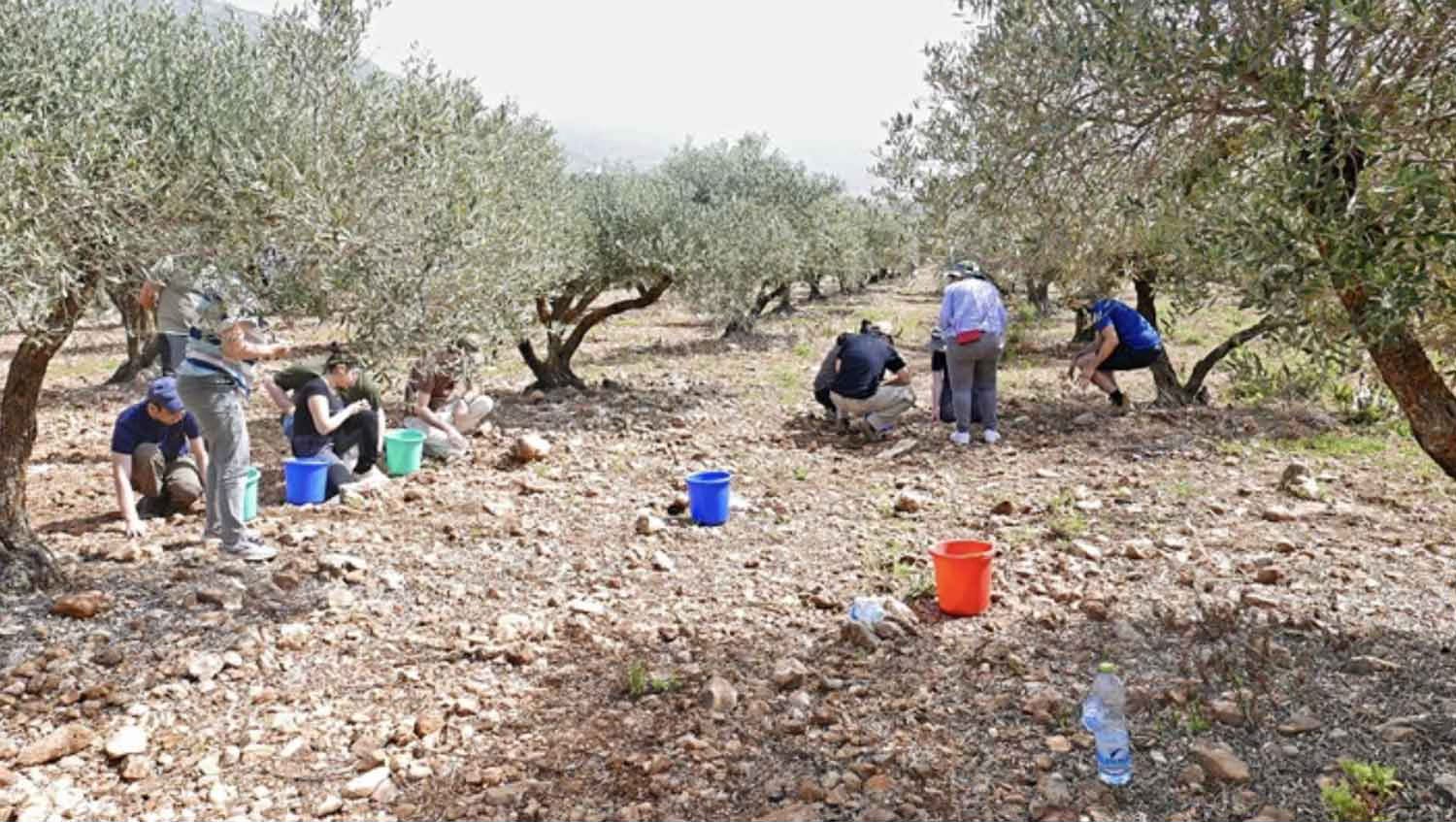
Sakhnin sits between the Sea of Galilee and the Mediterranean coast, in a low valley that makes a logical travel route for the 60-kilometer trek between them. Muataz Shalata is a resident of Sakhnin with an avocation of archaeological exploration who saw the promise of the valley with its many flint tools scattered across various locations. He reached out to Ran Barkai, and together they launched an archaeological survey.
They found what seems to be a rich Acheulean landscape. As their team worked, they recovered over 200 handaxes, alongside other typical Lower Paleolithic artifacts. Most are made from local flint nodules, well suited for flaking large cutting tools.
Most of the handaxes had a standard shape, and with the degree of standardization and intensity of flaking, Barkai and Shalata suspect that they are products of the Late Acheulean, likely between around 500,000 and 200,000 years ago. They did not excavate profiles with methods that could date in situ artifacts.
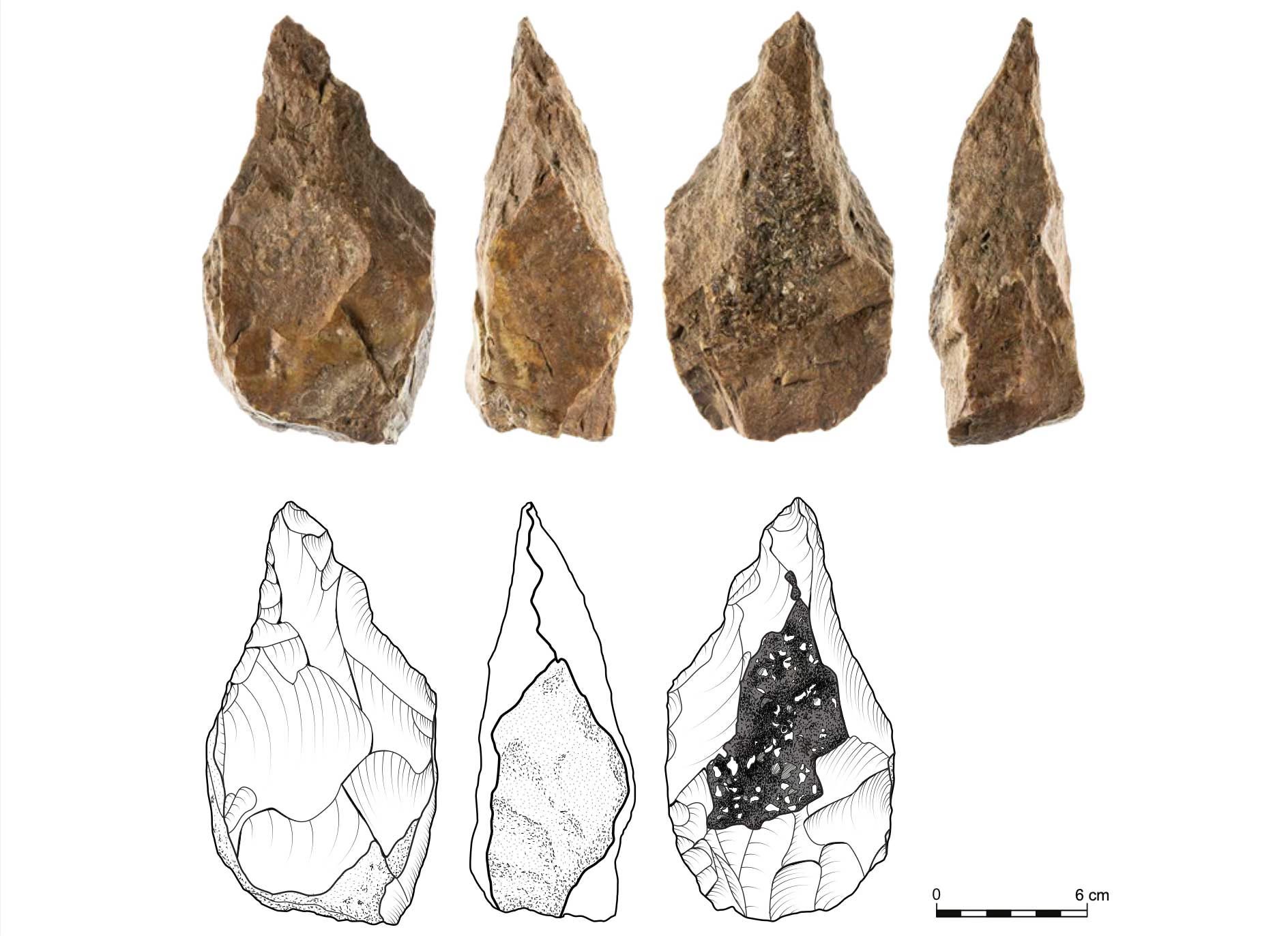
Among the handaxes were some artifacts that stand out. The ancient knappers worked with some flint nodules that contained marine fossil imprints or even entire embedded geodes. On some of these nodules, they flaked the stone so that the anomalous features sit within the face of the tool.
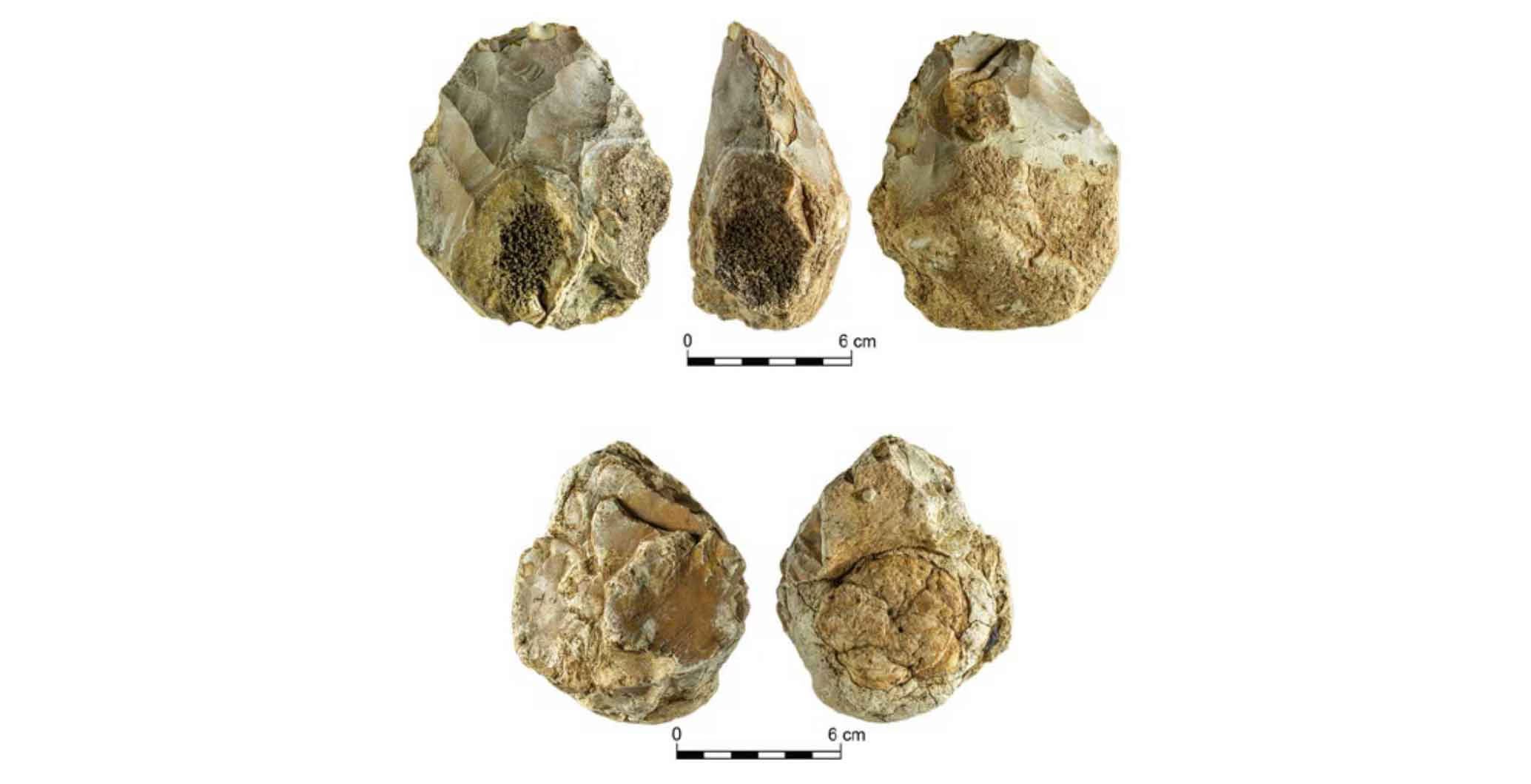
A few of the artifacts are produced on natural geodes, with the geode exposed on the face of the handaxe. Two that I’ve pictured at the top of the post have the geodes centered in the artifact. Another has it sligthly offset, but highly striking in a way that indicates the knapper worked around it.
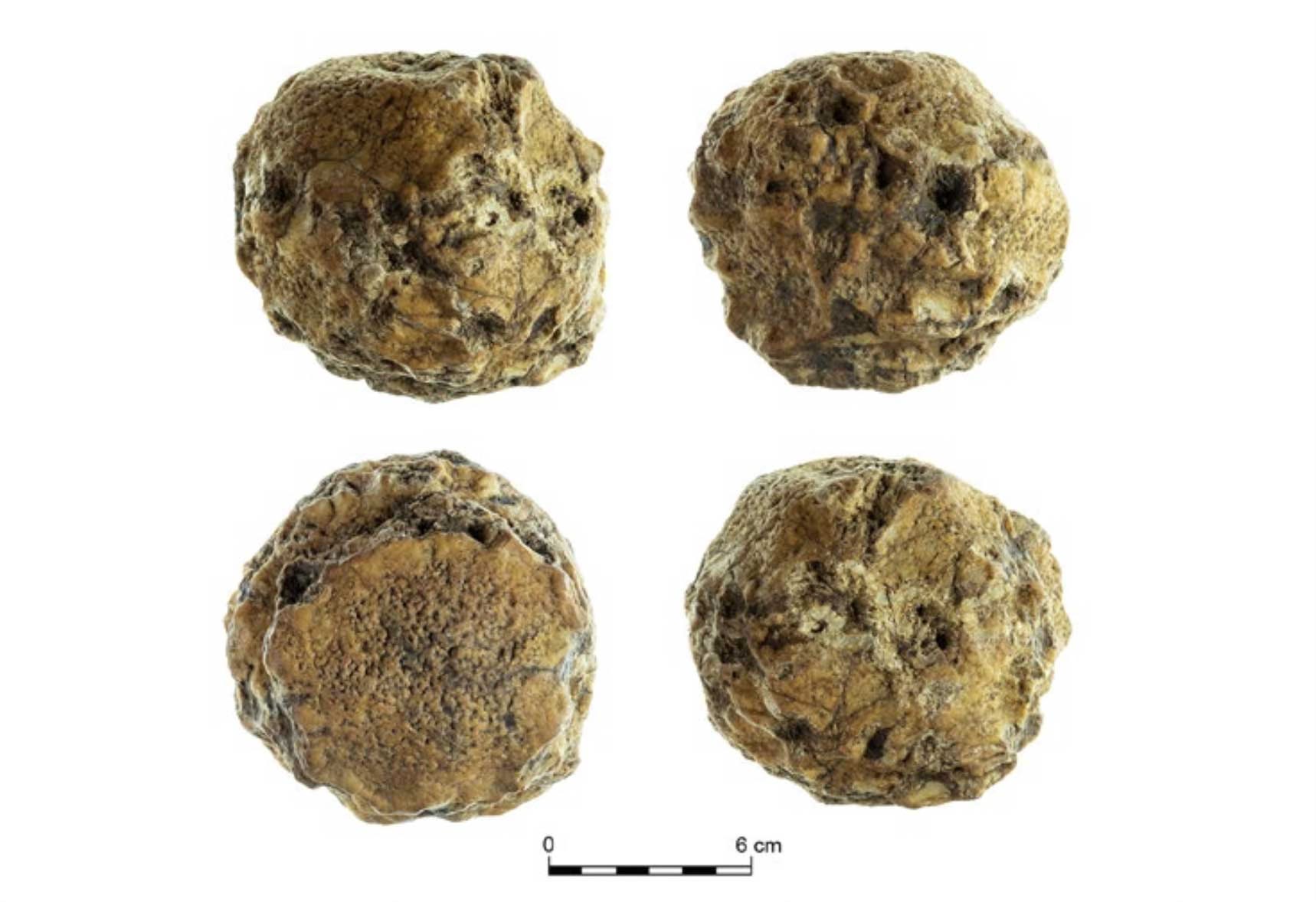
Another geode was used for its naturally spherical shape like other spheroid pounding tools.
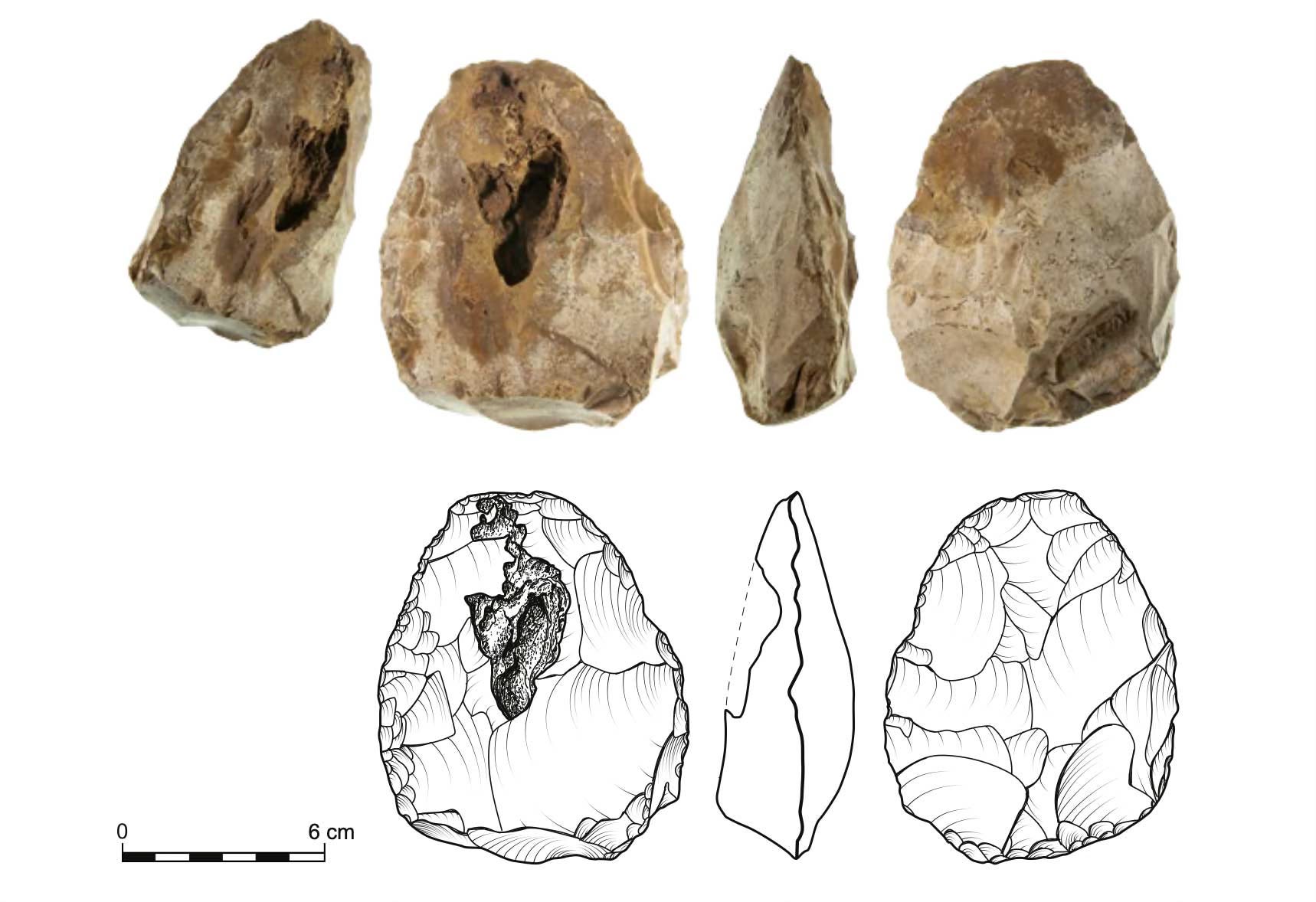
One curious piece is a large, thick, pointed handaxe on which the knapper left a weathered fossil-bearing surface. To my eye, the shape of the handaxe is similar to those I’ve seen made from elephant bone, where the original shape of the material dictates a limited degree of flake removal. In the Sakhnin case, the remaining weathered surface with its tiny fossils stands out with a striking texture.
An aesthetic sense
Over the years, archaeologists have often noted Acheulean handaxes or other objects with fossils centered on one side, or other natural features that seem to have been enhanced by the knapper. These are some of the most iconic artifacts from our evolutionary past.
What do they mean? Many archaeologists over the years have argued that such artifacts are evidence of an aesthetic sense. The
“We propose that these handaxes served as tools and mediators between humans and the cosmos, conceived as objects of potency enhanced by the primeval fossil imprints and unique geological features within the stone.”—Ran Barkai and Muataz Shalata
It is easy to forget how many cultures have organized—and still organize—technology around notions of spirit and power. People notice natural variations in stone and other materials. The unusual draws their attention. They interact with it. Those interactions sometimes attract the attention of others. In any hominin species that transmits culture, which was all of them, shared attention may initiate a shared perception of interest, spirit, power.
A simplistic economic analysis of stone toolmaking may omit the role of cultural preference, status, and power in the analysis of Acheulean artifacts. But have humans ever invented a tradition of handcrafting that is purely utilitarian? As they say in AI, attention is all you need.
When is a shell just a shell?
Still, archaeological finds are a very sparse record of ancient behavior. The “Acheulean” as understood by archaeologists spans more than a million years across parts of three continents. A few of the sites with handaxes and other large bifaces also have hominin fossils, and those belong to a diverse set of groups as recognized by biologists. With this kind of evidence, it may not be possible to show that a particular artifact, however special-looking, really had anything special about it.
The best-known example of possible aesthetic intent in a handaxe came from West Tofts, near Norfolk, England, discovered in 1911. This flint handaxe that features a beautifully preserved shell right in the middle of one face. For over a century, archaeologists and art historians have argued about what this handaxe might signify about the minds of ancient hominins.
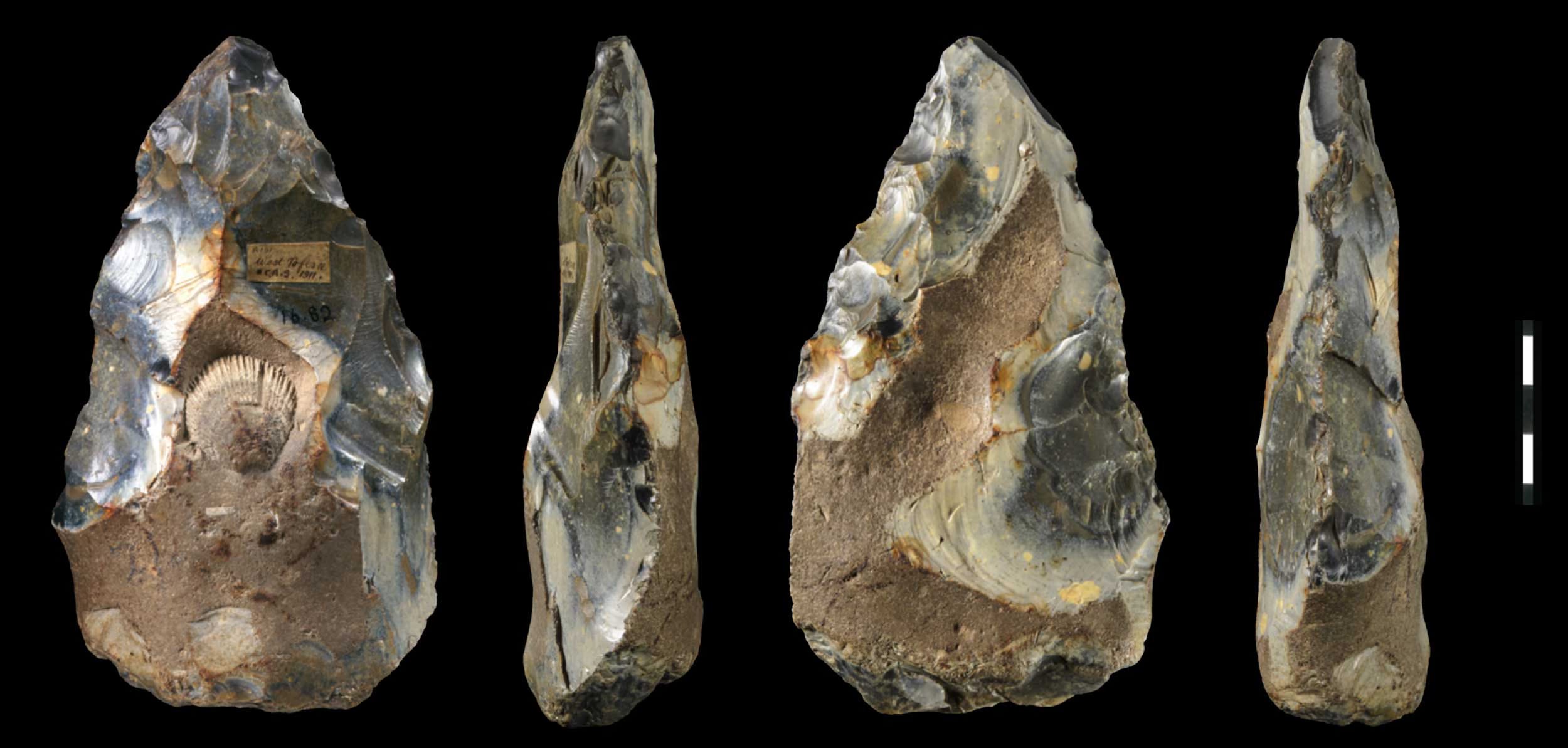
The shape of the handaxe seems like a perfect frame highlighting the fossil. This is no chance occurrence; at the very least, the knapper noticed the shell and worked around it. But was it more than this? Many archaeologists have considered the object symbolic, intended to communicate something to other individuals who saw it.
The problem of a singular object of this kind is the unanswered hypothetical. How likely are such objects with no aesthetic intent at all?
In 2023, Emily Flanders and Alastair Key tried to answer this question. They looked at the West Tofts handaxe from the perspective of knapping. They put the artifact through a micro-CT scanner, mapping the internal structure of the flint. The nodule of flint is relatively thin, so the kind of flake removals needed to shape this handaxe was very minimal. The fact that cortex—the outer surface of the natural nodule—still remains on both faces of the artifact shows that leaving the fossil did not impede the knapper from making a functional cutting edge.
The scan also showed the internal air pockets and other inclusions within the nodule, possibly including additional fossilized shells. The heterogeneity of the material, with natural internal fracturing, would have made it challenging to remove more flakes. Since the shell itself is located in a slightly concave area of the cortex, the flakes around the edge of the handaxe naturally ended where they did.
Flanders and Key concluded that the West Tofts handaxe is no more than a “remarkably average, structurally flawed, utilitarian biface”. Maybe sometimes a shell really is just a shell.
Bottom line
As Flanders and Key put it, there is no disagreement that today’s people see aesthetic qualities in the West Tofts handaxe. Nor is there much disagreement that aesthetics may have been important to hominins who made Acheulean artifacts. They considered a much more limited question:
“Our focus here has been to assess whether the Acheulean individual responsible for producing the [West Tofts handaxe] was motivated by aesthetic and artistic design principles, or alternatively, whether other explanations for its formal properties exist.”—Emily Flanders and Alistair Key
The problem in my view is that archaeological samples from this time depth are never sufficient to answer that question. It’s equifinality—the principle that different sets of events can lead to the same outcome. It would take a lot of handaxes to test the hypothesis that some fossil-bearing ones were intentionally shaped.
That’s one reason that Sakhnin valley collection may be very interesting. A localized cluster of handaxes with fossils, geodes, and other strange inclusions might help understand how much intention there was to the creation of these fascinating objects.
What I keep in mind is that random chance is not an option. The most utilitarian scenario for the production of the West Tofts handaxe nonetheless involves many judgments of symmetry and consistency across the object. The recognition of various symmetries—not only reflective but radial and others—is part of the basic perceptual equipment of all hominins. There could be no handaxe production without it. Indeed, Oldowan core reduction involves various symmetries that set the production sequence apart from those known from nonhuman primates. Because of this cognitive architecture, the aesthetics of stone artifacts are inseparable from their production.
References
Barkai, R. (2021). The Elephant in the Handaxe: Lower Palaeolithic Ontologies and Representations. Cambridge Archaeological Journal, 31(2), 349–361. https://doi.org/10.1017/S0959774320000360
Barkai, R., & Shalata, M. (2026). Lower Palaeolithic Tools of Potency: Handaxes Shaped around Fossils and Other Extraordinary Features at Sakhnin Valley, Israel. Tel Aviv: Journal of the Institute of Archaeology of Tel Aviv University, 1–31. https://doi.org/10.1080/03344355.2026.2637187
Flanders, E., & Key, A. (2023). The West Tofts handaxe: A remarkably average, structurally flawed, utilitarian biface. Journal of Archaeological Science, 160, 105888. https://doi.org/10.1016/j.jas.2023.105888
McNabb, J., Cole, J., & Hoggard, C. S. (2018). From side to side: Symmetry in handaxes in the British Lower and Middle Palaeolithic. Journal of Archaeological Science: Reports, 17, 293–310. https://doi.org/10.1016/j.jasrep.2017.11.008
I wonder how transportable were Acheulean handaxes. On the one hand it required quite a lot of efforts to make them to throw away often. On the other, they are found in very large quantities, and many seemingly not broken or worn out, but just abandoned while usable. I think it is an interesting question related to mobility of paleolithic people in general.