

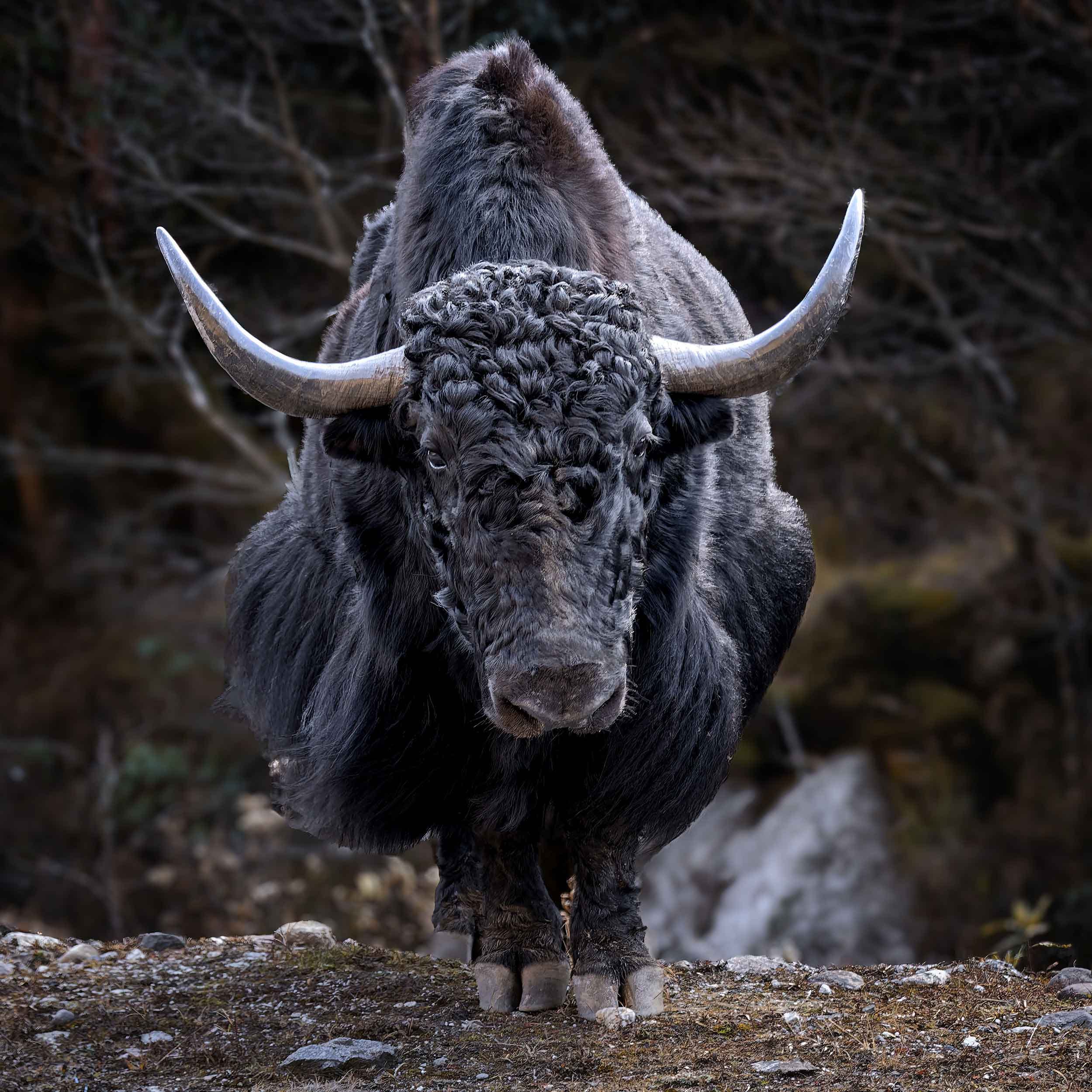
They’re calling it “Yak X”. The genetic data are described by Jonas Oppenheimer and a team led by Love Dalén, from bovid bone fragments of Denisova Cave and other nearby sites in the Altai and southern Siberia. Among these faunal collections are small pieces of twenty individuals of an unknown branch of yaks.
Based on comparisons with known yaks and other cattle relatives, Oppenheimer and coworkers suggest that Yak X is a different species from present-day wild or domesticated yaks (Bos mutus and Bos grunniens, respectively). That conclusion is based upon the extent of mitochondrial lineage separation and the lack of evidence of introgression or mixture in the nuclear genomes. None of the bone fragments in the study themselves provide enough anatomical information to assess any differences from living yaks.
Still, DNA isn’t quite all there is to go on: Earlier Russian paleontologists working with limb bones have identified Siberian Pleistocene yaks as a form larger than extant yaks, which they attributed to the subspecies B. mutus baikalensis. Oppenheimer and collaborators suggest the Yak X lineage is this Pleistocene form, and denote it as Bos cf. baikalensis.
This kind of case illuminates both the opportunity and challenge of past DNA data for species recognition in the fossil record. Those of us who study hominins discuss this problem a lot. Every time anyone finds a strange lineage somewhat outside the known variation of extant and fossil forms, there is the question of whether it is “really” distinct, whether a named species is “really” a species. Are Denisovans “real”? Are they a species?
Those discussions have often lacked a comparative context from other mammal groups. In part that’s because the early effort in ancient DNA has been strongly directed toward hominin fossil identification. Nothing wrong with that! But ancient DNA is causing a quieter revolution in thinking about the diversity, evolution, and mixture of other lineages of mammals. Their dynamics are similar to hominins in some interesting ways, and sometimes very different.
Cattle introgression
Cattle have always been one of my favorite examples of introgression among species. I ate a good number of beefalo burgers when I was a kid, and at least a few bison genes still run in the cattle raised by my Hawks family relatives. Even though bison and cattle separated from common ancestors more than 2.5 million years ago, interbreeding between these species is possible, with some hybrid sterility of males. Breeders over time have bred bison genes into many breeds of cattle, including the American Beefalo breed.
Almost all herds of living American bison (Bison bison) have some cattle genes, which were introduced into wild bison to varying degrees during the late nineteenth century as bison populations were extirpated in much of the continent. These cattle genes are usually responsible for the light pigmentation that leads to the occasional birth of a “white bison”. Sometimes portrayed as a supernatural sign, the pigmentation really does indicate something new introduced by European influence on this classic North American mammal.
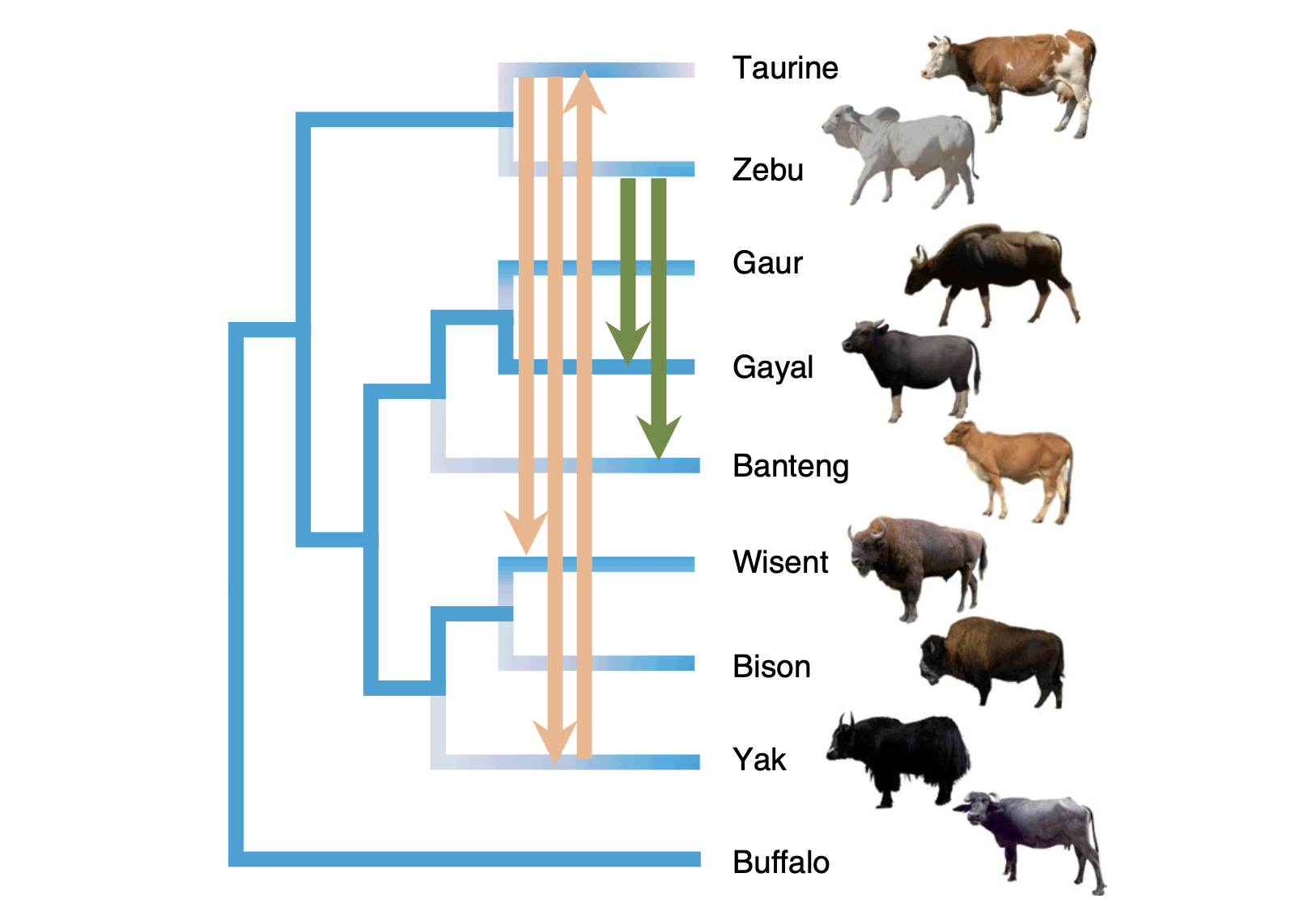
Cattle themselves were domesticated from six or more wild populations that are usually classified as different species by zoologists. Taurine cattle (Bos taurus) are most common in western Eurasia, China, and Mediterranean Africa and the zebu (Bos indicus) in much of South Asia, with varying mixture of zebu into taurine cattle across most of sub-Saharan Africa. Zebu have been mixed with gaur (Bos gaurus), kouprey (Bos sauveli), and gayal (Bos frontalis) in cattle breeds of southeast Asia. In Indonesia, varying mixtures with banteng (Bos javanicus) occur in domesticated breeds. The common ancestry of taurine and zebu cattle is Middle Pleistocene, around 500,000 to 250,000 years ago, with the common ancestor generally identified as the Pleistocene aurochs (Bos primigenius).
All these cattle bred from different wild populations are interfertile. Their male offspring are fertile, making them different from bison-cattle hybrids, where males usually are not fertile. Still, livestock breeders pay a lot of attention to fertility, and hybrids have some fertility depression compared to purebred animals. Hybrid males between zebu and taurine breeds are more likely to be scored for lower quality semen, and F2 hybrids sometimes show a slight drop in reproduction. This looks like a case of the very early stages of evolution of reproductive isolation. For many other groups of mammals, zoologists would likely favor recognizing such interfertile populations as variants of the same species. Yet there are few mammal species where we have so much data on interfertility, enough to show such extremely slight hybrid fertility depression.
In the longer term, these issues sort themselves out. The cattle population of Africa is nearly all of hybrid origin to some degree, as are the populations of Southeast Asia, China, and Indonesia. There are no real reproductive boundaries; only gradients and local breeds maintained by human selection. For many, the solution to the species problem is that domestication makes them an exception to the rules of speciation. If you’re like me, you likely aren’t happy with an answer that looks like an asterisk.
The place of yaks
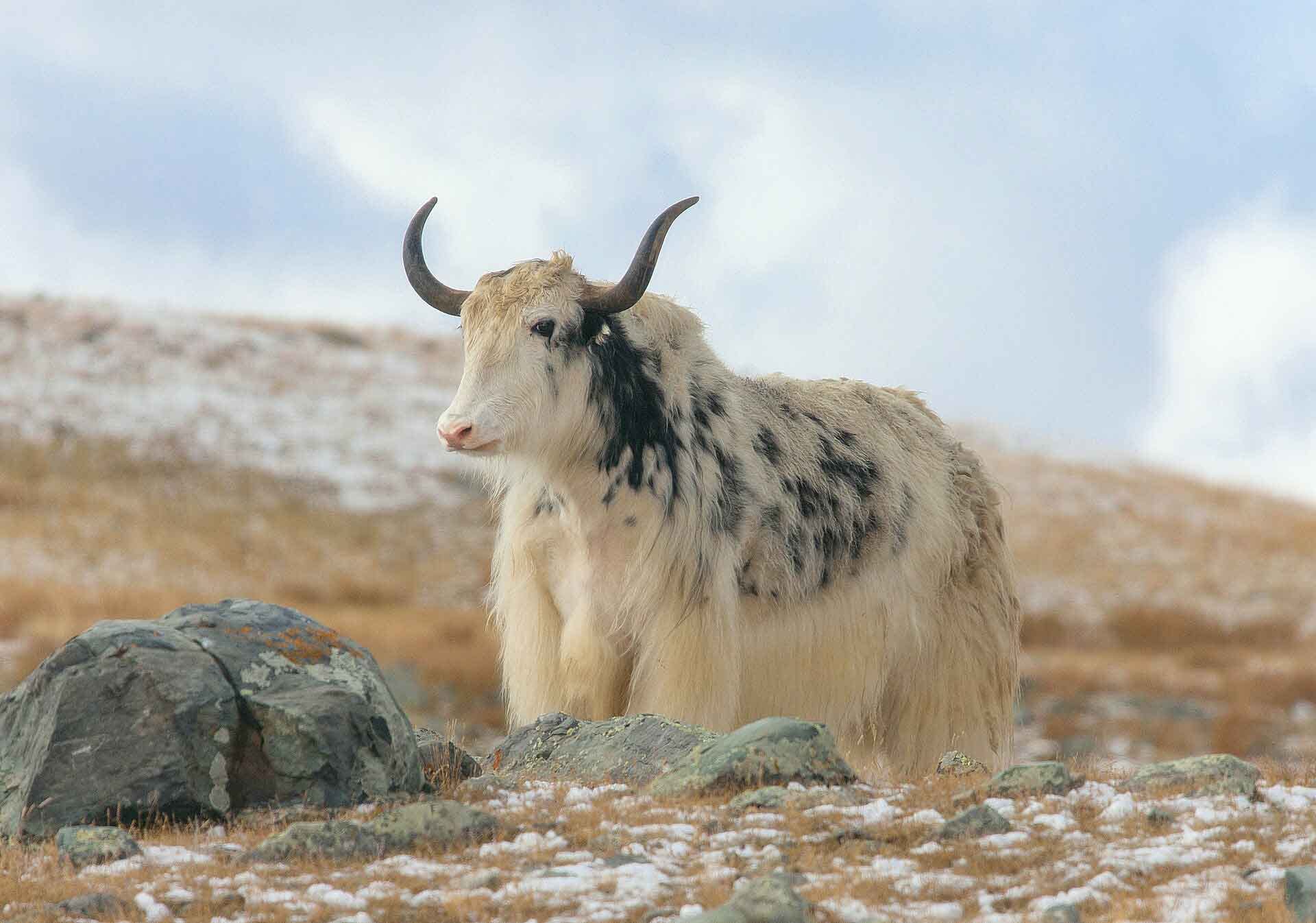
Yaks diverged from bison during the Early Pleistocene, around 2 million years ago. Yak and North American bison can produce hybrids, sometimes called yakalo. Males are generally infertile, as for bison-cattle hybrids, but breeders have rarely but breeders have crossed them and there have been few studies of hybrids.
Yak populations may have been in contact with Eurasian bison during the Pleistocene but there is no genomic evidence of historic interbreeding between them. Eurasian bison, or wisent (Bison bonasus), have a more genetically complicated story. They shared a common ancestor with extant North American bison more than one million years ago. However, the mitochondrial DNA of the wisent shares a more recent common ancestor with mitochondrial DNA of taurine cattle. This cytonuclear discordance probably stems from the replacement of bison-typical mtDNA by the mtDNA of aurochsen sometime during the Middle Pleistocene.
Domesticated yaks and cattle have been crossed often in East and South Asia, both during earlier stages of domestication and in recent attempts to improve breeds. Altitude tolerance in yaks has been brought into Tibetan cattle breeds, along with disease resistance, coat length, and other traits. Domestic yaks carry introgressed cattle genes, adding up to five percent of their genome in some breeds. That includes a number of selected traits, notably pigmentation.
In terms of classification, yaks, bison, and cattle present a genus problem. All kinds of cattle are classified within Bos, and yaks generally are also. Both Eurasian and North American bison have historically been classified within their own genus, Bison. This classification makes the genus Bos straddle the Bison branch, what systematists call paraphyly. That’s a no-no in modern classification, and researchers have tried to solve it in two different ways. One is to put yaks into their own genus, Poephagus. The other is to lump all the species into Bos, including the bison species, which would then be Bos bison and Bos bonasus. I point out this taxonomic tangle because paraphyly is another classification challenge that bovines share with hominins.
Disappearing lineages
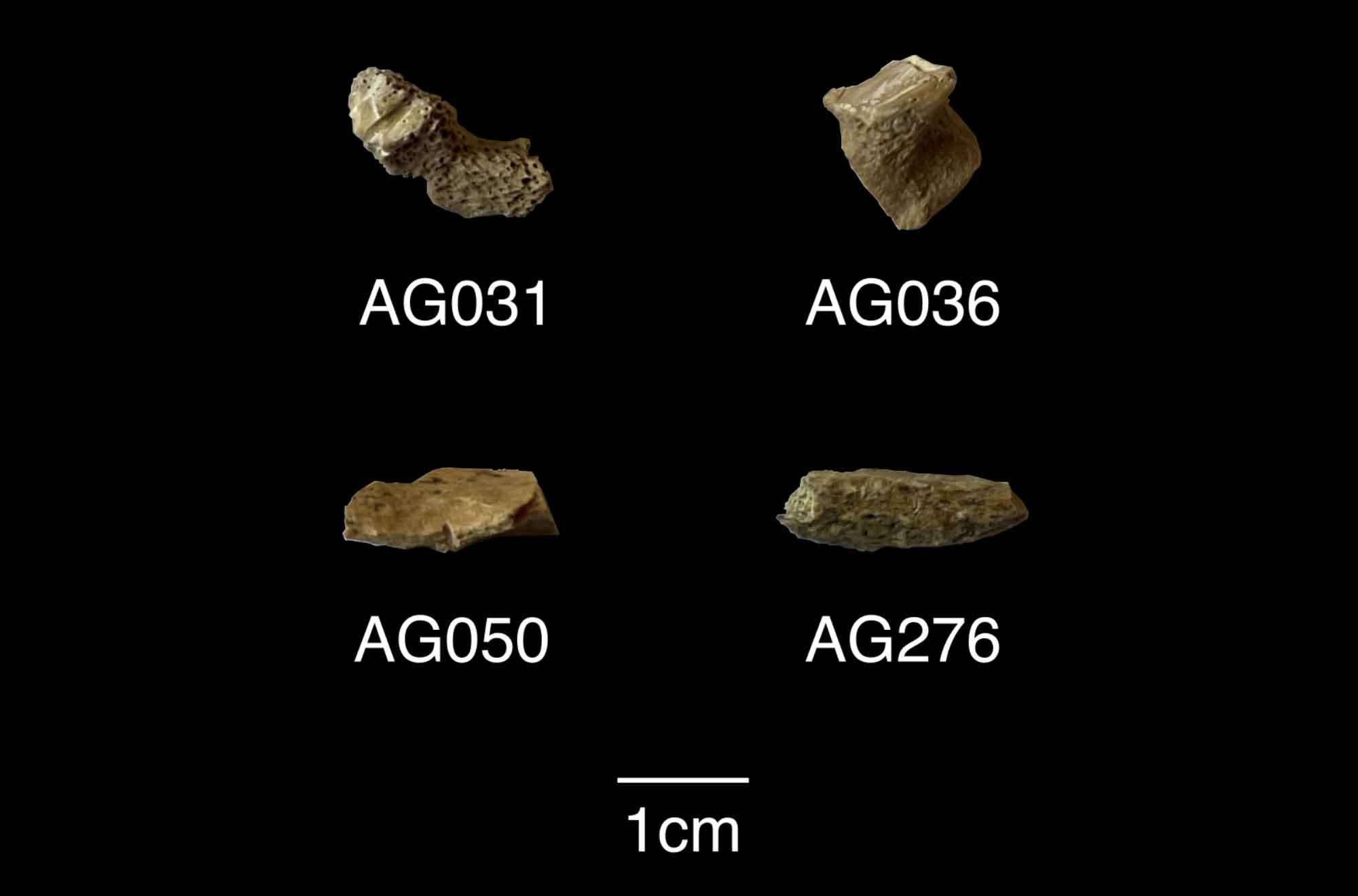
Yak X was identified from small bone fragments from Denisova Cave. These discoveries have followed the same process as the hominin discoveries. Rapid collagen profiling has been applied to tens of thousands of unidentifiable bone fragments from Denisova, all from known spatial and temporal contexts. The largest fraction belong to bovids. A research article by Alexandre Gilardet and coworkers from last year presented mitochondrial DNA data from fifty-seven of those fragments, together with six additional samples from four other sites.
More of those were like yak than any other extant species, but they all formed a clade separate from wild or domestic yaks today. This was the Yak X clade. The subsequent paper led by Jonas Oppenheimer reports on the nuclear genome from several of these new yak fossils, showing that these also separate from extant yaks.
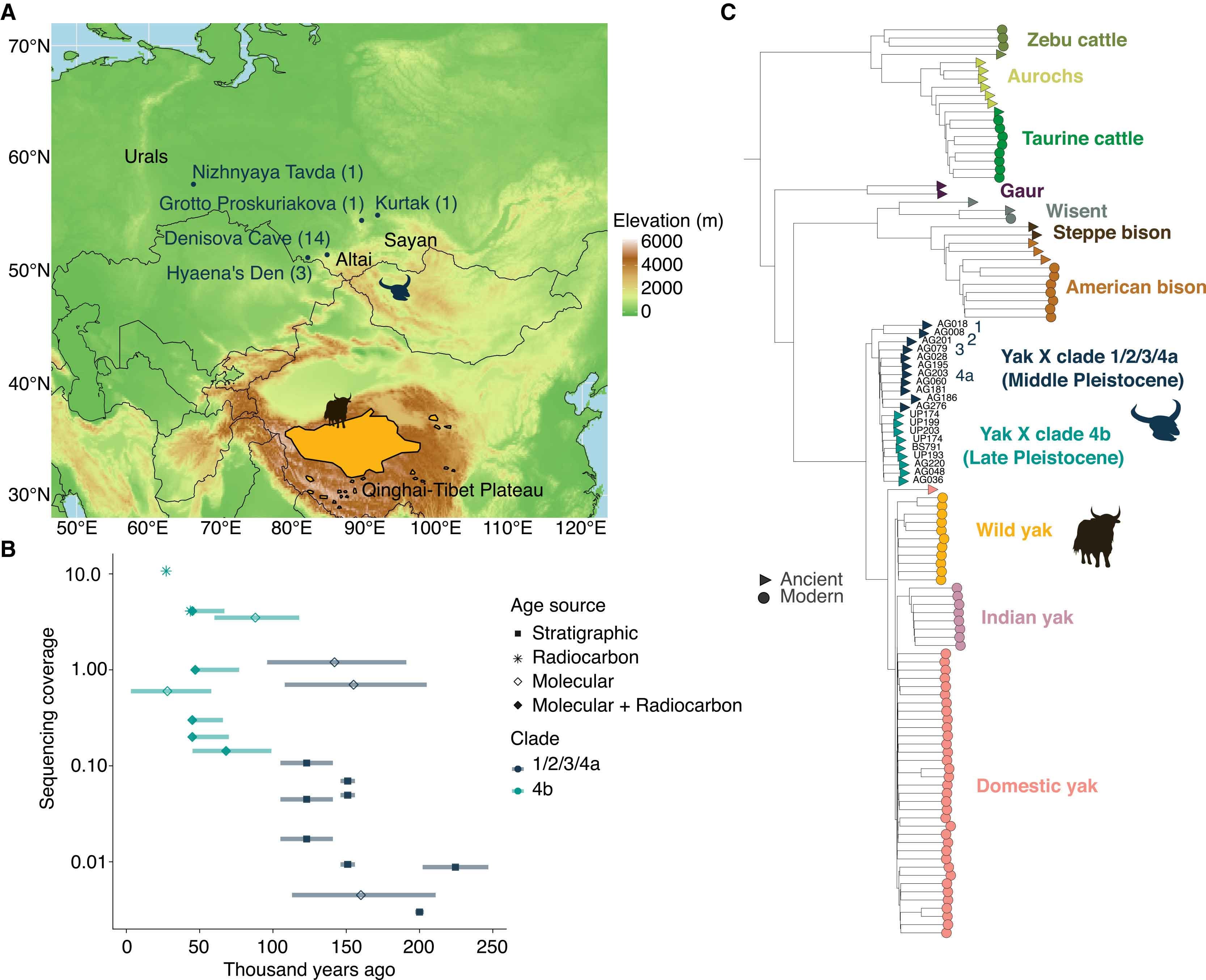
Is that enough to make these yaks a different species from extant wild or domestic yaks? I would not say so, not on its own. After all, this is the setup of the Denisova 3 genome: easily separated from living people and Neanderthals in both the nuclear and mitochondrial genome. Yet there is abundant evidence of recurrent gene flow in the hominin case, with modern people having ancestry from a Denisova-3-like population and multiple lineages contributing to Denisovan individuals in different proportions over time. The yaks show a different pattern. Oppenheimer and coworkers show that none of the Yak X individuals have evidence of substantial gene flow to or from other known lineages. That is the reason they suggest the hypothesis that Yak X is a distinct species.
The yaks are not the only oddballs in this sample. Gilardet and coworkers characterize the mitochondrial sequences of the bison, and they, too, belong to an extinct clade. This clade was already known from DNA sequences at other sites, all before the Holocene. It represents one or more extinct populations of steppe bison different from surviving European bison. No nuclear genetic data are reported for the bison remains, and that leaves it unclear how much gene flow may have connected them with other populations.
“Taken together, our results suggest that the Altai region was a hotspot for divergent and lost bovine diversity, an observation that mirrors the identification of several archaic Homo lineages in the region.”—Alexandre Gilardet and coworkers
There are many resemblances between the hominin story and the bovine story. Unexpected lineages. The mitochondrial “X” lineage designation. The paraphyly of genera that originated in the Pliocene. The cytonuclear discordance of one lineage with mitochondrial replacement. There are some common lessons. Extinct mitochondrial clades aren’t enough to assess relationships of populations by themselves; nuclear genetic data are needed to represent a broader genealogical picture. It’s comparisons like these that can help put the hominin classification into better context.
Maybe the biggest common thread is ecological. Oppenheimer and coworkers show a split within the Yak X clade, with one branch only seen earlier than 120,000 years ago, and another branch afterward. This apparent regional replacement may represent a bottleneck just leading to the last interglacial, or it may be an expansion of one population of the extinct yaks into the region. It’s a remarkable parallel of the local replacement of an earlier branch of Denisovans by a later branch, and of the intermittent local replacement by Neanderthals. This is likely the ordinary pattern of evolution of large mammals in the region. Ancient humans were one element of a shifting faunal community, facing some of the largest climate swings anywhere they existed.
Note: For folks who would like to read more about the origin and domestication of cattle diversity, there is a nice article from 2010 by Paolo Ajmone-Marsan and coworkers in the reference list. It especially covers the domestication and subsequent evolution of taurine and zebu cattle well.
References
Ajmone‐Marsan, P., Garcia, J. F., & Lenstra, J. A. (2010). On the origin of cattle: How aurochs became cattle and colonized the world. Evolutionary Anthropology: Issues, News, and Reviews, 19(4), 148–157. https://doi.org/10.1002/evan.20267
Gilardet, A., Oppenheimer, J., Sinding, M.-H. S., Lord, E., Chacón-Duque, J. C., Oteo-García, G., Xenikoudakis, G., Kosintsev, P., Southon, J., Vasiliev, S. K., Shunkov, M. V., Kozlikin, M. B., Douka, K., Shapiro, B., Heintzman, P. D., & Dalén, L. (2025). Paleogenomics Reveals a Loss of Bovine Lineages in Mid-latitude Asia Over the Last 200,000 Years. Genome Biology and Evolution, 17(11), evaf206. https://doi.org/10.1093/gbe/evaf206
Medugorac, I., Graf, A., Grohs, C., Rothammer, S., Zagdsuren, Y., Gladyr, E., Zinovieva, N., Barbieri, J., Seichter, D., Russ, I., Eggen, A., Hellenthal, G., Brem, G., Blum, H., Krebs, S., & Capitan, A. (2017). Whole-genome analysis of introgressive hybridization and characterization of the bovine legacy of Mongolian yaks. Nature Genetics, 49(3), 470–475. https://doi.org/10.1038/ng.3775
Oppenheimer, J., Gilardet, A., Kozlikin, M. B., Kosintsev, P., Vasiliev, S. K., Shunkov, M. V., Xenikoudakis, G., Ford, S., Douka, K., Heintzman, P. D., Shapiro, B., & Dalén, L. (2026). Ancient genomes reveal an extinct bovine species from mid-latitude Asia. Current Biology, S0960982226012522. https://doi.org/10.1016/j.cub.2026.09.043
Vasiliev, S. K. (2021). Remains of the Baikal yak (Poehpagus mutus baikalensis N. Verestchagin, 1954) from Late Pleistocene localities of Southern Siberia. Proceedings of the Zoological Institute RAS, 325(4), 384–408. https://doi.org/10.31610/trudyzin/2021.325.4.384
Wu, D.-D., Ding, X.-D., Wang, S., Wójcik, J. M., Zhang, Y., Tokarska, M., Li, Y., Wang, M.-S., Faruque, O., Nielsen, R., Zhang, Q., & Zhang, Y.-P. (2018). Pervasive introgression facilitated domestication and adaptation in the Bos species complex. Nature Ecology & Evolution, 2(7), 1139–1145. https://doi.org/10.1038/s41559-018-0562-y