

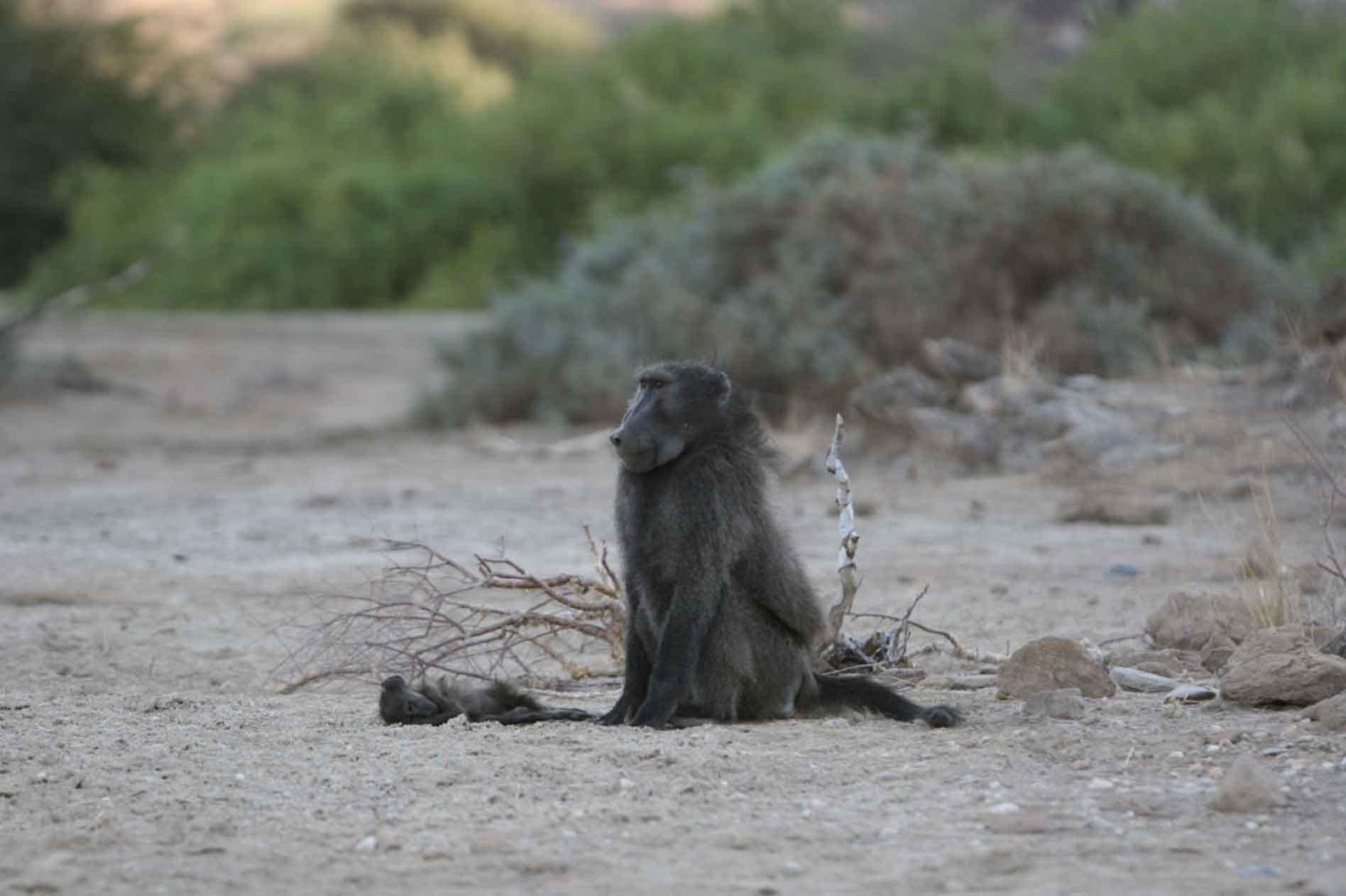
It’s inevitable in my line of research that I think and write about death. One area that I work to understand is how ancient human relatives thought about death. The lens we have is limited. Our only direct evidence is the record of ancient interactions with the bodies of the dead. As biologists, we can also call upon comparisons with other living species. These are further from us than ancient hominins, yet may nonetheless reveal much about how highly social mammals react in similar circumstances.
As I start this post about nonhuman primate interactions with death, I want folks to know that if you have experienced the loss of a loved one, my thoughts and hopes are with you.
Chimpanzees, baboons, and other nonhuman primates are not known to sustain behavioral traditions related to death or dead bodies. In this sense they do not have mortuary practices in the way that human societies do today. Still, decades of research have shown primatologists that nonhuman primates recognize death and respond to dead bodies in distinctive ways. Just as in humans, those responses form a continuum from emotional pain, grief and loss, to fear and concern, and to curiosity.
Some of these behaviors may help us to understand how social responses to death emerged in humans and our ancient relatives.
One repeated observation is that after the death of a chimpanzee infant, the mother may continue to carry the body for a period of days or even weeks. Primatologists have called this behavior infant corpse carrying, and they have seen it in more than forty species of primates. Most cases last just a few days at most, but the longest case in wild chimpanzees, recorded at Mahale, Tanzania, stretched to nearly four months. The behavior is a highly evocative signal of maternal grief and the effects of losing an infant. What can these cases teach us about our own evolutionary history?
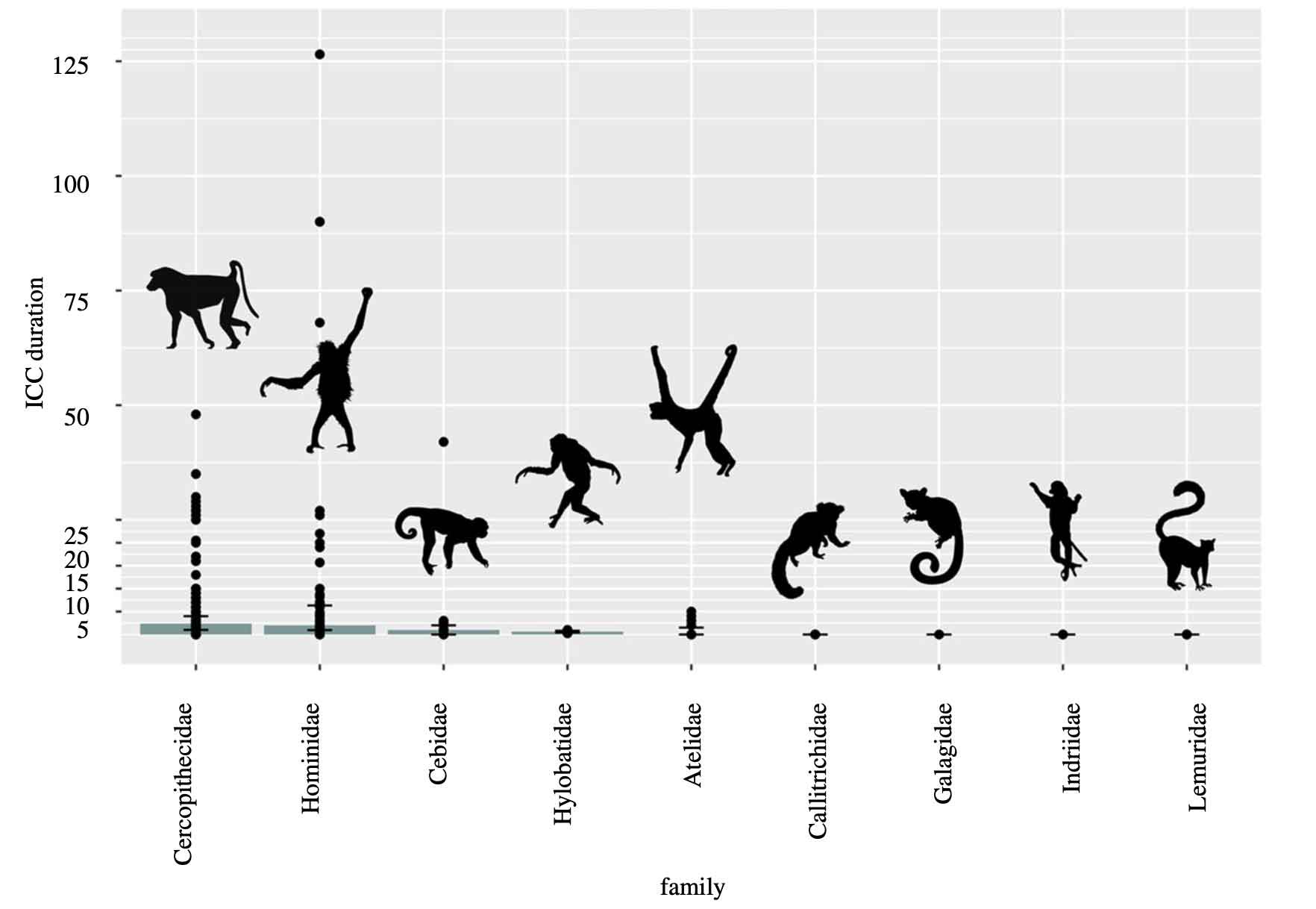
Chimpanzee infant corpse carrying
The chimpanzee field site with the longest record of human observation is Gombe National Park, Tanzania. This is the site made famous by the work of the late Jane Goodall. Over more than 50 years of observations, researchers at Gombe have seen many cases where a mother carried her infant’s corpse after death.
In 2020, Elizabeth Lonsdorf and a team of collaborators, including long-term Gombe research director Anne Pusey, published a comparative study of 33 documented cases of infant corpse carrying in the two communities under long-term observations there.
It was not only biological mothers who carried infant corpses. Three cases involved other individuals who had adopted the infants as caregivers prior to death, including two older siblings and one unrelated female. Five cases were abducted infants, carried after their death either by their abductor or others. Such cases illustrate that infant corpse carrying is not a single pattern of behavior. Kidnappers have different motivations and emotions than mothers. Yet the time that they interact with a body, or the mode of those interactions, may tell us little about differences.
Still, clearly, mothers are the most affected by infant deaths. At Gombe, researchers knew of the deaths of 93 infants or juveniles younger than 5 years. Out of these, 42 infant corpses were observed sometime after death. In nine of those cases, where infanticide or abduction happened, other individuals prevented the mother from touching or having the body. In every other case, the mother carried the infant’s corpse for some time. These episodes of carrying varied in length from 30 minutes to over 15 days. The median was 1.83 days.
Mothers did not carry corpses in the same way as living infants. They were seen to hold and carry the infant’s body more deliberately, like an inanimate object, or in some cases sling the corpse around their neck.
Last year, Elena Bersacola led a multisite study on chimpanzees using camera traps, often known in the U.S. as “trail cams”. Chimpanzee researchers are using this technology more and more to study chimpanzee groups non-invasively without habituating them to human presence.
Taking footage of 18 communities of chimpanzees ranging from a few months to years, the cameras caught 10 cases of individuals carrying the corpses of infants. The authors of the study calculated the rate as 0.46 cases per community per year, roughly double what has been observed by researchers who follow chimpanzees in person.
Camera traps caught images of some individuals across days. For example, one adult female from the Kihomboza community in Uganda was spotted by cameras over 26 days. Her infant was between one year and eighteen months of age at death, and the dry season death led to rapid mummification of the corpse. She carried the infant in front of her, and also used folds of tissue near her groin to carry the body, freeing her hands to carry jackfruit and other foods.
Why carry infant corpses?
Primatologists have known about this behavior for a long time. The first recorded observations date to more than a hundred years ago. Interpretations of infant corpse carrying have shifted greatly over that time. At first, few researchers thought that chimpanzees or other primates could develop any awareness of death. Carrying infants long after death was imagined as a case of maternal instinct gone haywire. Still, even from the earliest days of evolutionary science, some who observed chimpanzee behavior recognized signs of grief or depression after experience of loss.
Weeks or months of carrying a dead infant is extreme. Transporting a decaying or mummified corpse costs energy, gets in the way of normal locomotion, and complicates foraging and social interactions.
A new paper from Reece Hammond and Thomas Püschel looks at more than 80 cases across chimpanzee and bonobo field sites to understand what social or individual factors matter to infant corpse carrying. Some longstanding hypotheses do not fit the data from these cases. The age of the mother seems not to matter, nor the size of the group. Both male and female infants are equally likely to be carried after death. It seems to make no difference whether a mother has seen any other mother with a similar experience.
A few things do matter in these cases. Infants dying from disease were carried significantly longer than victims of infanticide. Hammond and Püschel suggest that continuing to transport infanticide victims would expose mothers to renewed aggression from the male who killed the infant. Mothers carried older infants longer than younger infants, suggesting that the strength of their bond mattered the most. One interesting demographic correlate has to do with birth intervals in the community. Mothers carried dead infants longer when their community tended to have longer intervals between births.
Researchers have studied the behavior more consistently in chimpanzees than in other primates. There have been some biases in what has been published, with a focus on more extreme cases that may be outliers. Even so, it is clear that baboons, geladas, and several species of macaques overlap a lot with chimpanzees in the extent and duration of carrying infant corpses. In bonnet macaques (Macaca radiata), bereaved mothers carry deceased offspring for an average of 3.5 days, avoid food, isolate themselves, and show prolonged passivity. Male chacma baboons sometimes form close social friendships with mothers, and have been seen to guard deceased infants, threatening approaching observers, and gently grooming the corpse.
Understanding death
What do these primates understand about death? In a 2019 review article, André Gonçalves and Susana Carvalho examine what primate encounters with the dead may tell us about their understanding of death. There is no easy answer. They point out that a mature human understanding of death includes several different components: Death entails the end of mental and biological functions; it is irreversible; it is caused by disease or trauma; and all living organisms will die. These different components tend to be learned by children at different developmental ages, suggesting that the adult concept is really a composite of ideas.
I would add that most adult humans do not limit their concept of death to these physical and natural phenomena. Most add some dimension of supernatural relations, so that the concept of death involves relations of ghosts, spirits, demons, netherworlds, or reincarnation. Such elements make the concept of death, and the social and individual reactions to death, culturally variable. These aspects, too, are learned at different ages and in different ways.
Gonçalves and Carvalho consider many of the described primate reactions to dead bodies. This includes infant corpse carrying and many other kinds of encounters. They find that primate reactions to death are suggestive about primates’ abilities to recognize that death is irreversible, caused by disease or trauma, and marked by the loss of biological functions. The idea of inevitability and universality of death is less easily seen in these interactions.
The cases of infant corpse carrying are especially notable because they reflect a continued attachment with dead bodies, beyond that seen in other kinds of encounters. They suggest that reactions to death can be overridden or delayed in cases of deep emotional attachment and grief. Letting go may be the hardest thing to do.
Infant hominins
Infant remains have rarely been found in the fossil hominin record. Archaeologists have often noted that infant skeletons are intrinsically fragile, making them less likely to survive the fragmentation and loss typical of ancient sites. I would add that archaeologists and paleontologists have less expertise in recognizing infant hominin elements. The anatomical features of young infant bones are different from adult anatomy, making them easy to overlook in fragmented assemblages mixed with other kinds of animals.
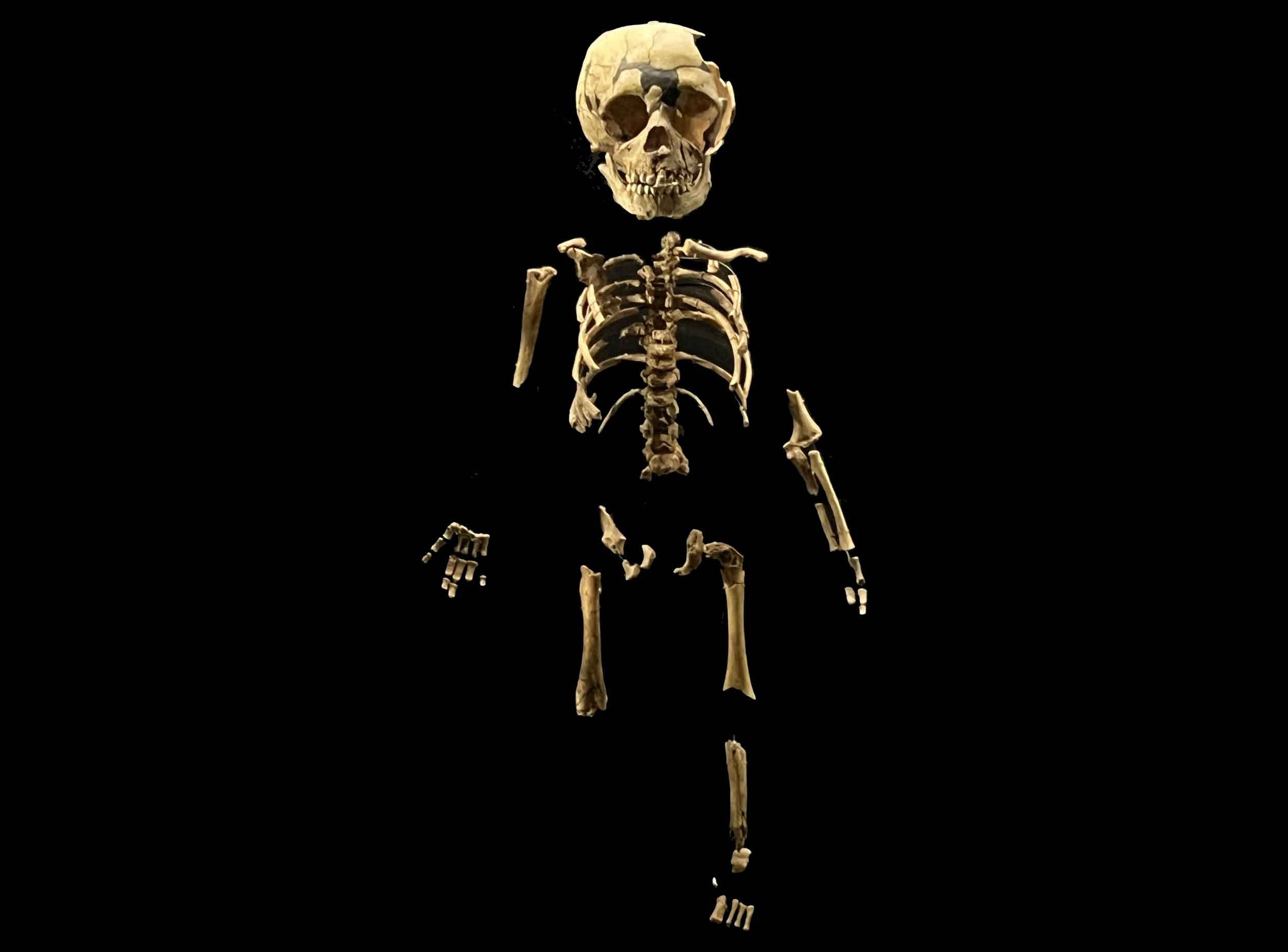
Looking back to the earlier hominin record, I take a lesson from the observations from Gombe. Not a single infant died without the mother carrying the corpse for some time, or being kept from it by others. It seems very unlikely to me that early hominin mothers would have been indifferent; they surely shared the deep bonds with their infants that are found in other primates and humans. Meanwhile, the bipedal abilities of early hominins made it easier and relatively less costly to carry infants while foraging.
If costs were lower, the risks of carrying infant corpses may have been higher. Early hominins like Australopithecus were likely more exposed to predation than today’s chimpanzees. Indeed, one of the most well-known fossil infants, the Taung skull, was taken by a large raptor. Still, the risk from predators may have increased the tendency to protect and hold onto bodies for days after death. Maybe we have relatively few infant hominins because few infant bodies were abandoned at the waterside and cave sites where fossils formed.
Even considering the sparse record, something changed in later hominins. Neanderthals buried many babies. So did early modern people. While there has been intense archaeological effort in understanding the circumstances of burials, very little has gone to their preburial histories. Could infants have been carried for some time before burial? Did social groups use burial rituals to help mothers let go of their little ones?
These questions are especially relevant in cases where burial has been debated. The Roc de Marsal infant Neanderthal, for example, has been the subject of vociferous disagreement about whether its surrounding context and burial position reflect a cultural burial. Some of the strongest arguments revolve around the body position and whether it indicates a lack of attention or care in burial. But attention and care can take on very different appearances depending on the pattern and extent of postmortem treatment of a corpse. A body that a grandmother or aunt may separate from its mother after days of grief will likely not look the same as one laid to rest shortly after dying. Understanding and looking for the signs of postmortem carrying may provide important clues for interpreting the social context of death in these early people.
References
Bersacola, E., McLennan, M. R., Bessa, J. H., Camara, H., Jaló, M., Kiiza, V., Mamy, G., Mpanga, N., Oelze, V., Ramon, M., Sanhá, A. N. W., Van Holstein, L., Stewart, F. A., Fitzgerald, M., Koops, K., & Hockings, K. J. (2025). Camera Traps Document Infant Corpse Carrying Behaviour in Multiple Unhabituated Chimpanzee Populations. Ecology and Evolution, 15(7), e71698. https://doi.org/10.1002/ece3.71698
Carter, A. J., Baniel, A., Cowlishaw, G., & Huchard, E. (2020). Baboon thanatology: Responses of filial and non-filial group members to infants’ corpses. Royal Society Open Science, 7(3), 192206. https://doi.org/10.1098/rsos.192206
Das, S., Erinjery, J. J., Desai, N., Mohan, K., Kumara, H. N., & Singh, M. (2019). Deceased-infant carrying in nonhuman anthropoids: Insights from systematic analysis and case studies of bonnet macaques (Macaca radiata) and lion-tailed macaques (Macaca silenus). Journal of Comparative Psychology, 133(2), 156–170. https://doi.org/10.1037/com0000140
Fernández-Fueyo, E., Sugiyama, Y., Matsui, T., & Carter, A. J. (2021). Why do some primate mothers carry their infant’s corpse? A cross-species comparative study. Proceedings of the Royal Society B: Biological Sciences, 288(1959), 20210590. https://doi.org/10.1098/rspb.2021.0590
Gonçalves, A., & Carvalho, S. (2019). Death among primates: A critical review of non-human primate interactions towards their dead and dying. Biological Reviews, 94(4), 1502–1529. https://doi.org/10.1111/brv.12512
Lonsdorf, E. V., Wilson, M. L., Boehm, E., Delaney-Soesman, J., Grebey, T., Murray, C., Wellens, K., & Pusey, A. E. (2020). Why chimpanzees carry dead infants: An empirical assessment of existing hypotheses. Royal Society Open Science, 7(7), 200931. https://doi.org/10.1098/rsos.200931