

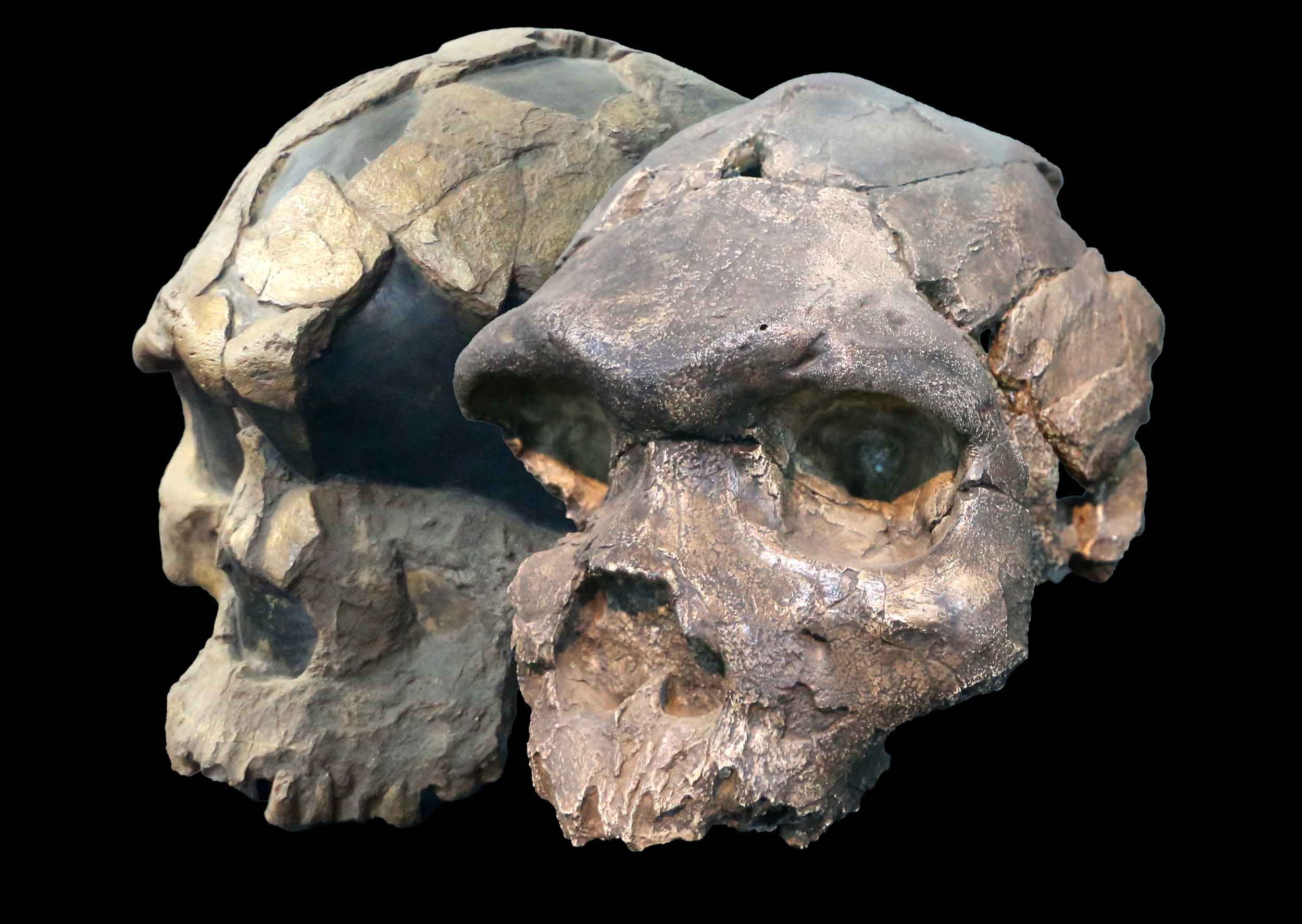
Around a decade ago, I was working to understand the deep population history of Africa from genomes of living people. I was just one of many researchers who had begun to notice a shared pattern across genomes worldwide. It looked like everyone living today might have come from a population of hybrids. This was beyond the mixture already known with Neanderthals and Denisovans. For one thing, it was a lot earlier. For another, the signs seemed to be everywhere, not just in any particular geographic region.
Early statistical methods focused on the differences in ancestry across living human populations, giving them the power to find small fractions of ancestry uniquely in some groups and not others. The 2% Neanderthal ancestry in many populations was first evident because African populations had much less. The story was the same with the roughly 3% Denisovan ancestry in Papua New Guinea, and with a similar small fraction of “ghost ancestry” in some West African groups. Still, those methods were likely underestimating the importance of mixture. They are not well-powered to find deeper events that are more widely shared.
During the last five years, some studies have opened windows into the deeper history of modern humans in Africa. I covered one of the first studies along these lines back in 2023, a paper by Aaron Ragsdale and collaborators. Their results are now joined by subsequent studies using somewhat different methodologies. In broad strokes, it appears that the modern human population evolved from a merger of two ancient groups around 300,000 years ago, roughly 80% from one, and 20% from the other. The uniformity of this signal in all living populations suggests that it was a true formative event.
Who were these ancient groups? And why did the descendants of their mingling prove to be greater than either of the parents? These unanswered questions are near the center of my current research.
A wave across the genome
For me this story began in 2016. The Simons Genome Diversity Project (SGDP) added whole-genome data from a number of human groups that remain underrepresented in human genetics research, including African peoples such as the ǂKhomani San, Ju|'hoansi, and Biaka. The variation of these Indigenous groups have helped better understand the deeper history of early modern humans in Africa before 100,000 years ago.
What drew my attention in the 2016 study, led by Swapan Mallick, was an analysis of the history of inbreeding across genomes from different populations. This kind of analysis, known as the multiple sequentially Markovian coalescent (MSMC), is a computational breakdown of a sample of genomes into smaller segments to understand when common genetic ancestors of the sample were more or less likely to have lived. Looking at the persistence of genetic segments as separate lineages, and their occasional coalescence back in time to common ancestors, is a way of looking at inbreeding in ancestral groups. Inbreeding is connected with population size: Parents in small populations tend to be closer relatives and parents in large populations tend to be more distant. To report these probabilities, the MSMC analysis charts an “effective population size” in each time interval stepping back into the past. With good estimates of mutation and recombination rates, it is possible for these charts to be calibrated in years.
This wonderfully informative method has been applied across all kinds of species. But reading these charts is not straightforward. What they portray, effective population size, is an inverse function of what was actually measured, the fraction of present-day genomic segments that coalesce within a specific interval of time. When the chart shows a low effective population size, it means inbreeding during that time was high.
Some of the easiest interpretations are about genetic bottlenecks or founder effects. For example, every sample of Indigenous people from the Americas shows a very small effective population size during a period around 12,000 to 20,000 years ago. That result has a straightforward explanation: For some or all of that time, the ancestors of these groups were limited to a small number of founders. The peoples of North Africa, Eurasia, Oceania, and the Americas share a history of low effective population size between around 70,000 and 40,000 years ago. This striking pattern, like the more recent pattern within the Americas, also results from a shared founder effect at the start of all these groups. This is one of the most obvious genetic signs of the “out of Africa” range expansion of modern humans.
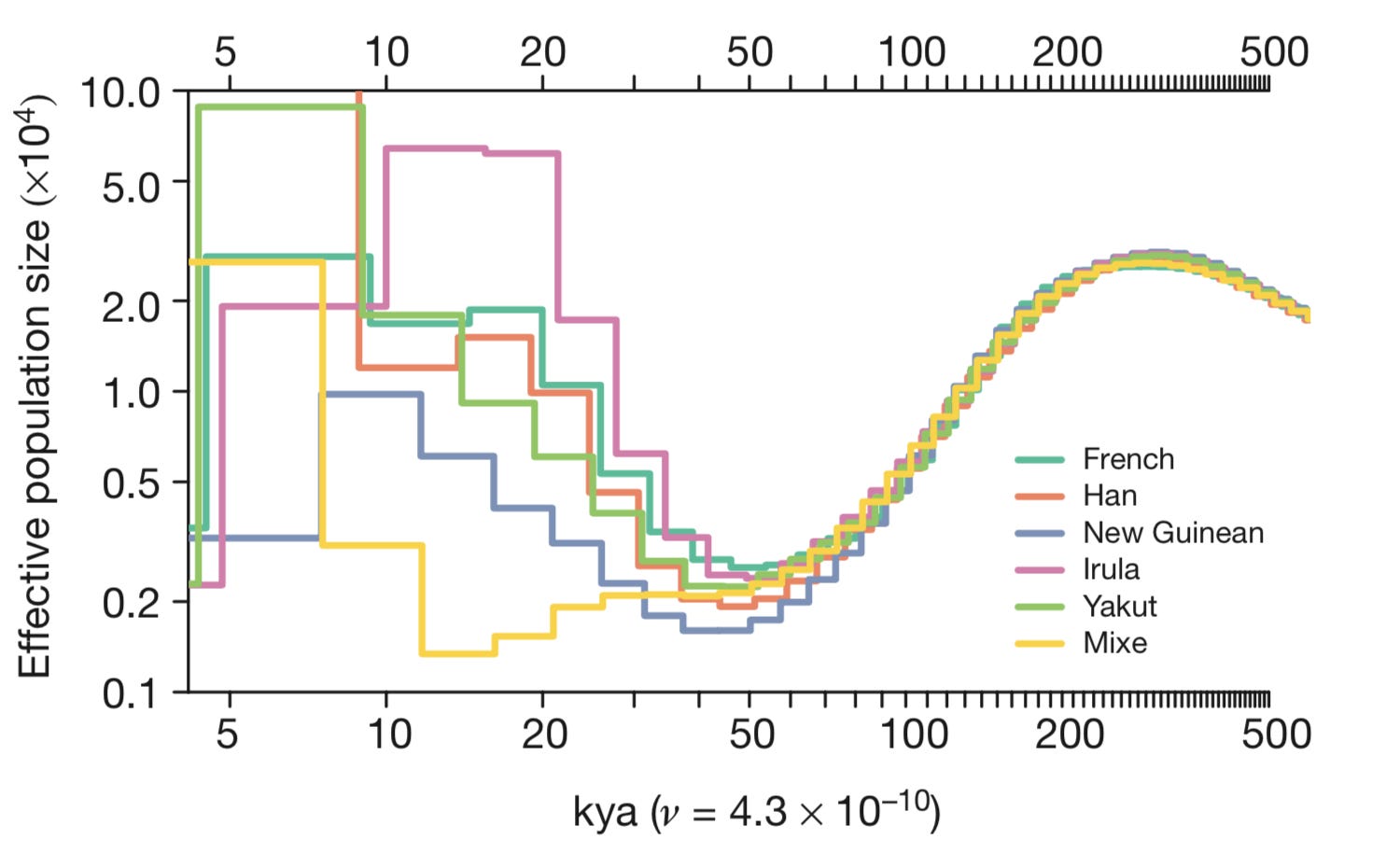
Sub-Saharan African populations have a different historical pattern. None have the pronounced period of high inbreeding around 70,000 to 40,000 years ago that is seen elsewhere in the world. Some current African groups do show slightly more inbreeding at or before that time, consistent with the immigration of Eurasian peoples into Africa during the last 50,000 years. Others, especially the Khoisan-speaking peoples of southern Africa and forest hunter-gatherers like the Biaka, show very little sign of changes to inbreeding across that time period.
But look further back, and all African groups have a larger effective size. Non-African groups, too, converge upon the same history of larger effective population size in what looks like the period well before 100,000 years ago, stretching far into the Middle Pleistocene. Before any founder effects of modern people, in the deep shared ancestry leading to all living human groups, there was a wave of greater genetic variation, lower inbreeding.
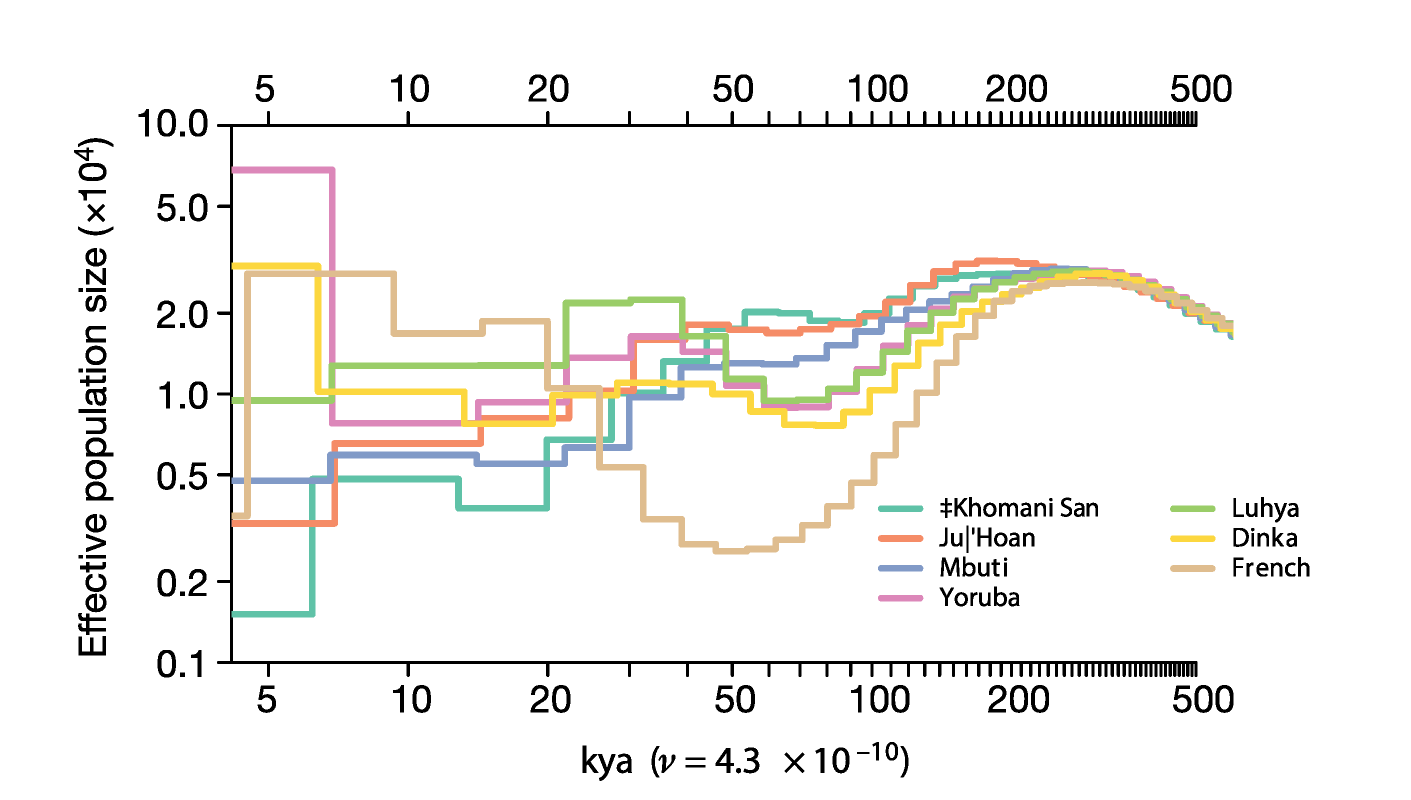
This wave is not shared by Neanderthal or Denisovan genomes. Across the same time that the common African ancestral population had low inbreeding, both the Neanderthal and Denisovan ancestral populations were very high in inbreeding.
“One remarkable aspect of human population history as inferred from genetics is a consistent “wave” of larger effective population sizes, found in both African and non-African populations, that appears to reflect events prior to the last 100,000 years.”—Me, back in 2017
The first question I had to ask was whether population size was the right explanation for this wave. Could the Middle Pleistocene have been a time of much larger populations, followed by a depression after modern humans arose? While that was a possibility, I thought that a different explanation was more likely. If the Middle Pleistocene African population had been divided into long-diverged groups that merged together, that would also look like a long period of low inbreeding in the ancestry of today’s people. I did some fairly simple modeling and found that, indeed, a deep separation of groups through the Middle Pleistocene would produce exactly this pattern. I was even able to replicate the wave appearance in the graphs.
This wasn’t a strange idea. In a series of papers, Joseph Lachance and his lab members had already shown that samples of some African populations today have signs of mixture from divergent groups. Such “ghost populations”, similar in their fraction of contribution to Neanderthals and Denisovans, have been a feature of many subsequent analyses of African genetic variation. At the same time, the fossil record was confirming the deep variation of Middle Pleistocene Africa. The discovery of Homo naledi, around 300,000 years old but connecting much earlier to the ancestry of modern people, was an important sign that anthropologists had more groups to discover. The geological dating of fossil material from Jebel Irhoud, Morocco, from Omo Kibish, Ethiopia, and from Kabwe, Zambia, all suggested that morphologically diverse human populations had existed in that span between 350,000 and 250,000 years ago.
The 80-20 principle
Last year, Trevor Cousins, Aylwyn Scally, and Richard Durbin introduced a new method to understand structured population histories. This took a different modeling approach from earlier work by Aaron Ragsdale and coworkers, which I discussed back in 2023. Cousins and coworkers used a population model much more like the one I was investigating in my 2017 paper. The two approaches both arrive at very similar results.
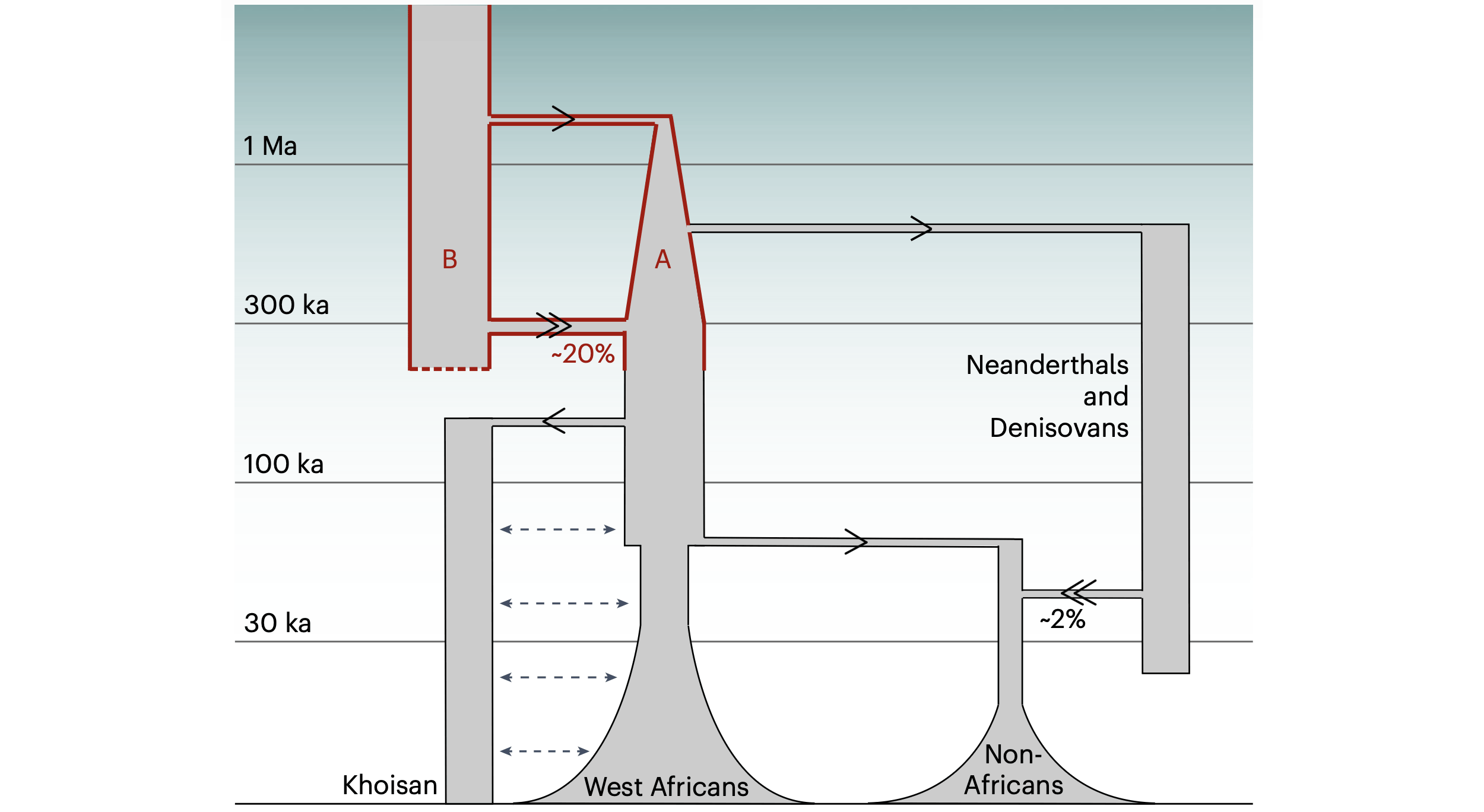
The best-fit model in the work by Cousins and coworkers has two ancetral populations, which they labeled Population A and Population B. The two split around 1.5 million years ago. Much later, around 300,000 years ago, they came back together to form the early modern human population. Around 80% of today’s genetic variation comes from Population A, and around 20% from Population B. These fractions are close to the same in all living humans.
Out of the two ancestors, Population A had the more interesting history. Soon after the split it underwent a bottleneck, shedding much of its earlier variation and reducing incomplete lineage sorting in its descendants. Among those descendants are the Neanderthals and Denisovans, whose shared ancestral branch split from Population A around 800,000 years ago.
Population B, by contrast, was larger and more stable through its early history. Its minority share in the modern human gene pool may reflect its geographic location or some aspects of its ecology. Cousins and coworkers found that Population B ancestry tends to be less likely to include coding regions of genes, which may suggest some selective disadvantage during or after their mixture.
This history aligns in interesting ways with the best-fit scenario presented by Ragsdale and coworkers in their 2023 paper. In that model, too, were two ancestral groups, Stem 1 and Stem 2, which split around 1.6 million years ago. Stem 1 underwent a severe bottleneck, down to a very small size. As Stem 1 evolved, the Neandersovan branch split off from it around 800,000 years ago, and then around 480,000 years ago Stem 1 split into eastern (1E) and southern (1S) branches. These each combined with Stem 2 in different proportions around 100,000 years ago: The southern African groups are around 70% Stem 2 and 30% Stem 1S, all other people around 50% Stem 2 and 50% Stem 1E. It was a more complicated picture than the Cousins-Scally-Durbin scenario, but mostly the same in its earlier phases.
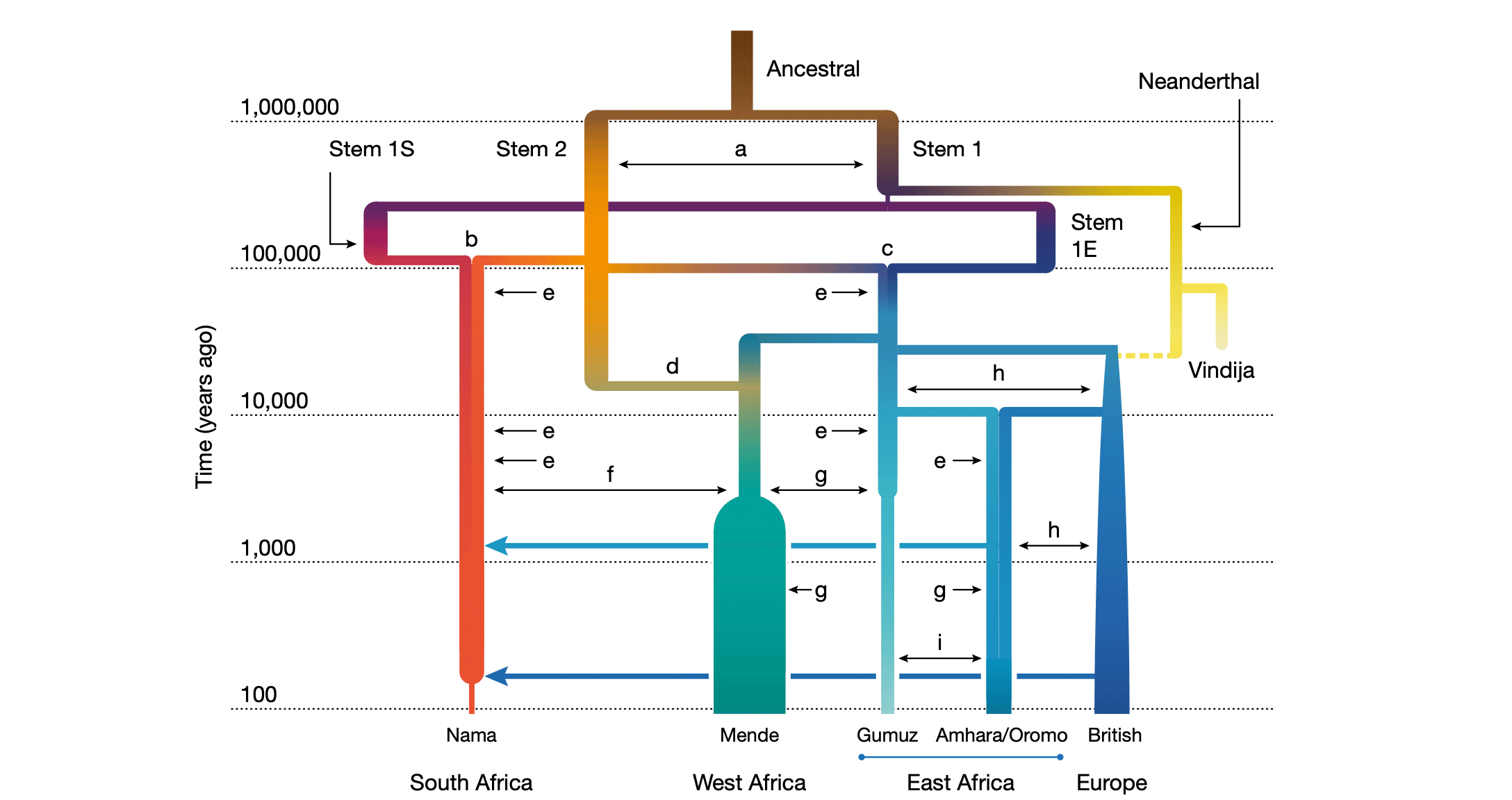
It’s an important feature of the work by Ragsdale and coauthors that there is long-term gene flow between the two stems. The fraction of gene flow each generation is very low, only 1.26 × 10⁻⁴ per generation. Over 50,000 generations that small number does add up. But it is a major impediment to inbreeding and enables the two ancestral stems to have different haplotypes become common by genetic drift, even as they may share adaptive alleles.
Preprints adding to the story
Two new preprints from earlier this year have added slightly different twists on the basic theme of an 80-20 merger. One of these comes from Alan Rogers and collaborators; the other was led by Hrushikesh Loya from Simon Robert Myers’s research group. The two studies were begun for different reasons, and thus accentuate different aspects of the deep population model.
In the case of Rogers and coauthors, their interest was whether deep stems in modern humans might be compatible with the “superarchaic” lineage that contributed to Neanderthal and Denisovan ancestry. Their study is the first to model both these deep lineages, showing that they are indeed different. The “superarchaic” ancestor of Neanderthals and Denisovans, which they label Population S, derives from a stem that diverged from the main modern human branch around 2.5 million years ago. That’s way back in time, well before the Dmanisi fossil hominins, possibly suggesting that Homo erectus ancestors were in Eurasia long before their earliest fossil occurrences in Africa.
Regarding the ancestry of modern humans, Rogers and coworkers confirm that two branches merged. One of these was the center of the action, giving rise to the branch with Neanderthals and Denisovans, and later splitting to give rise to modern human populations. As modern humans arose, that main stem received 20% of its ancestry from a minority stem, which the researchers label Population Z. The divergence of Population Z from the main stem goes back to between 1.4 million and 1.2 million years ago. The model assumes that gene flow from Population Z happened all at once, but it is not hard to see that this could be stretched over some time more gradually.
“The similarity between these sets of findings is remarkable in view of the differences between methods. Some of the methods ignore linkage disequilibrium whereas others rely on it. Some use variation within populations (or even within individuals) whereas others use differences between populations. Yet the studies reach similar conclusions and are thus mutually supportive.”—Alan Rogers and coworkers
The other study, by Loya and coauthors, began with a hypothesis about function. They noted that humans today vary in a key gene related to genetic recombination, PRDM9. The protein product of this gene binds to specific DNA motifs and helps determine where recombination of chromosomes will happen during meiosis. The most common variants today are PRDM9-A type alleles, which occur everywhere in the world and are 85% to 90% in Europe and Asia. The PRDM9-C type allele is globally rare, but occurs at frequencies of 10% to 15% in Africa. Other alleles also occur with lower frequencies and add up to around 35% in Africa.
The interesting piece for Loya and coauthors is that the functional difference between PRDM9-A and PRDM9-C leaves a footprint of greater gene conversion near hotspots for the two protein forms.
These genomic footprints provide a way to trace the histories of these two alleles through ancestral populations. Loya and coworkers build a model in which the two stem lineages differ in PRDM9 type. The population with PRDM9-A they term Population HA, the other with PRDM9-C they term Population HC. In their model, the two separated more than a million years ago and merged around 300,000 years ago. Population HC was the original source of the Neanderthals and Denisovans, and later gave rise to most of the ancestry of modern humans. Population HA contributed around 20% to the ancestry of modern humans at the time of their merger.
In their model there is one additional event. Neanderthals received influx of about 10% of their ancestry from Population HA sometime after their origin. This might correspond to the previously-demonstrated African gene flow that replaced the Neanderthal mtDNA and Y chromosome, as well as an estimated 6–10% of their autosomal ancestry.
I don’t have any committed idea about which of these models may be closest to reality. Going this far back in time, it is almost certain that models lack the power to get into the details of these groups. There may have been more stems with smaller impact, or fluctuations of gene flow over time. What I find most valuable is the overlap in the deep models. As Alan Rogers and coworkers point out, the different approaches are looking at different kinds of data yet arriving at a broadly similar picture. I wrote in 2023 that I tend to prefer isolation-by-distance models. None of these recent studies tested that model directly, but the gene flow in the Ragsdale model is more like isolation-by-distance than the models without gene flow.
Who were these stem populations?
Here follows some informed speculation.
The fossil record from Middle Pleistocene Africa is sparse, and it is biased. More fossils are known from Morocco, the northern part of the East African Rift System, and South Africa. Currently the record has little or no representation from some large geographic regions, notably including West Africa and the Sahel, the Angola-Zambia-DRC highlands, Mozambique to southern Tanzania, and the eastern Mediterranean coast. The Sahara was habitable and inhabited for parts of the Middle Pleistocene. So were parts of the Kalahari.
There is, in other words, much we cannot see.
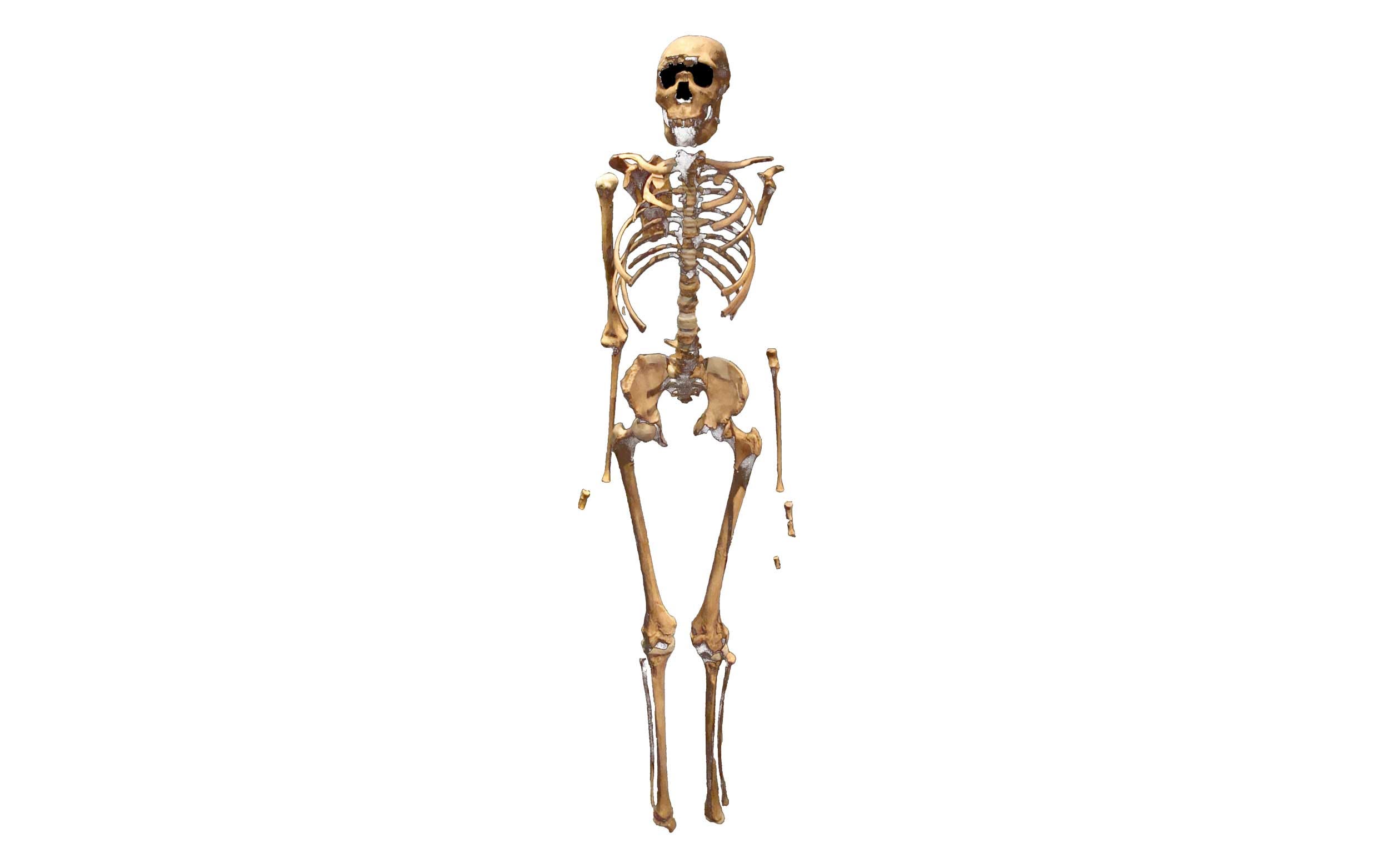
The most visible group in terms of skeletal representation and sample size is from the Rising Star cave system of South Africa. Those fossils between 335,000 and 241,000 years old, belong to Homo naledi. To many researchers, this may seem an unlikely ancestor for modern humans. Certainly my current thinking is that the genetic divergence of H. naledi and modern humans probably happened before 1.5 million years ago, probably too old to be one of the two stem populations.
But it is important to understand the limitations of this assumption. For one thing, the known record of H. naledi is biased toward female adults and juveniles, and the current picture of its body size, brain size, and other morphological features is therefore incomplete. Homo naledi-like brain sizes were common within the hominin populations around 1.5 million to 1 million years ago, seen in fossils like the DAN5 skull from Gona, Ethiopia, and the KNM-OL 45500 partial skull from Olorgesailie, Kenya. Such fossils could be naledi ancestors, or they could reflect early mixture of a naledi stem with the stem leading to archaic and modern humans.
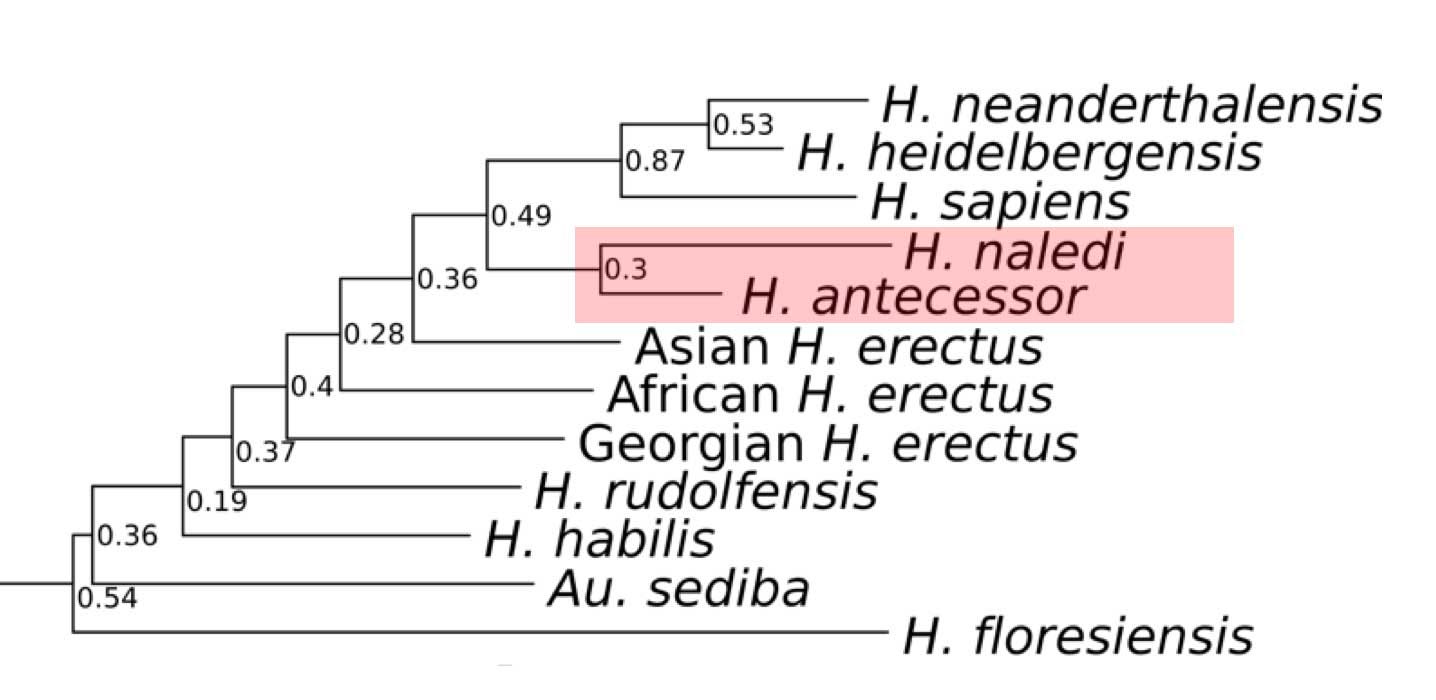
For another thing, it has not been so easy to place H. naledi into hominin phylogenetic trees, and some options suggest that an origin around 1.5 million years ago may be about right. Certainly H. naledi persisted into the right time and place to mix into early modern human populations. From this perspective, the idea that H. naledi may be part of an ancestral mix is hardly far-fetched.
A less provocative idea would be that both the stems are groups that researchers would identify as “archaic humans”, such as those represented by the Bodo and Kabwe fossil skulls. These forms are represented across the time period from around 600,000 years ago (at Bodo, Ethiopia) up to around 300,000 years ago (at Kabwe, Zambia). Certainly a merger of such groups could have happened around this time.
Yet this hypothesis faces its own problems. Nobody has yet found archaic humans from times between 1.5 million and 1 million years ago, when all models suggest the ancestral stems began to diverge. If we assume that both stems ended up archaic humans, in the broad sense, then they must have evolved that way simultaneously from earlier, H. erectus-like ancestors. That could happen with gene flow and selection, and indeed would be a true “multiregional evolution in Africa” mechanism, resembling the Ragsdale model.
A third scenario places the stem populations on different continents. Suppose that one of the stems, which gave rise to Neanderthals and Denisovans as well as the majority of the modern human gene pool, inhabited southwest Asia. The minority stem might then have inhabited part of East Africa or southern Africa. Putting the stem populations on different continents separated by the Sahara Desert would provide a biogeographic reason for the million-year separation of the stem populations. With low levels of gene flow like the Ragsdale model, it would be a multicontinental multiregional evolution scenario.
This scenario might fit the idea proposed by José Bermúdez de Castro and María Martinón-Torres in a 2013 paper, which proposed two “hotspots” of evolution for Pleistocene Homo, one in Southwest Asia and the other in East Africa. In their concept, the Levantine Corridor was an area with near-continuous habitation that gave rise to successive range expansions into Europe and other parts of Eurasia. Homo antecessor as represented in Spain was an early dispersal, possibly the first, and Neanderthals and Denisovans were later dispersals. The Levantine Corridor could well be the home of a Cousins-like Population A.
However, like the other scenarios, this one does not fit all the data. If a wave of dispersal from one stem actually swept from southwest Asia across Africa, it is hard to see how all humans throughout the world could end up with the same mix of the two stems. Further, the protein and fossil data from Homo antecessor and fossils of Asian Homo erectus both show that some parts of Eurasia were inhabited by branches other than the two stems around the same time that the Neandersovan branch got its start. All this makes it seem that Africa is a better hypothesis for both stems.
What do you think? Are there other scenarios that make sense from the fossil and genetic point of view? This is an active area of research and the answers are far from obvious!
References
Bermúdez de Castro, J. M., & Martinón-Torres, M. (2013). A new model for the evolution of the human Pleistocene populations of Europe. Quaternary International, 295, 102–112. https://doi.org/10.1016/j.quaint.2012.02.036
Collier, N. W., Gravel, S., & Ragsdale, A. P. (2026). Inferring hominin history with recurrent gene flow from single unphased genomes and a two-locus statistic. bioRxiv. https://doi.org/10.64898/2026.04.11.717825
Cousins, T., Scally, A., & Durbin, R. (2025). A structured coalescent model reveals deep ancestral structure shared by all modern humans. Nature Genetics, 57(4), 856–864. https://doi.org/10.1038/s41588-025-02117-1
Dembo, M., Radovčić, D., Garvin, H. M., Laird, M. F., Schroeder, L., Scott, J. E., Brophy, J., Ackermann, R. R., Musiba, C. M., de Ruiter, D. J., Mooers, A. Ø., & Collard, M. (2016). The evolutionary relationships and age of Homo naledi: An assessment using dated Bayesian phylogenetic methods. Journal of Human Evolution, 97, 17–26. https://doi.org/10.1016/j.jhevol.2016.04.008
Hawks, J. (2017). Introgression makes waves in inferred histories of effective population size. Human Biology, 89(1), 67–80. https://doi.org/10.13110/humanbiology.89.1.04
Loya, H., Gupta Hinch, A., Palamara, P. F., Speidel, L., & Myers, S. R. (2026). Genome-wide genealogies reveal deep admixtures forming modern humans. bioRxiv. https://doi.org/10.64898/2026.04.17.719197
Mallick, S., Li, H., Lipson, M., Mathieson, I., Gymrek, M., Racimo, F., Zhao, M., Chennagiri, N., Nordenfelt, S., Tandon, A., Skoglund, P., Lazaridis, I., Sankararaman, S., Fu, Q., Rohland, N., Renaud, G., Erlich, Y., Willems, T., Gallo, C., … Reich, D. (2016). The Simons Genome Diversity Project: 300 genomes from 142 diverse populations. Nature, 538(7624), 201–206. https://doi.org/10.1038/nature18964
Padilla-Iglesias, C., Xue, Z., Leonardi, M., Perez, M. F., Paijmans, J. L. A., Colucci, M., Hovhannisyan, A., Maisano-Delser, P., Blanco-Portillo, J., Ioannidis, A. G., Lucarini, G., Cerasoni, J. N., Kandel, A. W., Will, M., Hallett, E. Y., Krapp, M., Lupo, K., Scerri, E. M. L., Crevecoeur, I., … Manica, A. (2025). Pan-African model explains Homo sapiens genetic and morphological evolution. bioRxiv. https://doi.org/10.1101/2025.05.22.655514
Ragsdale, A. P., Weaver, T. D., Atkinson, E. G., Hoal, E. G., Möller, M., Henn, B. M., & Gravel, S. (2023). A weakly structured stem for human origins in Africa. Nature, 1–9. https://doi.org/10.1038/s41586-023-06055-y
Rogers, A. R., Islam, M. T., Brand, C. M., & Webster, T. H. (2026). The Genetic Legacy of Introgression from Two Deeply Divergent Lineages in the Genus Homo. bioRxiv. https://doi.org/10.64898/2026.03.22.713509
Schiffels, S., & Durbin, R. (2014). Inferring human population size and separation history from multiple genome sequences. Nature Genetics, 46(8), 919–925. https://doi.org/10.1038/ng.3015
Wang, B., Lei, C., Lin, H., Shi, S., Ma, X., Zeng, W., Yuan, K., Ni, X., & Xu, S. (2026). ArchaicSeeker 3.0: A deep-learning framework for scalable, haplotype-resolved inference of archaic introgression. bioRxiv. https://doi.org/10.64898/2026.05.05.722798
Incredible finding. It does seem to push human speech, and humans as we more or less recognise them back pretty early? Like 1.5 mya maybe 2.5 MILLION years ago? That's shocking honestly. Alan Rogers is going to win "found earliest divergence" award at this rate. That's well into the oldowan era.
I get the issue of the presence of other hominid fossils and the paucity in key areas of what might be more likely our own predecessors, but the thought experiment I work with is
If naledi was the oldest we'd find we'd assume it was ancestral to us. Until we found jebel irhoud
Likewise with dmanisi, until we've now found that denisovanesque looking Yunxian skull from 1.76 mya. I get that's almost rabbit in the Cambrian era (as a friend put it) but it at least gives us another strand of possibilities. Humans as we more or less recognise them, going way back.
And as you're highlighting here we apparently haven't even scratched the surface in terms of the fossil sites we could be digging.
Kind of speechless here we are in the relative golden age of palaeoanthropology. Utterly disgraceful funding is getting cut I'm hoping its just reversed in two years. Thank you for these constant updates Professor Hawks.
The first paragraph is a breathtaking example of scientific curiosity in action. Wow. Nobody is as good at opening minds to fresh ways of thinking than John Hawks. I found it impossible to read further without first taking time to consider the implications of his words.
Hawks writes so clearly that even though I lack a background in genetics, I was fascinated by how generously he incorporates and credits the work of others to suggest a new approach to understanding the evolutionary history of Homo sapiens. I love that Hawks concludes his piece by asking, “What do you think?” I’m not sure what I think. I only know that I’d love to get these researchers together in one room and ask them all kinds of questions!