

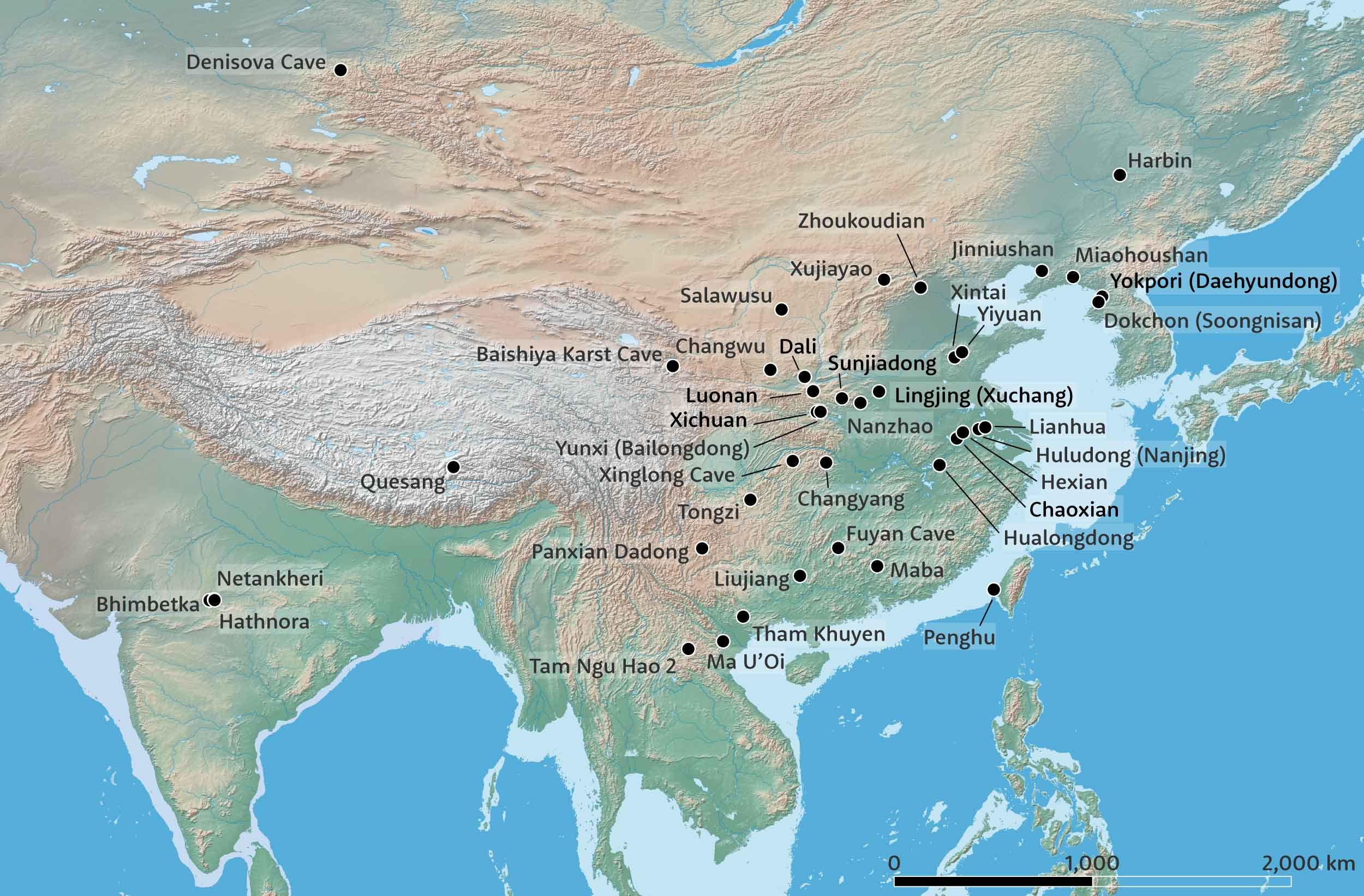
The headlines this week are that scientists have obtained protein data from Homo erectus teeth, showing a link between this species in China and the later populations known as the Denisovans. The work was done by Qiaomei Fu and her team, published in Nature, and includes ancient peptides from six teeth that come from three sites: Zhoukoudian, Hexian, and Sunjiadong.
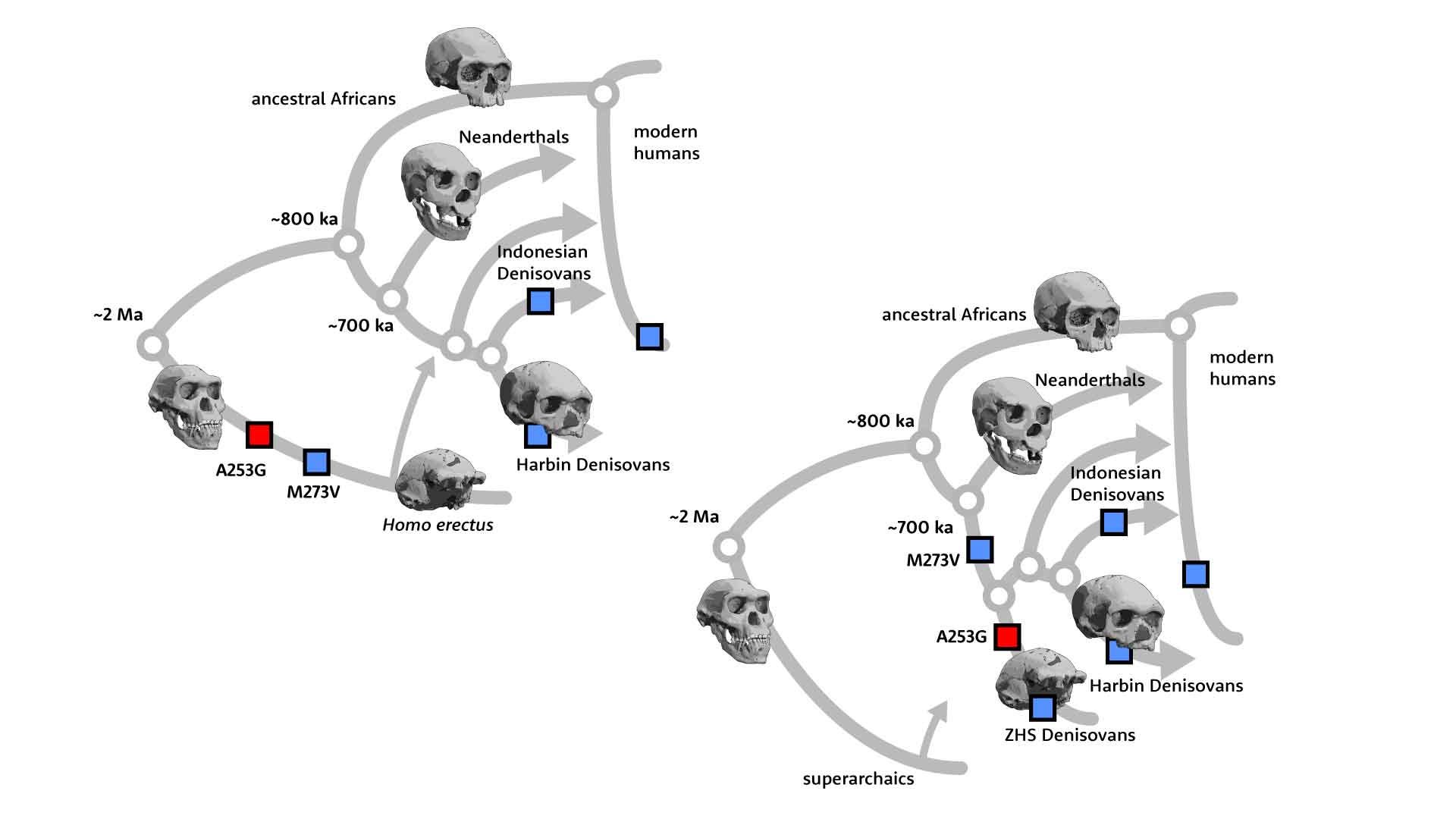
All six teeth share two derived amino acid changes, both in the sequence of an enamel matrix protein known as ameloblastin, or AMBN. One of these hasn’t before been seen in hominins: a change from alanine to glycine at position 253 of the sequence, or A253G. The other is 20 positions downstream, swapping in valine for the ancestral methionine, M273V. The DNA mutation encoding this change is shared by both the Denisova 3 and Denisova 25 genomes. The M273V amino acid change itself is in the Harbin and Penghu 1 dental proteomes—part of why they align with Denisovans. A number of genomes from modern people also share this change, possibly from Denisovan ancestors.
The hypothesis presented by Fu and coworkers is that Homo erectus was the source of M273V, and its presence in Denisovans is a result of introgression. In support of this idea of introgression, they note earlier research on the Denisova 3 and Denisova 25 genomes that suggests a contribution from a “superarchaic” source population. Many—including me—have speculated that this superarchaic ancestry came from H. erectus. Fu’s team may have just proved it.
But I don’t think these teeth are Homo erectus.
Their estimated ages, all around 400,000 years ago, are prime Denisovan time. Fu and coworkers find that all the teeth share a derived link with later Denisovan genomes. For me, the most likely hypothesis is that these teeth come from a population within the Denisovan branch of humanity.
This situation is basically the same as the Sima de los Huesos fossils. Those remains are around 430,000 years old. Those fossils look like Neanderthals in some subtle ways, but until DNA was recovered from them, many researchers considered them to be part of a different group, often called Homo heidelbergensis. DNA revised both the timeline and their identification.
It may seem heretical, but I think protein data may be about to do the same for fossils from East Asia.
The teeth
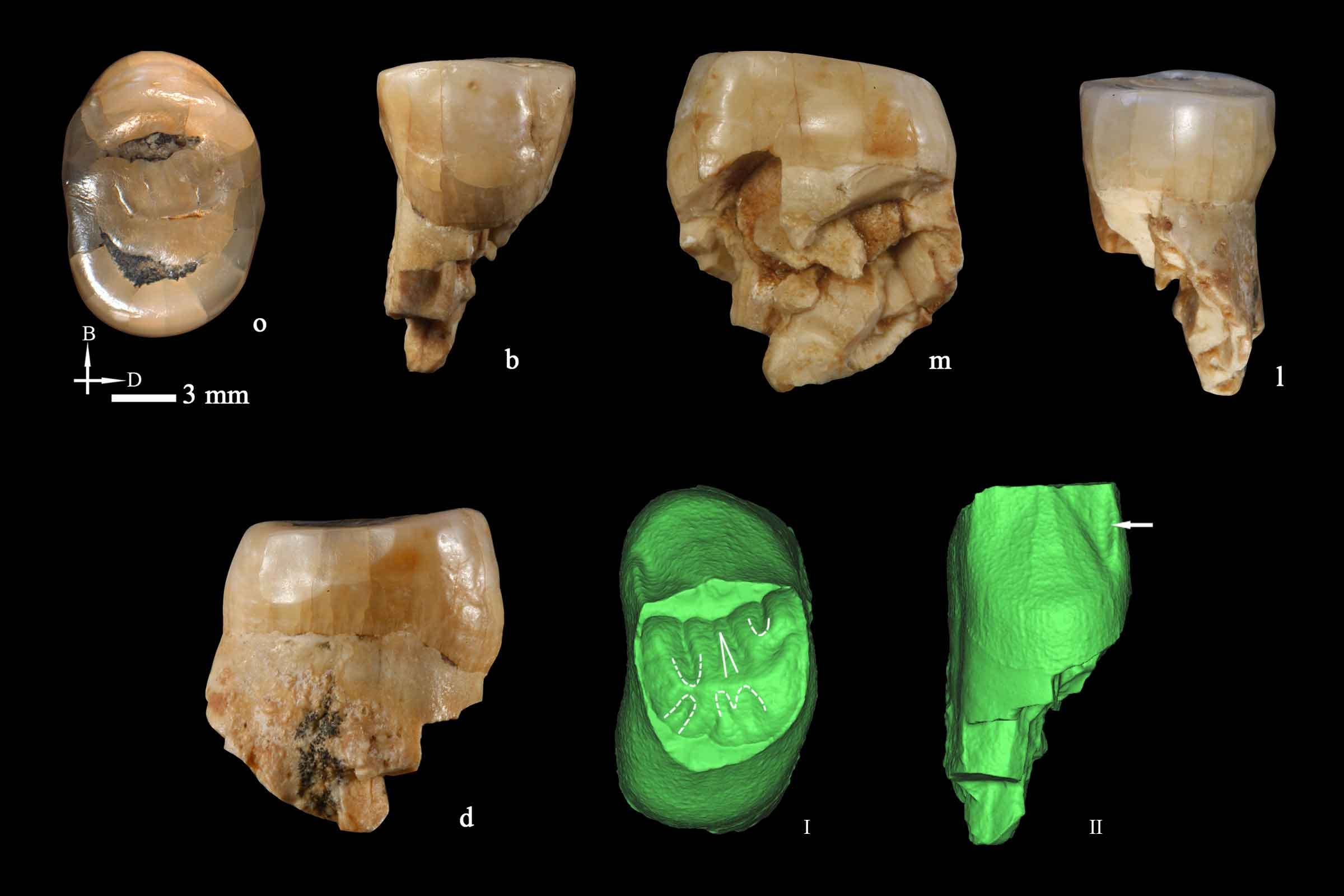
First, the context of the teeth. Three of the teeth come from Sunjiadong, in central China near Wuhan. These were described by Lingxia Zhou and coworkers in 2018 after their discovery in 2012. The three teeth represent three different individuals of different ages.
The only skeletal remains described with the teeth are small parts of the mandible and maxilla of a young child, also represented by four of the teeth, one of which was sampled for proteins. Zhou and coworkers find that the pattern of tooth eruption of this child is compatible with modern humans and is slower than found in Homo erectus children like the Turkana Boy skeleton.
Although Fu and coworkers cite two papers for the estimated age of 400,000 years ago, both of those cited works base the age on a general idea that the fauna from Sunjiadong are “Middle Pleistocene”. I cannot find any radiometric or paleomagnetic results to constrain the age of the hominin teeth.
The Sunjiadong teeth overlap in size with modern humans, H. erectus, and Neanderthals. Zhou and collaborators describe their form as most similar to Zhoukoudian teeth. At the same time, they point out several aspects shared with later fossil teeth from China. The morphology has no shared derived features with Homo erectus samples that would exclude them being Denisovan or some other group.
No site from the Middle Pleistocene has more historic importance to understanding the fossil record of China than Zhoukoudian. Known as “Dragon Bone Hill”, this place southwest of Beijing actually has several different caves. The most well-known of these, Locality 1, is an infilled cave that began to be investigated in the 1920s. Most of the excavation work through the 1930s was directed by Pei Wenzhong and later by Jia Lanpo. Funding for this research was raised from the Rockefeller Foundation by the Canadian anatomist Davidson Black, who studied the fossil hominin remains. After Black’s death in 1934, the German anthropologist Franz Weidenreich directed the laboratory in Beijing and continued studies of the fossils. The fossils from that work were lost in 1941.
The tooth in this new protein study, PA69, is a lower molar that was excavated during the early 1950s, one of five teeth from Locality 1 that were found in the postwar era.
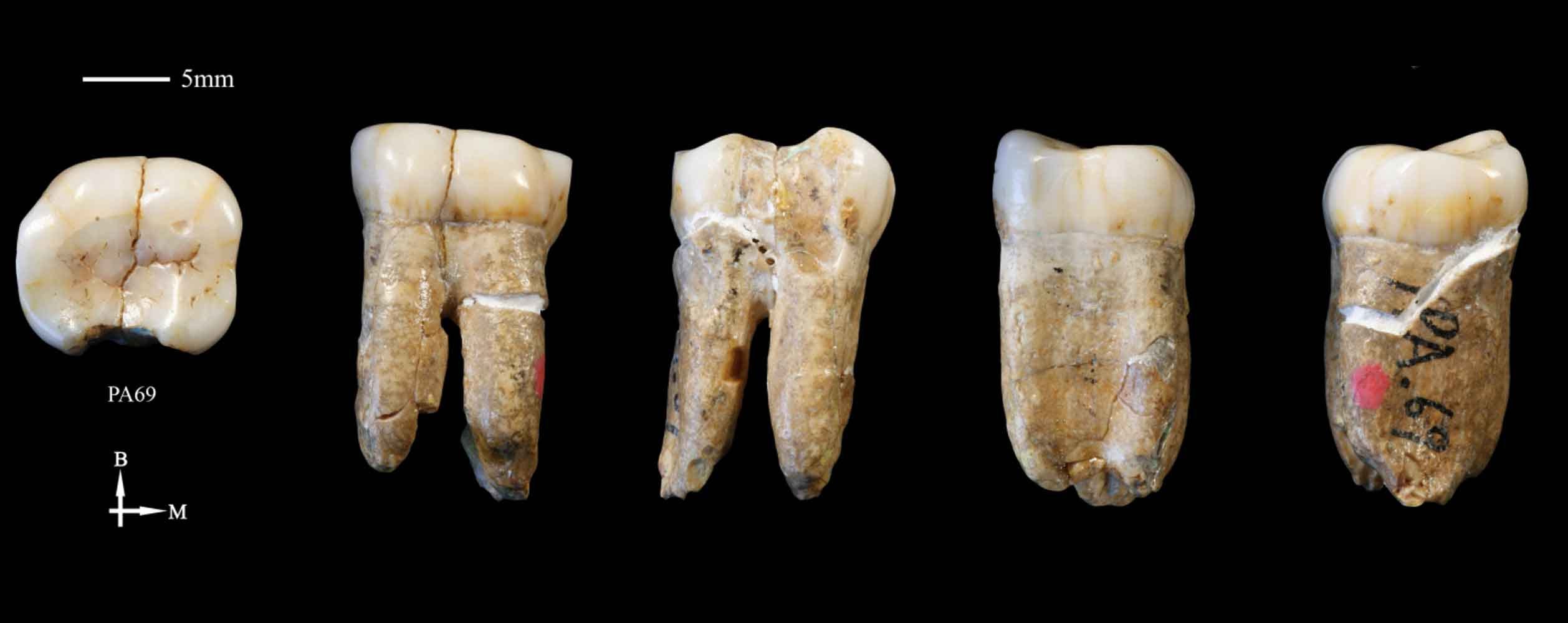
These teeth were studied with microCT by Song Xing and collaborators in a 2018 paper. PA69 is reported to come from layers 8-9, the same levels as some of the skulls studied by Weidenreich, which have long been attributed to Homo erectus. The estimated age reported in the new study by Fu and coworkers, around 420,000 years ago, is just one story. This date comes from 1980s-era thermoluminescence work, with a reported error of around 80,000 years, and was generally supported by ESR results published in 1991. Guanjun Shen and coworkers in 2009 applied cosmogenic burial dating to the site, finding a median estimate around 650,000 to 770,000 years. That seems old. The error ranges reported with those estimates are very wide, ranging from under 400,000 years to more than 900,000. So possibly the chronology around 420,000 years is correct.
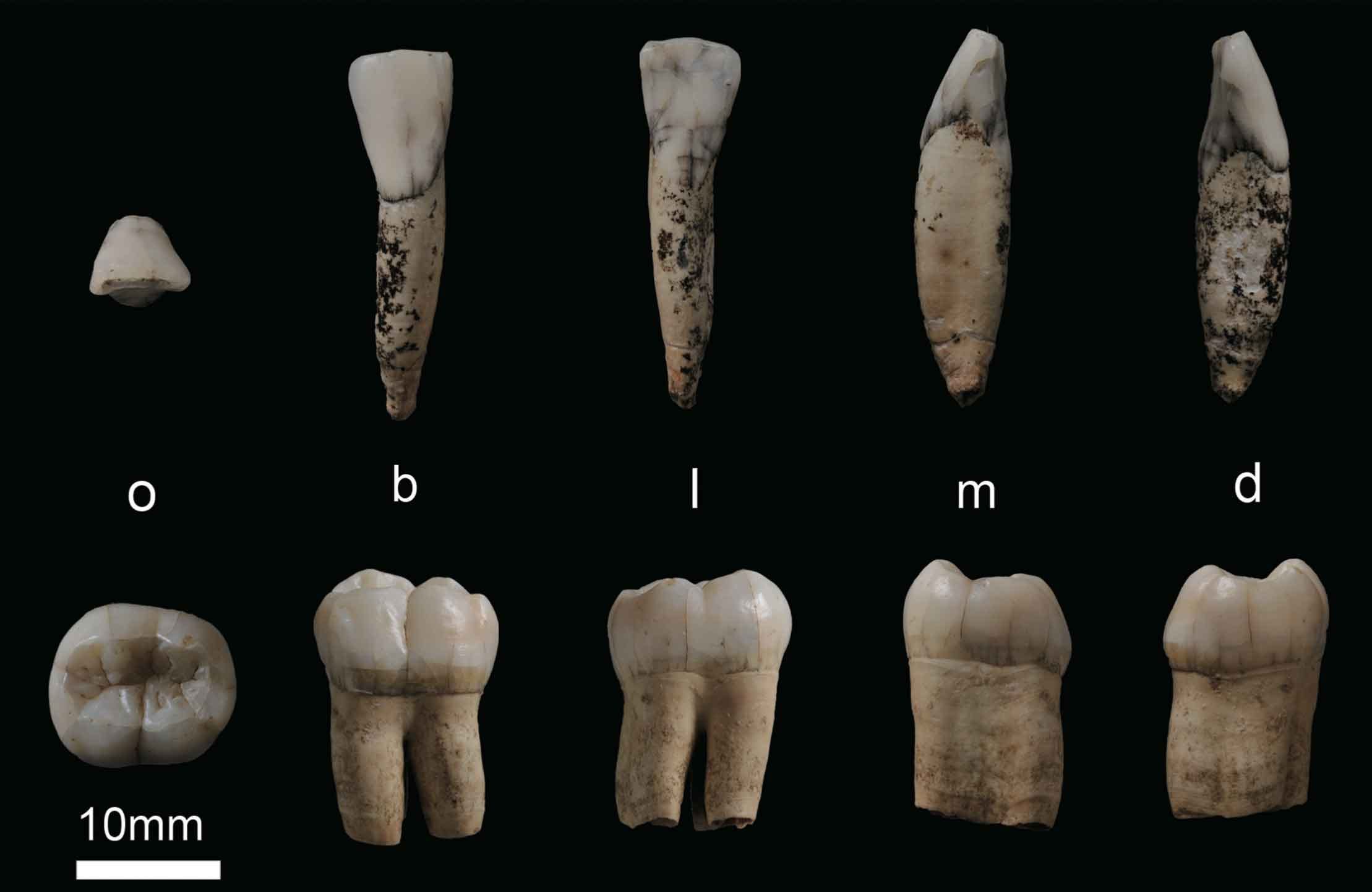
The fossils from Hexian are less known but nonetheless classic. Longtan Cave is near the Yangtze River in Hexian county, west of Shanghai. The most studied fossil from the site is a partial skull, PA830, usually attributed to Homo erectus. Its cranial height is low relative to its length, and its parietal bones slope inward giving a trapezoid shape when seen from behind. Those traits are similar to other skulls attributed to H. erectus. But the skull is quite broad, and its endocranial volume, around 1025 ml, is within the range of both Neanderthals and modern people. The teeth included in this study come from a thin layer near the base of the site with the other hominin remains, including the skull and a partial mandible.
I have not seen the Sunjiadong teeth, but I have studied the Zhoukoudian and Hexian teeth. They’re not a lot to go on. In terms of their morphology, they are not exceptional in size or shape in ways that would rule out connections with later populations. Most of the Chinese researchers who have studied them have concluded that their form does suggest anatomical connections with later samples.
One of the interesting things about the PA69 tooth is that the internal boundary between dentine and enamel is more wrinkly than in many other fossil molars. It looks like a complicated set of river valleys cut deeply into a plateau. The descriptions of some of the teeth from Zhoukoudian and Hexian teeth keyed in on this “dendrite-like” pattern. I remember sitting in a conference presentation years ago and seeing images of the internal structure of these teeth. It’s impressive that scientists can see inside them. I mention this observation because it seems to be the only derived morphology that is seen in these teeth compared to the samples from Indonesia or Africa. The scientists who described the teeth considered it a possible identifying feature of East Asian H. erectus. But since this pattern is unique to this group of fossils, it doesn’t exclude a sister-group relationship with later fossil hominins from China.
Protein scenarios
So the morphology of the teeth doesn’t speak for itself. That’s a bigger problem for proteomic analysis than for ancient DNA. The enamel proteome has way less information than genetic sequences, even compared just to mitochondrial DNA. In the case of this new study on six teeth, there are only two informative amino acid changes: A253G and M273V. By contrast, a mitochondrial genome has a few dozen mutational changes. A sample of six whole genomes would have 10 million or more, and most work with ancient DNA is based on around a million SNPs.
Without clear information from the morphology, there’s a strong limit to what these six teeth can tell us about the identity of the group they come from. A sample of two amino acids doesn’t tell us branch lengths, or times. It really just gives the opportunity to test two basic hypotheses: Is this group of six teeth variable or the same, and do they share derived changes with any other known individuals or groups?
The six teeth all share two derived amino acid changes, A253G and M273V, and that’s good evidence that they come from the same branch of hominins. Some Denisovans and some modern people also have M273V. That’s good evidence that known members of the Denisovan branch either shared a common ancestor with the Zhoukoudian-Hexian-Sunjiadong (ZHS) group, or mixed with them.
But that doesn’t mean the ZHS teeth are Homo erectus. There are several hypotheses that are consistent with the protein data.
The hypothesis in the paper: The ZHS are late Homo erectus, and this Asian Homo erectus branch evolved both A253G and M273V, which are not found in Homo antecessor or earlier hominins. Some descendants of this ZHS H. erectus population interbred with Denisovans sometime after 400,000 years ago, M273V introgressed into some Denisovans, and much later Denisovans transferred that change to the ancestors of some living people.
A “Denisovan geographic variation” hypothesis: The ZHS teeth come from a Denisovan population. The common Denisovan ancestors evolved M273V, and both ZHS Denisovans and the Siberian Denisovans share this change. The ZHS Denisovan branch additionally evolved A253G.
An “earlier introgression” hypothesis: ZHS are an early Denisovan population and have M273V from the common Denisovan ancestor. The ancestors of the ZHS Denisovans did mix with earlier Homo erectus, and this is where they picked up A253G.
“Introgression into the ghost”: ZHS are Homo erectus or some previously-unknown group. Their ancestors evolved A253G, and they picked up M273V from a Denisovan source.
One additional point to add is that seeing both amino acid changes within the single AMBN protein may have important functional implications. Maybe the A235G and M273V changes are both related to the dendrite-like shape reflected in the internal structure of the Zhoukoudian and Hexian molars. Or maybe the same factors that selected for the distinctive pattern of shovel-shaping in the incisors of the ZHS teeth and later fossils from China are tied in some way to the shared M273V mutation.
Homo erectus or Denisovans?
Denisovans existed for a long time before 400,000 years ago. Currently the two most substantive estimates of Denisovan origin time come from two different sets of data. Stéphane Peyrégne and collaborators sequenced the whole genome of the Denisova 25 bone fragment—itself around 200,000 years old—which gives some of the strongest direct evidence of Neanderthal-Denisovan origins. They estimated the Denisovans branched from Neanderthals between 585,000 and 505,000 years ago.
Alan Rogers has led a few recent studies using a statistical method optimized to find the times of branching and gene flow in samples of ancient genomes. The most recent preprint from his team has an estimate of around 700,000 years ago for the branching of Neanderthal and Denisovan lineages. Since this estimate explicitly takes into account the mixture between these groups later in time, I tend to think it is the more accurate of the two methods.
There’s an additional direct way of knowing the Denisovans are way older than 400,000 years: DNA verifies the 430,000-year-old Sima de los Huesos fossils as an early group within the Neanderthal branch. The European record is full of early Neanderthals. As reviewed by Mirjana Roksandic and collaborators in 2018, nearly all Middle Pleistocene European hominins share at least some morphology with Neanderthals, going back as far as the 600,000-year-old Mauer mandible. While Roksandic and coworkers discuss some possible exceptions, including a fossil jaw from Maia Balanica, Serbia, my presumption these days is that anything in Europe after around 600,000 years ago is Neanderthal until proven otherwise.
I think China is the same story. Everything after around 600,000 years ago is Denisovan, until we find clear evidence showing a break between populations that might be the arrival of Denisovans as a new group.
From DNA we know a lot about later Denisovan history. The genetic data show us that they had diverged into three branches by around 250,000 years ago, and one of those branches, with variation still represented today in the ancestors of Papuan people, started as early as 350,000 years ago. But that story leaves more than 150,000 years and as much as 350,000 years of Denisovan population history unaccounted for.
The early diversification of Denisovans may be recorded in the fossils from China in the time interval from 600,000 to around 350,000 years ago. The teeth in this study, most of the Zhoukoudian fossil collection, fossils like the Hexian and Nanjing skulls, may actually be early Denisovans.
A different hypothesis has been suggested by Xijun Ni and collaborators, mostly recently in a 2025 paper led by Xiaobo Feng. They suggest that the fossil skulls from Yunxian, China, estimated between 1 million and 600,000 years old, are early members of the Denisovan group. Connecting these fossils to the Harbin skull, they call this lineage Homo longi. In their hypothesis, the Yunxian-Harbin Homo longi lineage is different from Zhoukoudian and other Homo erectus fossils. They consider these as two different branches. I wrote about this work last year.
If this hypothesis were correct, it seems possible that those two branches might have coexisted at some times and places. Or maybe there are parts of China where one replaced the other for a while, only to flip back again when the climate shifted. A sample like Zhoukoudian, which collected pieces of dead hominins for thousands of years, might actually include fragments from both groups.
As I’ve written, I don’t subscribe to this “hard” Homo longi point of view. The timeline from DNA has a lot more weight in my thinking, and my confidence in morphological evidence as a way of finding connections like these is weak.
At the same time, the superarchaic mixture within Denisovans does provide a possible evolutionary path for similarities between earlier fossils from Yunxian and the much later fossils from Harbin and other sites. I’ve got no problem with an erectus-Denisovan introgression link. I just tend to think that the ZHS teeth are on the Denisovan side of the equation. The superarchaic ancestry in Denisovans is a low proportion—so finding the smoking gun in the dental proteome is just not a high probability.
Still, both the H. erectus and Denisovan scenarios are possible, and that’s my bottom line. If the teeth were attached to a Turkana Boy like skeleton, that would probably settle it. Or if the Zhoukoudian tooth is actually more than 700,000 years old, I’d more easily accept we know they are a deeper group. But at 400,000 years ago, there’s not a very good reason to connect these teeth with H. erectus, and I even question whether the skulls from Zhoukoudian and Hexian have any reliable connection to that species.
The implications are not very different either way. It’s tough to look at data like these and not be impressed with the uncertainty of boundaries and the mixing across those boundaries by past people.
Note: One interesting piece of this study is that the dental proteome provides information about the sex of the six individuals represented by the teeth. Five of the six have a Y chromosome signature in their enamel proteome, indicating male sex. I’ve written previously about the sex bias among known Denisovan fossil individuals, which now includes the mandible from Penghu and two teeth from Denisova Cave itself. The large size of the Harbin skull also suggests male skeletal sex for this individual. Aside from the Denisova 3 finger bone, there is not yet any diagnostic morphological information associated with remains with female sex from this group. The Sunjiadong incisor with a female sex assessment in this new study provides only a hint about how dental size may correlate with sex in the ZHS group.


References
Feng, X., Yin, Q., Gao, F., Lu, D., Fang, Q., Feng, Y., Huang, X., Tan, C., Zhou, H., Li, Q., Zhang, C., Stringer, C., & Ni, X. (2025). The phylogenetic position of the Yunxian cranium elucidates the origin of Homo longi and the Denisovans. Science, 389(6767), 1320–1324. https://doi.org/10.1126/science.ado9202
Fu, Q., Wu, Z., Bennett, E. A., Xing, S., Ji, Q., Dong, Z., Rao, H., Gu, X., Dang, Y., Xing, J., Zhou, K., & Feng, X. (2026). Enamel proteins from six Homo erectus specimens across China. Nature. https://doi.org/10.1038/s41586-026-10478-8
Liu, W., Martinón‐Torres, M., Kaifu, Y., Wu, X., Kono, R. T., Chang, C., Wei, P., Xing, S., Huang, W., & Bermúdez De Castro, J. M. (2017). A mandible from the Middle Pleistocene Hexian site and its significance in relation to the variability of Asian Homo erectus. American Journal of Physical Anthropology, 162(4), 715–731. https://doi.org/10.1002/ajpa.23162
Peyrégne, S., Massilani, D., Swiel, Y., Boyle, M. J., Iasi, L. N. M., Sümer, A. P., Mesa, A. B., De Filippo, C., Viola, B., Essel, E., Nagel, S., Richter, J., Weihmann, A., Schellbach, B., Zeberg, H., Visagie, J., Kozlikin, M. B., Shunkov, M. V., Derevianko, A. P., … Kelso, J. (2025). A high-coverage genome from a 200,000-year-old Denisovan. bioRxiv. https://doi.org/10.1101/2025.10.20.683404
Rogers, A. R., Islam, M. T., Brand, C. M., & Webster, T. H. (2026). The Genetic Legacy of Introgression from Two Deeply Divergent Lineages in the Genus Homo. bioRxiv. https://doi.org/10.64898/2026.03.22.713509
Roksandic, M., Radović, P., & Lindal, J. (2018). Revising the hypodigm of Homo heidelbergensis: A view from the Eastern Mediterranean. Quaternary International, Filling the Geographic Gaps in the Human Evolutionary Story, 466, 66–81. https://doi.org/10.1016/j.quaint.2017.10.013
Shen, G., Gao, X., Gao, B., & Granger, D. E. (2009). Age of Zhoukoudian Homo erectus determined with 26Al/10Be burial dating. Nature, 458(7235), Article 7235. https://doi.org/10.1038/nature07741
Welker, F., Ramos-Madrigal, J., Gutenbrunner, P., Mackie, M., Tiwary, S., Rakownikow Jersie-Christensen, R., Chiva, C., Dickinson, M. R., Kuhlwilm, M., de Manuel, M., Gelabert, P., Martinón-Torres, M., Margvelashvili, A., Arsuaga, J. L., Carbonell, E., Marques-Bonet, T., Penkman, K., Sabidó, E., Cox, J., … Cappellini, E. (2020). The dental proteome of Homo antecessor. Nature, 580(7802), 235–238. https://doi.org/10.1038/s41586-020-2153-8
Xing, S., Martinón-Torres, M., & Bermúdez De Castro, J. M. (2018). The fossil teeth of the Peking Man. Scientific Reports, 8(1), 2066. https://doi.org/10.1038/s41598-018-20432-y
Xing, S., Martinón-Torres, M., Bermúdez De Castro, J. M., Zhang, Y., Fan, X., Zheng, L., Huang, W., & Liu, W. (2014). Middle Pleistocene Hominin Teeth from Longtan Cave, Hexian, China. PLoS ONE, 9(12), e114265. https://doi.org/10.1371/journal.pone.0114265
Zhang, Y., Zhang, S., Gu, X., & Li, X. (2017). A study on the perforated bone from Sunjiadong site in Henan Province. Acta Anthropologica Sinica, 36(4), 457–464.
Zhou, L., Li, X., Gu, X., Du, B., Shi, J., & Gao, X. (2018). Middle Pleistocene hominins from the Sunjiadong site, Luanchuan county, Henan Province, Central China. Acta Anthropologica Sinica, 37(2), 192–205.
>China is the same story. Everything after around 600,000 years ago is Denisovan
But erectus still existed in SEA (though not China) until much later ~100 kya, right?
And also, presuming that erectus are the same as "superarchaics", where and when do you think their introgression into Denisovans occurred?
Interesting! There are some potential nomenclatural ramifications if this is true. If Zhoukoudian and Denisova and Harbin are all considered part of the same species, then I think *Homo pekinensis* (Black & Zdansky 1927) (originally *Sinanthropus*) takes precedence?