

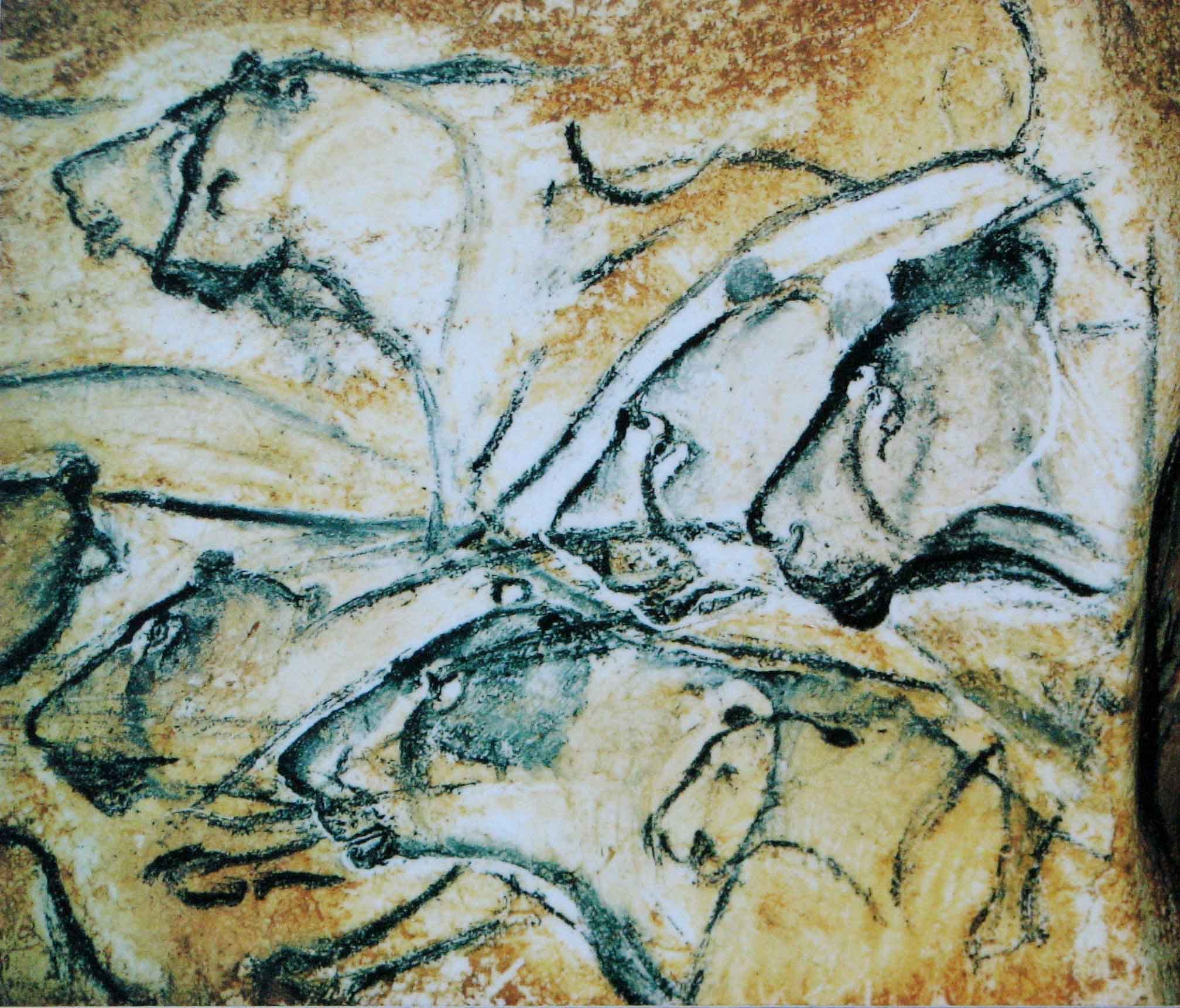
Cave lions mostly didn’t live in caves. They’re like their human contemporaries, the Neanderthals, that way. Just as Neanderthals were not truly cavemen, but nineteenth-century naturalists found them there, so too with the ancient European lions.
Cave lions are like Neanderthals in another way: They mixed with their African-derived relatives. New details about the pattern of mixture of cave lions and modern lions are coming from ancient genomes. David Stanton and coworkers in a new paper compiled twelve genomes from ancient lions across northeastern Siberia, Yukon, Central Asia, and Europe to better understand their diversity and connections with surviving populations of lions.
What they found was widespread evidence of interbreeding from modern lions into ancient cave lion populations.
What set cave lions apart
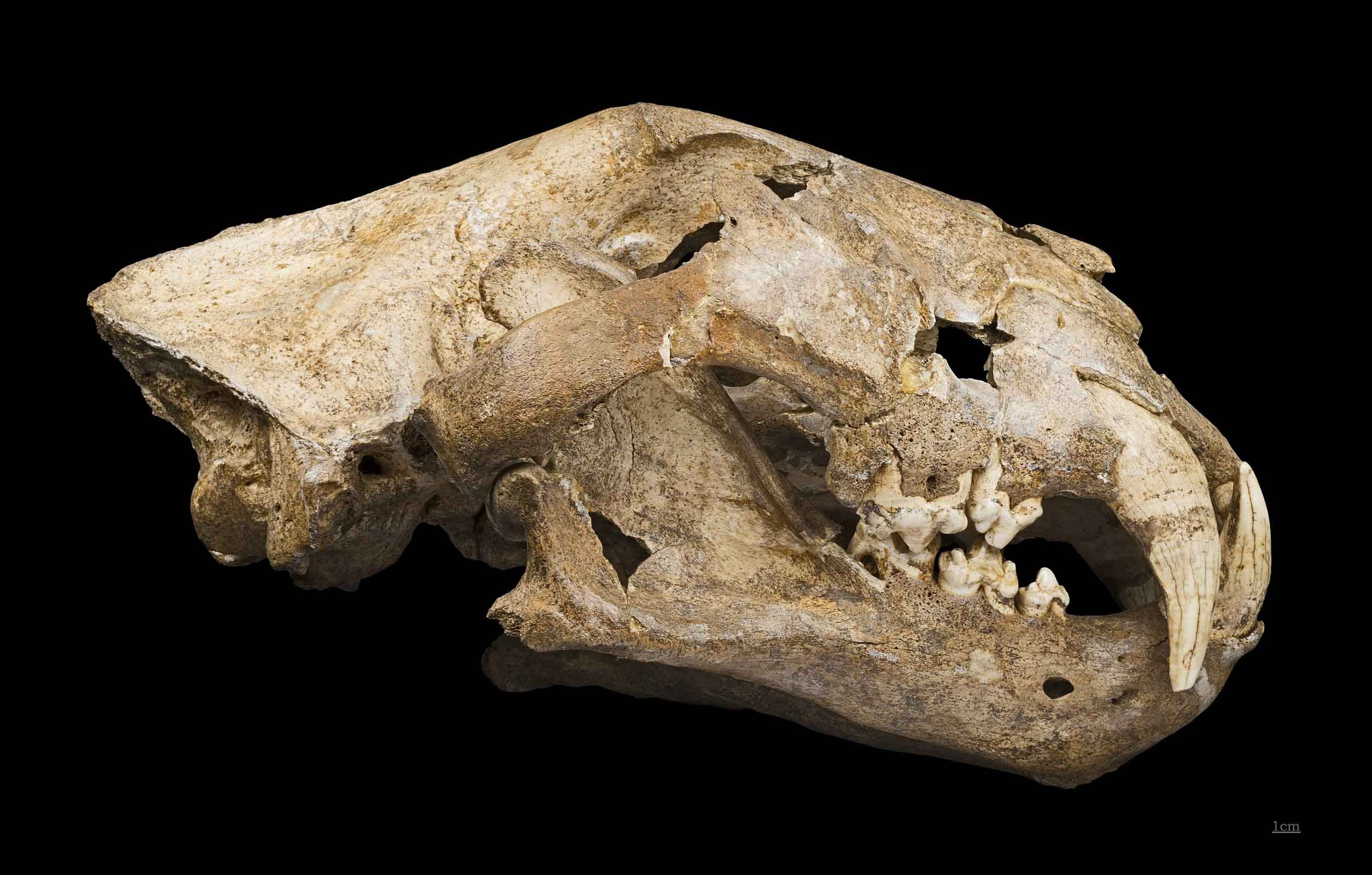
Usually classified as Panthera spelaea, these extinct cats spanned the mammoth steppe of northern Eurasia during the Late Pleistocene. They averaged larger in size than surviving African or Asian lions. Their cranial differences from modern lions are reminiscent of some early human relatives: a taller, more robust mandibular ramus, a convex mandibular base, greater postorbital constriction, larger muzzles and wider nasal apertures. Cave lions were in some ways like the Neanderthals of the lion world.
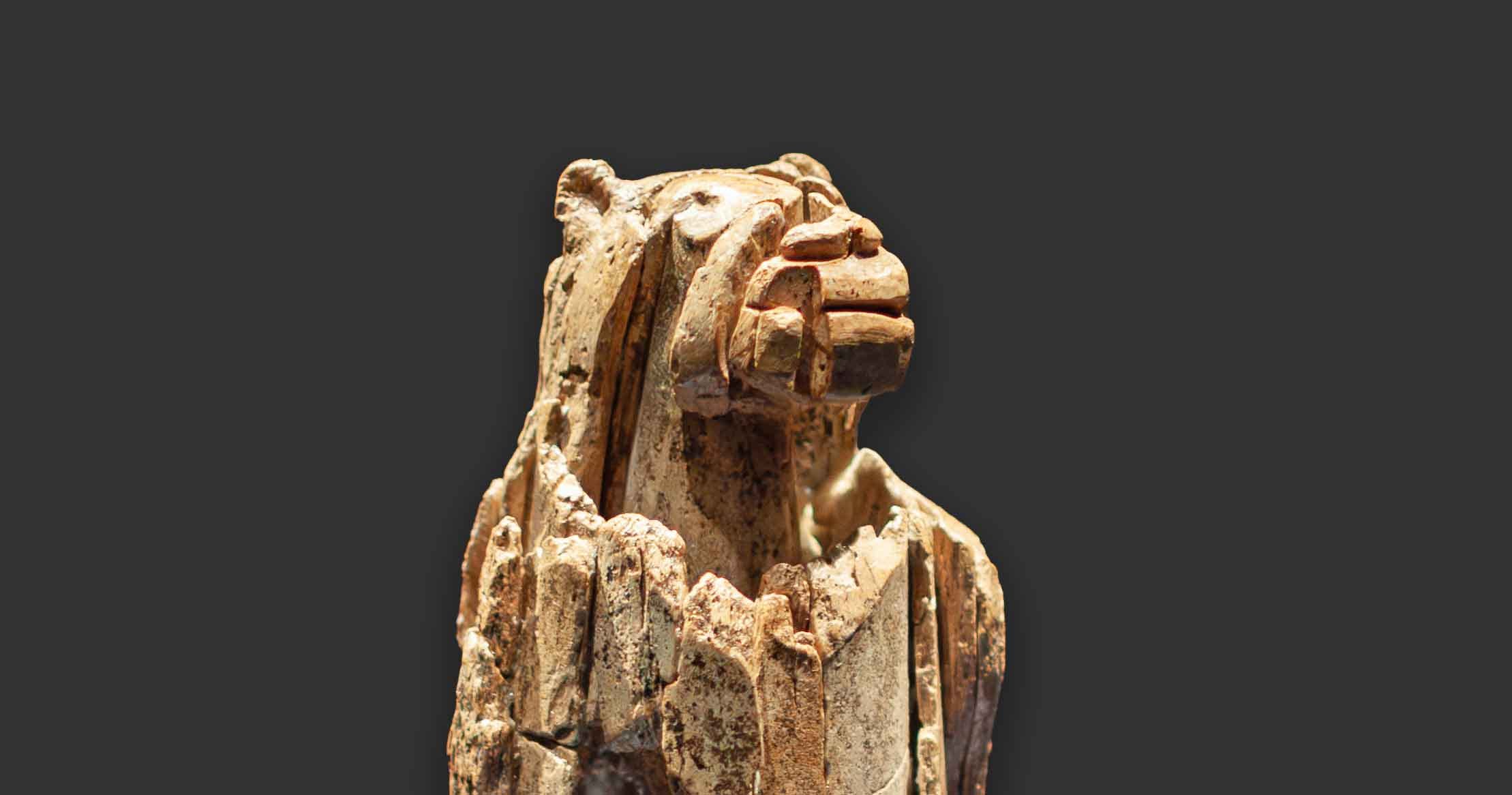
They became extinct between around 15,000 and 10,000 years ago. During their final years, modern people depicted them in cave art and in sculpted ivory, leaving direct insight into their appearance. Adult male cave lions seem not to have had manes. The permafrost of northern Siberia has yielded some remarkable frozen bodies, including cubs. The fur of these frozen individuals was lighter in color and had a thick underlayer. Those qualities are very different from today’s lions that have fur made for staying cool in the African sun.
There is a living cat species that is larger than the modern lion: the tiger. The similarities of lions and tigers often confused scientists working to understand the relationships of the big cats before DNA sequences became available. Lions and tigers are close relatives, but not that close: Modern leopards and jaguars are both closer to lions than tigers are to any of these other big cats. The superficial resemblance of cave lions and tigers has sometimes confused paleontologists. For instance, the Pleistocene big cats of Japan were long interpreted as tigers, but only this year genetic work has shown that it was cave lions, not tigers, that inhabited the islands.
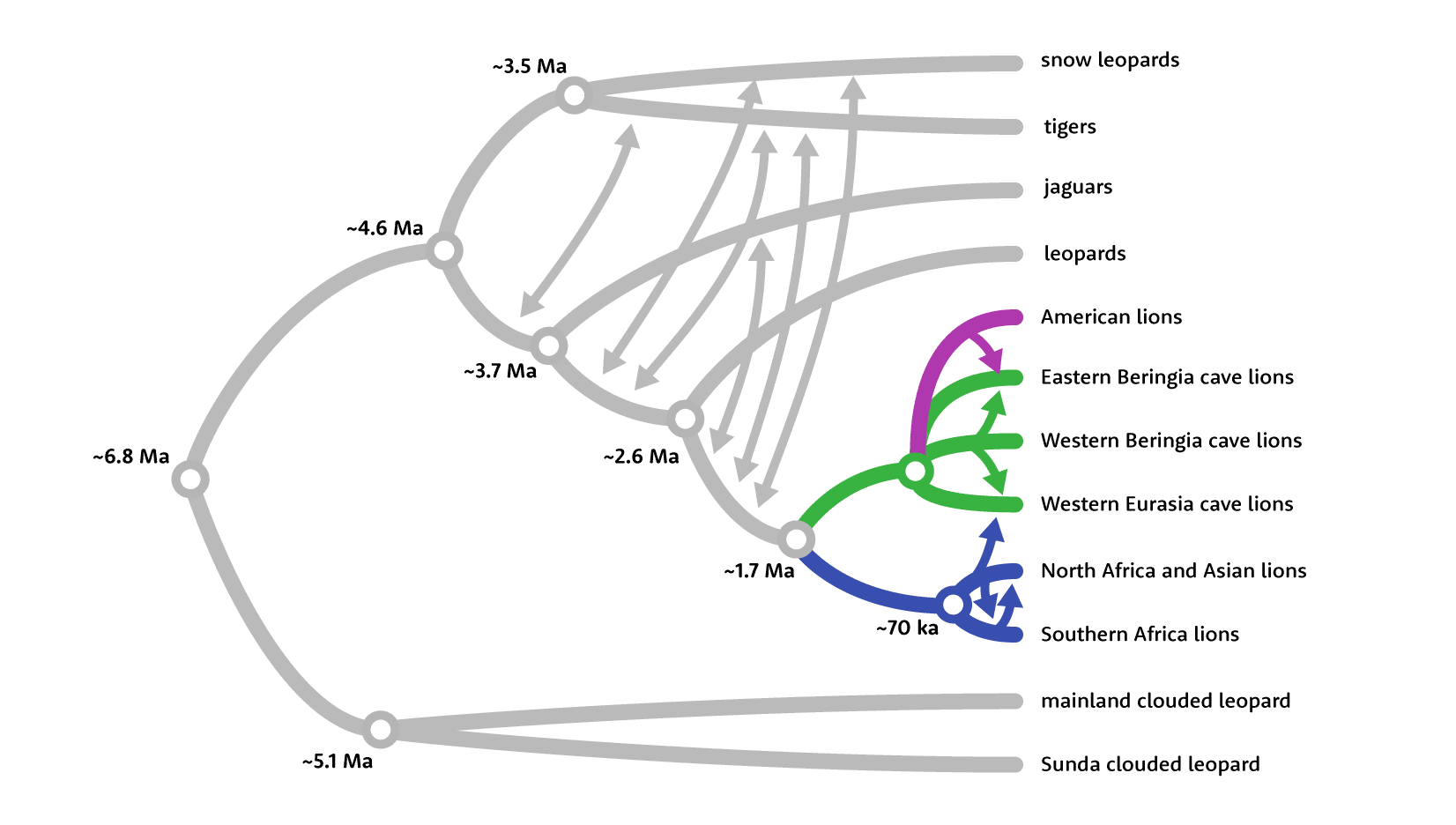
Ancient DNA began to illuminate cave lion evolution back in 2004. Initial studies worked with fragments of mitochondrial DNA, showing definitively that cave lions are extinct relatives of modern lions. By 2009, mitochondrial DNA work from the extinct American lion (often classified as Panthera atrox) showed that this Pleistocene lineage was a sister group of the cave lions. North America was likely invaded during the Middle Pleistocene by the Beringian branch of cave lions.
Over the 2010s researchers built a larger sample of mitochondrial genomes from a larger number of samples across Europe, Siberia, and Beringia. This line of mitochondrial research culminated in a 2020 study, led by the same David Stanton as the new study, including mtDNA from 31 cave lions. From these mitochondrial genomes, the team proposed that cave lions diverged from modern lions approximately 1.85 million years ago.
The mitochondrial diversity of this cave lion sample was apportioned between two deep lineages that shared a mitochondrial ancestor around 600,000 years ago. One of those two branches was mostly in northeastern Siberia and Yukon, the region known as Beringia. The other branch covered the rest of northern Eurasia. The two coexisted but exhibited very little overlap in geography in the sample. Stanton and coworkers found a third mitochondrial lineage in this study, separating more than 900,000 years ago from the other two, and represented by only a single incomplete skeleton from permafrost in northeastern Siberia. It remains unclear whether this skeleton may be much older than other remains from this region.
A 2020 paper by Marc de Manuel and coworkers analyzed the first nuclear genomes from extinct cave lions, together with genomes from modern lions from across Africa and Asia. The study yielded some important findings on modern lion diversity, showing that today’s lions split into two main lineages (northern and southern) roughly 70,000 years ago, followed by substantial subsequent gene flow between them. The study highlighted the very low genetic diversity of today’s remaining Asian lions, reflecting strong inbreeding in this endangered population.
With respect to cave lions, the study estimated that the divergence between cave and modern lions occurred only about 500,000 years ago. That’s much more recent than the mitochondrial genomes were leading scientists to believe. But this study had some limitations. It included only two cave lion genomes, from northeastern Siberia and Yukon, both a very long distance from any potential contacts with modern lions.
A history of interbreeding
The new study by Stanton and coworkers is much more extensive than earlier work, including twelve cave lion genomes spanning over 100,000 years of time. Most of these samples are from northeastern Siberia. In biogeography, this region is often considered to be part of the joined mammoth steppe that extended from Siberia across the Bering Strait into Alaska and Yukon, known as Beringia. In addition to these cave lions, the study included one from Austria, one from east of Lake Baikal, and one from Yukon. Adding to these, the study included a newly-sequenced museum specimen of a modern lion from Southwest Asia, which they hoped might inform about historic gene flow. They ended up combining this specimen with two previously-sampled individuals from the same region.
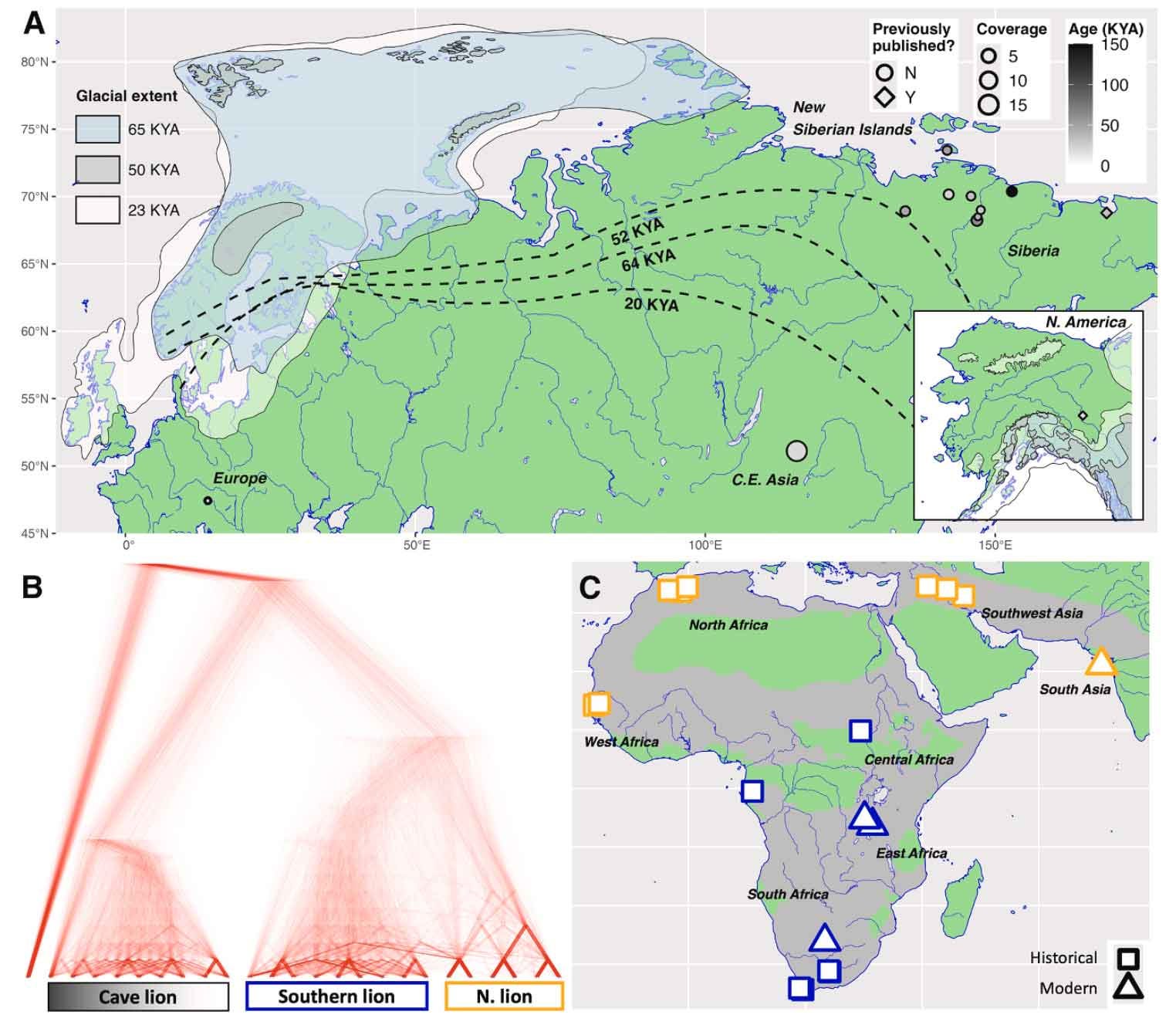
The most important results of the study are its findings about ancient gene flow. The analyses demonstrate repeated genetic exchanges between modern and cave lions over the last 150,000 years, and ancestry from modern lions is as high as 3.2% to 4.4% in some cave lion genomes. The authors’ hunch about the Southwest Asian museum lions paid off, as the connection of modern lions into cave lions is closest to this group of genomes.
Introgression from modern lions into cave lions was highest in specimens dating to around 20,000, 22,000, and 64,000 years ago, including a prominent 20,000-year-old specimen from the Lake Baikal region. Based on the timing, Stanton and coauthors suggest that interbreeding was driven in part by climate. The reasoning behind this idea is that the advance of ice may have restricted the northern extent of cave lions and brought their population more into contact with modern lions in southwest Asia.
Personally, I’m generally skeptical when researchers try to correlate the timing of ancient events with climate change. There are just too many ways to line up these chronologies and the confidence limits on the skeletal timeline are too wide to be very confident. In this study, a challenge is that the cave lion sample is too small, and too focused on a small region of northeastern Siberia, to give much of a window onto its deep structure.
More important, these are low-coverage genomes. The average is 3.5x coverage, and one specimen is as low as 0.3x. That limits the analysis of interbreeding to methods that do not involve linkage, which means we can say little about whether mixture happened recurrently, in pulses at some times, or with some other pattern.
The evidence of interbreeding puts the divergence of cave lions from modern lions into a new light. Previous estimates of the time of divergence between the cave lions and modern lions were around 500,000 years ago, but these estimates came from the assumption of no gene flow after the lineages began to diverge. Since these lineages interbred, the initial differentiation between them must have been much longer in the past.
But how much longer? Stanton and coauthors modeled the gene flow and suggest that a likely time of divergence is around 1.71 million years ago. They do not report a range of error for this estimate, which seems high to me. It would be interesting to use the methods of Alan Rogers and coauthors on some of the higher-coverage genomes to come to a better understanding of how gene flow and divergence interacted.
The study does not include any genome evidence from American lions. The best evidence so far about this branch of lions comes from earlier work on mitochondrial DNA, which suggested that American lions were descendants of the cave lion lineage. In this study, Stanton and coworkers find that the Yukon cave lion specimen has a large component of ancestry from an unknown lineage, which they view as mixture from American lions.
What we are missing
Genomes give a lot of evidence. But there is still much we do not know about the deepest roots of the cave lion lineage. There are many fossils much older than Siberian permafrost remains, going back well into the Middle Pleistocene. Some of these are from the same sites that have generated hominin remains, including the lions from Sima de los Huesos. So far we know nothing about their DNA.
Another major limitation of current knowledge concerns modern lions. The work by de Manuel and coworkers showed that extant modern lions stem from a recent common ancestor that split into northern and southern lineages only about 70,000 years ago. But the fossil record of lions in Africa goes much farther back, as early as 1.9 million years ago. How did these earlier lions relate to the Late Pleistocene survivors? Morphology gives only hints of their pattern of relationships, and they’ve received only a fraction of the attention given to hominins.
Of course, if the divergence of Late Pleistocene cave lions and modern lions goes back to a million years or more, some of the fossils are likely ancestors of these two branches. But other branches likely existed. Some may have been just as divergent and long-lived as the cave lions.
Consider the hominin analogy. In Europe, some of the fossils around 800,000 years ago belonged to a lineage much more different from us than Neanderthals. The best-known sample, from Gran Dolina, Spain, is known as Homo antecessor. This branch existed from Early Pleistocene times, diverging from the common ancestors of modern people, Denisovans, and Neanderthals some 1.5 million years ago or more. By the time of Sima de los Huesos, around 430,000 years ago, the same region was home to early Neanderthals.
Sima de los Huesos and Gran Dolina are mere hundreds of meters apart. Two different lineages were here, one 350,000 years after the other, but separated by some 1.5 million years or more of evolution.
With the lions, we are missing so much. How many African branches were there before the final one? Were they deeply differentiated across the continent, something like the superarchaic branches that gave rise ultimately to modern humans? There are so many possibilities.
Species in lions
I have to end with a few words about classification. Cave lions and modern lions interbred, and that was important to the evolution of the cave lions at a minimum. Many scientists refer to these branches as subspecies: Panthera leo leo and Panthera leo spelaea. Others see them as distinct species.
The American lion was historically called Panthera atrox. The mitochondrial record suggests that these lions were a branch of cave lions that entered North America in the later Middle Pleistocene. There is no whole-genome evidence yet, but the Yukon cave lion in Stanton and coauthors’ study has around 7% contribution from a lineage that may be American lions. The data are not all in, but they suggest that American lions should embed within the cave lions, not as a sister to them.
I’ve long used the big cats as examples in my introductory lectures on speciation. The continued ability of lions and tigers, lions and leopards, and jaguars and leopards to hybridize is well-known—generating ligers, leopons, jaguleps, and other combinations. Ligers are hybrids between two lineages that separated more than 4.5 million years ago. All these hybrids exhibit partial sterility and reinforce the identification of lions, tigers, leopards, and jaguars as biological species.
Yet genomic data have shown that the big cat lineages all diverged with varied patterns of continued gene flow. For a million years and more after their separations, early members of these lineages exchanged genes.
Cave lions were getting genes from modern lions even as they approached their final days. That gene flow was more than a million years after the lineages started to differentiate. Lion generation length is much shorter than hominins, an average of only around 5 years. That means a million years was a very long time indeed.
How should all these lions be classified?
I’m not sure we can answer yet. My inclination is to agree with those who classify all these as varieties of Panthera leo.
I’m most impressed by what we’re missing. Current paleogenomic studies include only specimens from Siberia, Europe, and Yukon, all thousands of kilometers away from potential Late Pleistocene contact zones where cave lions intersected with modern lions. Charles Darwin emphasized that the reason why species appear discontinuous is only because the intermediates have become extinct. With lions, it’s worse. The very regions where mixture probably happened are times and places where we do not yet have much or any data.
Notes: It’s been a few weeks since I last posted. I had a great trip to Poland for the 2026 Copernicus Festival, and I’ll update in upcoming posts.
References
Bocherens, H., Drucker, D. G., Bonjean, D., Bridault, A., Conard, N. J., Cupillard, C., Germonpré, M., Höneisen, M., Münzel, S. C., Napierala, H., Patou-Mathis, M., Stephan, E., Uerpmann, H.-P., & Ziegler, R. (2011). Isotopic evidence for dietary ecology of cave lion (Panthera spelaea) in North-Western Europe: Prey choice, competition and implications for extinction. Quaternary International, 245(2), 249–261. https://doi.org/10.1016/j.quaint.2011.02.023
Burger, J., Rosendahl, W., Loreille, O., Hemmer, H., Eriksson, T., Götherström, A., Hiller, J., Collins, M. J., Wess, T., & Alt, K. W. (2004). Molecular phylogeny of the extinct cave lion Panthera leo spelaea. Molecular Phylogenetics and Evolution, 30(3), 841–849. https://doi.org/10.1016/j.ympev.2003.07.020
Bursell, M. G., Dikow, R. B., Figueiró, H. V., Dudchenko, O., Flanagan, J. P., Aiden, E. L., Goossens, B., Nathan, S. K. S. S., Johnson, W. E., Koepfli, K.-P., & Frandsen, P. B. (2022). Whole genome analysis of clouded leopard species reveals an ancient divergence and distinct demographic histories. iScience, 25(12), 105647. https://doi.org/10.1016/j.isci.2022.105647
De Manuel, M., Barnett, R., Sandoval-Velasco, M., Yamaguchi, N., Garrett Vieira, F., Zepeda Mendoza, M. L., Liu, S., Martin, M. D., Sinding, M.-H. S., Mak, S. S. T., Carøe, C., Liu, S., Guo, C., Zheng, J., Zazula, G., Baryshnikov, G., Eizirik, E., Koepfli, K.-P., Johnson, W. E., … Gilbert, M. T. P. (2020). The evolutionary history of extinct and living lions. Proceedings of the National Academy of Sciences, 117(20), 10927–10934. https://doi.org/10.1073/pnas.1919423117
Figueiró, H. V., Li, G., Trindade, F. J., Assis, J., Pais, F., Fernandes, G., Santos, S. H. D., Hughes, G. M., Komissarov, A., Antunes, A., Trinca, C. S., Rodrigues, M. R., Linderoth, T., Bi, K., Silveira, L., Azevedo, F. C. C., Kantek, D., Ramalho, E., Brassaloti, R. A., … Eizirik, E. (2017). Genome-wide signatures of complex introgression and adaptive evolution in the big cats. Science Advances, 3(7), e1700299. https://doi.org/10.1126/sciadv.1700299
Marciszak, A., Ivanoff, D. V., Semenov, Y. A., Talamo, S., Ridush, B., Stupak, A., Yanish, Y., & Kovalchuk, O. (2023). The Quaternary lions of Ukraine and a trend of decreasing size in Panthera spelaea. Journal of Mammalian Evolution, 30(1), 109–135. https://doi.org/10.1007/s10914-022-09635-3
Nedoluzhko, A., Boeskorov, G., Tikhonov, A., & Protopopov, A. (2024). 20th anniversary of the history of genetic research on cave lions: A short review. Earth History and Biodiversity, 2, 100013. https://doi.org/10.1016/j.hisbio.2024.100013
Santos, S. H. D., Figueiró, H. V., Flouri, T., Ramalho, E., Cullen, L., Yang, Z., Murphy, W. J., & Eizirik, E. (2025). Massive Inter-species Introgression Overwhelms Phylogenomic Relationships Among Jaguar, Lion, and Leopard. Systematic Biology, 74(4), 583–599. https://doi.org/10.1093/sysbio/syaf021
Stanton, D. W. G., Alberti, F., Plotnikov, V., Androsov, S., Grigoriev, S., Fedorov, S., Kosintsev, P., Nagel, D., Vartanyan, S., Barnes, I., Barnett, R., Ersmark, E., Döppes, D., Germonpré, M., Hofreiter, M., Rosendahl, W., Skoglund, P., & Dalén, L. (2020). Early Pleistocene origin and extensive intra-species diversity of the extinct cave lion. Scientific Reports, 10(1), 12621. https://doi.org/10.1038/s41598-020-69474-1
Stanton, D. W. G., Bergström, A., Heintzman, P. D., Van Der Valk, T., Carmagnini, A., Ersmark, E., Pawar, H., Sandoval-Velasco, M., Androsov, S., Fedorov, S., Kuhlwilm, M., Nagel, D., Plotnikov, V., Protopopov, A., Shapiro, B., Barnett, R., Sinding, M.-H. S., Marques-Bonet, T., Yamaguchi, N., … Dalén, L. (2026). Paleogenomes reveal the evolutionary relationship between modern and cave lions. Cell, S0092867426005246. https://doi.org/10.1016/j.cell.2026.05.007
Sun, X., Peng, L., Tsutaya, T., Jiangzuo, Q., Hasegawa, Y., Hou, Y., Han, Y., Zhuang, Y., Martins, N. F. G., Ramos Madrigal, J., Taurozzi, A. J., Mackie, M., Trochė, G., Olsen, J. V., Cappellini, E., O’Brien, S. J., Gilbert, M. T. P., Yamaguchi, N., & Luo, S.-J. (2026). The Japanese Archipelago sheltered cave lions, not tigers, during the Late Pleistocene. Proceedings of the National Academy of Sciences, 123(6), e2523901123. https://doi.org/10.1073/pnas.2523901123
I'm fascinated by the open-minded discussion of speciation and learn so much from Dr. Hawks.
Heather Remoff